

 |
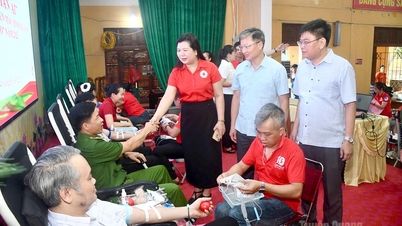
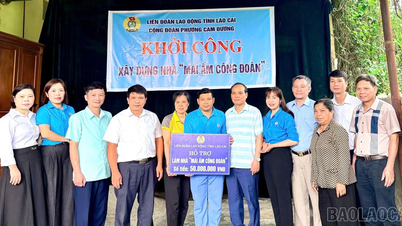
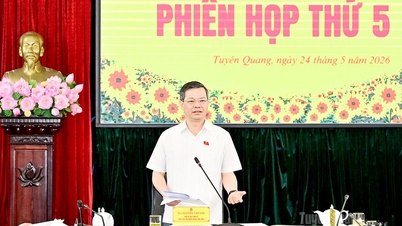
| The leaders of Phu Luong commune held their regular monthly meeting with citizens in April. |
The systematic steps
Following the merger with Ha Giang province and the reorganization of commune-level administrative units according to Resolution No. 1684/NQ-UBTVQH15 dated June 16, 2025, of the Standing Committee of the National Assembly , the province currently has 124 subordinate administrative units, including 117 communes, 7 wards, and 3,802 villages and residential areas.
In less than a year, the Standing Committee and the Executive Committee of the Provincial Party Committee issued 118 leadership and guidance documents, including resolutions, regulations, projects, plans, and official letters to implement tasks. The Provincial People's Council and the Provincial People's Committee also issued 205 documents to concretize the Party's policies and State laws, from budget decentralization and delineation of authority to the restructuring of public service units and personnel placement.
Regarding the streamlining of the administrative apparatus, on its very first day of operation, the 19th Provincial People's Council successfully held its First Session, electing all key positions and establishing 14 specialized agencies under the Provincial People's Committee, a reduction of 13 agencies compared to the total number in the two provinces before the merger. The number of internal departments decreased by 92, equivalent to 24%.
With 124 commune-level administrative units, the consolidation of Party organizations, government bodies, the Fatherland Front , and other mass organizations was carried out rapidly but with extreme caution. Regulation No. 09-QĐ/TU on the decentralization of personnel management and Regulation No. 08-QĐ/TU on the evaluation and classification of quality have become guiding principles for the new apparatus to operate on the right track.
At the commune level, 100% of communes and wards have all the key positions, including Party Committee Secretary, Standing Deputy Secretary, Chairman and Vice Chairman of the People's Council, and Chairman and Vice Chairman of the People's Committee. Notably, 100% of the Party Committee Secretaries, People's Committee Chairmen, and Heads of the Party Committee's Inspection Committee at the commune level are not local residents. This is a policy implemented to increase objectivity and combat vested interests.
The Fatherland Front system and socio-political organizations have also been streamlined from six main points to one, with the internal structure reduced from 20 committees to one office, nine specialized committees, and one affiliated unit.
 |
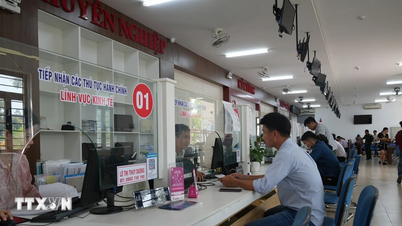
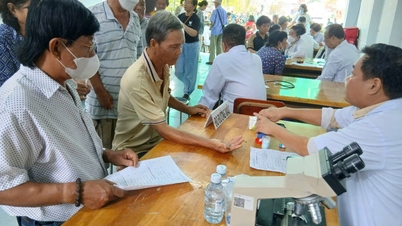
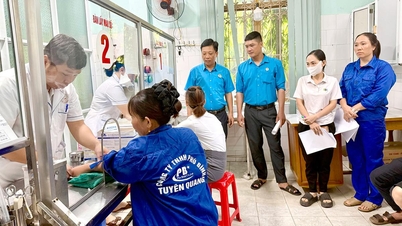
| Staff at the Minh Xuan Ward Public Administrative Service Center assist residents in resolving administrative procedures. |
Operational efficiency
After one year of operation, the two-tiered government model has initially shown clear effectiveness compared to the previous three-tiered model.
The elimination of the district level has significantly shortened administrative procedures. Provincial and commune-level authorities directly coordinate in handling work without intermediaries. Commune-level Public Administrative Service Centers have been established in all 124/124 communes and wards, with a citizen satisfaction rate of 97.27% as of April 30, 2026. The rate of applications processed ahead of schedule at the commune level reached 99.21%, and at the provincial level reached 96.21%.
In particular, with 722 tasks decentralized and delegated to the commune level across various sectors and fields, local governments have been granted substantial authority. Areas such as finance, justice, culture, education, diplomacy, ethnic affairs, and religion are assessed as having been implemented feasiblely and effectively.
The new model has forced commune-level officials to improve themselves. Comrade Nguyen Van Trieu, Secretary of the Party Committee of Thang Mo commune, said: "With strong decentralization and delegation of power from the province, we are more proactive in deciding on local economic development plans. In particular, thanks to the direct supervision of the Provincial Party Committee members, we can report infrastructure or land-related issues directly to the province and have them resolved very quickly, eliminating the previous bottlenecks in processing applications."
Digital transformation efforts have been accelerated and implemented synchronously. The rate of electronic document exchange between state agencies has reached 100%. The administrative procedure information system is connected to 24 national databases. The digital economy is projected to account for 7.39% of GRDP in 2025. Community digital technology teams are operating in 100% of communes and wards, with 3,926 teams and 20,250 members, supporting citizens in accessing online public services.
In remote and rural communes, people have begun to feel the vitality brought about by this innovation. Ms. Luong Thi Thom from Hoa An commune shared: “Previously, to handle complicated land and house paperwork, we had to go to the district, which was very difficult. Now, commune officials guide us through online submission, and the applications are processed by the province directly on the computer. Provincial officials even come to the commune to conduct on-site inspections, so people don't have to travel all the way to the province. I think this two-tiered system helps people reduce the hardship of travel, and the procedures are much more open and transparent.”
 |
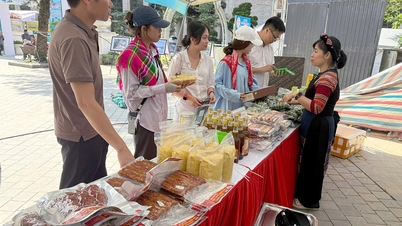
| Leaders of Tan Quang commune visit a fish farming model in Nam An village. |
Building a streamlined, effective, and efficient administrative apparatus.
After one year of implementation, alongside the noteworthy results, the practical implementation has also presented numerous difficulties and challenges.
The entire province still lacks more than 4,500 civil servants and public employees compared to the assigned targets, with the health and education sectors lacking nearly 8,000 according to the established quotas. Many newly established commune-level public service units have an average of only 5 staff members, which is far too few to handle the increasingly large workload as decentralization occurs. The pressure of holding multiple positions weighs heavily on grassroots officials, directly affecting the quality of service to the people.
In addition, a portion of the 722 tasks decentralized to the commune level, concentrated in the fields of agriculture, construction, industry and trade, and health, are exceeding the professional capacity and actual resources of the local government.
Digital infrastructure still faces many bottlenecks. Some specialized software is not yet synchronized, 74 villages still have poor signal coverage, and the rate of underground telecommunications cable installation is only nearly 12%. The level of technological access among people in remote areas is still limited, creating a gap between the digital transformation policy and real-life practices.
Facing these challenges head-on, Tuyen Quang province has clearly identified key solutions for the 2026-2030 period. Regarding personnel, the province is promoting the recruitment and training of commune-level officials linked to specific job positions; and simultaneously proposing to the central government to allocate staffing quotas appropriate to the characteristics of mountainous, border, and ethnic minority areas, instead of applying the current general quotas. Regarding decentralization, the province is reviewing each group of tasks; anything exceeding the capacity of the commune level will be adjusted or receive technical support from the provincial level. Regarding digital transformation, the province prioritizes 100% coverage of villages and hamlets; and promotes the "Digital Literacy Movement"...
The overarching spirit of this new phase is: every official and Party member must truly "dare to speak, dare to act, and dare to take responsibility"; every agency and unit implementing tasks must ensure "clear responsibilities, clear tasks, clear timelines, clear accountability, and clear results." The two levels of government will only truly function smoothly when each stage and each level fulfills its responsibilities correctly, completely, and to the best of its ability.
Text and photos: Ly Thu
Transition from stable operation to effective and efficient operation.
 |
| Comrade Do Anh Tuan Member of the Provincial Party Committee, Director of the Department of Internal Affairs |
With a decisive and coordinated approach, the Department of Internal Affairs has proactively advised on and comprehensively implemented solutions regarding organizational restructuring, decentralization, delegation of authority, placement of officials and civil servants, and improvement of the two-tiered government operating mechanism, ensuring that work is not interrupted and that citizens and businesses are not affected.
To date, the most significant results are the reduction of 13 specialized agencies at the provincial level and 92 internal departments within the provincial departments; the decentralization, delegation of authority, and authorization have been strongly implemented at the grassroots level, creating conditions for communes to be more proactive in handling their work. In addition, all 124 communes and wards have completed the regulations on their functions and tasks; 496 specialized agencies and administrative organizations at the commune level have been established. Public service units are also continuing to be reviewed and reorganized towards streamlining and efficiency.
Based on that, the Department of Internal Affairs will continue to advise the province to shift strongly from a stable operational state to an effective and efficient one, aiming to build an administrative system that is closer to the people, clearer in responsibilities, and better serves the people and businesses.
Supporting business development
 |
| Mr. Nguyen Phuong Nam Chairman of the Board of Directors and General Director of Vien Chau Tunnel Brick Joint Stock Company |
I have observed that the decentralization and delegation of authority under the two-tiered local government model, after one year of operation, has brought about positive changes, particularly in resolving business obstacles. Previously, administrative procedures for businesses involved multiple stages and levels of management, resulting in lengthy processing times and impacting production and business progress. However, with specific authority delegated to the grassroots level, issues arising from businesses are received and processed more quickly. Difficulties related to administrative procedures and policy mechanisms are promptly addressed by specialized agencies, allowing us to be more proactive in production planning, reduce costs, minimize risks, and ensure projects are implemented on schedule. The increased accountability of grassroots governments also fosters closer collaboration between the government and the business community. This is a crucial prerequisite for businesses to confidently expand production and contribute positively to local development.
Streamlining processes and improving service quality.
 |
| Ms. Nguyen Thi Diem Staff member of the Public Administrative Service Center of Nhữ Khê Commune |
After implementing the two-tiered local government model, we received specific training and guidance on the procedures for handling administrative procedures; the process of receiving, digitizing, processing, and returning results of documents; and guidance on using the electronic one-stop service software and online public services. Based on this, we proactively arranged and adjusted processing procedures, promoting the application of software to streamline, monitor, and control the progress of document processing. As a result, documents are managed tightly, processed according to the correct procedures and regulations, ensuring timely completion and minimizing the need for citizens to make multiple trips.
On average, I receive and process about 20 applications per day related to cultural affairs, social welfare, pensions, war veterans, and health insurance. Although the workload has increased, the implementation of online public services and the processing of applications in a digital environment have helped shorten processing times and improve work efficiency.
Serving the people better
 |
| Ms. Do Thi Nhung Residential area 10, Ha Giang 1 ward |
After one year of implementing the two-tiered local government model, I have observed many positive changes in management and public service. Administrative procedures are handled more quickly and efficiently; many matters that previously required long waits are now processed directly at the local level, saving people time and money. In particular, the attitude of officials has also improved significantly, becoming more approachable, responsible, and dedicated to serving the people.
Publicizing procedures, processing times, and applying information technology also helps citizens easily track progress, creating transparency and convenience in dealing with administrative agencies. I hope this model will continue to be improved to better serve the people.
Source: https://baotuyenquang.com.vn/chuyen-muc-cai-cach-hanh-chinh/202605/dot-pha-tu-mo-hinh-chinh-quyen-dia-phuong-2-cap-30b7430/

































































































Comment (0)