

Some Vietnamese tourists reported experiencing an earthquake while traveling by car to the ancient village of Shirakawago, feeling "like they were sitting in a hammock."
Japan experienced 155 earthquakes nationwide on January 1st, with the strongest being a 7.6 magnitude tremor in Ishikawa Prefecture. The epicenter on the Noto Peninsula affected five prefectures in the region: Ishikawa, Niigata, Fukui, Toyama, and Gifu, according to Reuters . The Meteorological Agency reported extensive damage, with nearly 50,000 households losing power and tens of thousands of homes damaged. At least 20 people were killed.
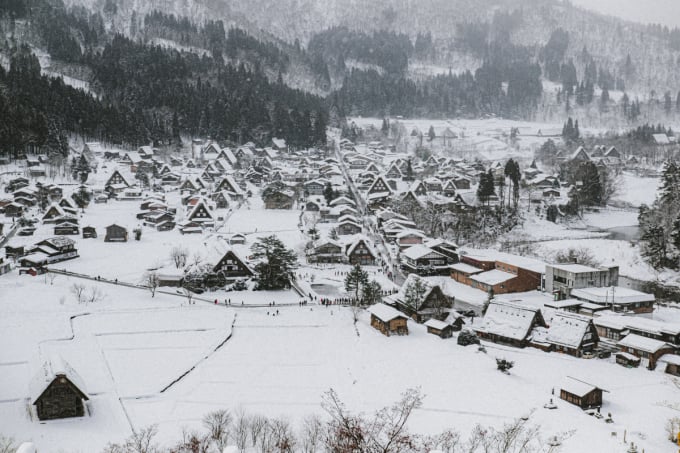
Shirakawago is covered in white snow in December. Photo: Nick M.
At the time of the earthquake, there were about 20 Vietnamese tourists visiting the ancient village of Shirakawago in Gifu Prefecture. Located about 350 km from Tokyo, Shirakawago is one of the oldest villages in the country and was recognized as a UNESCO World Heritage Site in 1995.
A Vietnamese tour guide said that Vietnamese tourists were a little "anxious" but "not too scared" when the earthquake struck. Everyone was sitting in their vehicles, feeling "like they were in a hammock."
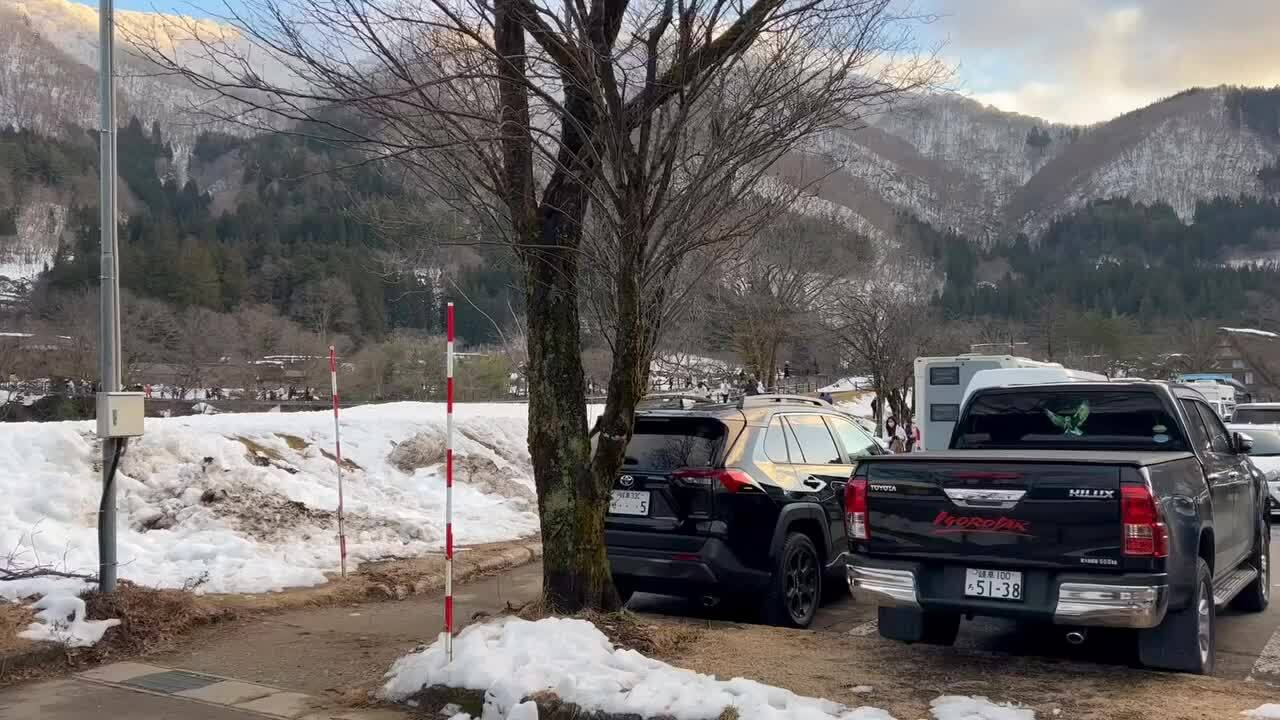
Vietnamese tourists film the earthquake in Japan on January 1st. Video : Hoang Thang
Mr. Nhan Phuong, the Southern regional coordinator of the Japan National Tourism Organization (JNTO) in Vietnam, said that Vietnamese tourist groups traveling during the New Year holiday remained safe and there was no panic.
"Many people were surprised, and a little worried, when the ground suddenly shook violently, and the bus floated as if on water," Mr. Phuong said.
To date, there have been no casualties or property damage to Vietnamese tour groups. However, some tour groups have been forced to change their itineraries and routes due to the temporary closure of some highways following the earthquake. In an emergency press conference yesterday, Japanese Chief Cabinet Secretary Hayashi Yoshimasa stated that sections of five highways have been closed as a precautionary measure, according to Skift.
Grandfather The information provided further details about a Vietnamese tour group's hotel lobby in Niigata Prefecture being flooded due to large waves following the earthquake. Currently, it's peak tourist season, so they have no alternative hotel and cannot travel as planned. Most tours in the Hokuriku region (comprising Ishikawa, Fukui, Niigata, and Toyama prefectures) have been cancelled due to damaged highways and service closures.
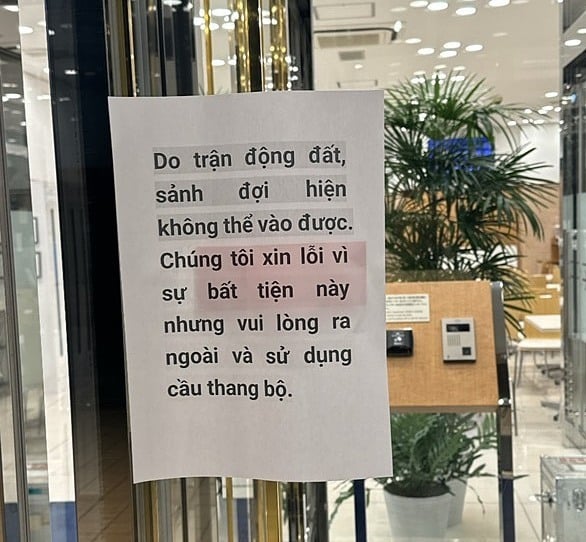
A notice posted in front of a hotel in Niigata Prefecture where a Vietnamese tour group was staying. Photo: Provided by the interviewee.
According to Ms. Huynh Phan Phuong Hoang, Deputy General Director of Vietravel Tourism Company, December is not the peak season for Vietnamese tourists visiting Japan. Her company has over 500 tourists currently traveling in various cities in Japan, all far from areas affected by the strong earthquake, so they were not impacted. "The groups have already finished their tours and are preparing to return to Vietnam," Ms. Hoang said.
With over 20 years of experience serving Vietnamese tourists in the Japanese market, Ms. Hoang said that Japan frequently experiences earthquakes, so the government and people always have plans and preparations in place to adapt. Vietnamese travel companies are "accustomed" to earthquakes in Japan, so everyone remains calm and not overly worried.
Mr. Nguyen Van Dung, Director of Asia Gate Travel, a company with 10 years of experience in the Japanese tour market in Hanoi, said that earthquakes cannot be predicted like weather. When an earthquake occurs, a notification message will be sent to phones in Japan about 10 seconds beforehand. "Japan experiences an average of over 1,000 earthquakes each year. The areas that experienced strong tremors this time did not have many Vietnamese tourists, so most were safe," Mr. Dung said.
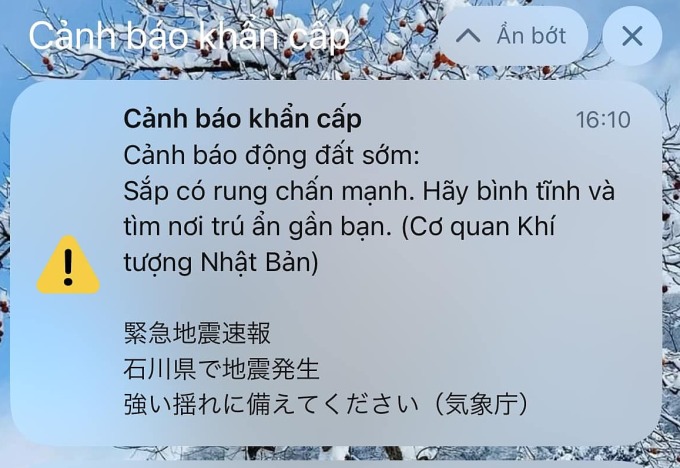
Earthquake warning messages from Japan were sent to personal mobile phones. Photo: Hoang Thang
For tourists from Vietnam traveling to Japan, Mr. Phuong advises them to "strictly adhere to government guidelines," especially those from the Japan Meteorological Agency and Disaster Prevention Agency. In addition, tourists should listen to instructions from local guides, travel service providers, and logistics companies; quickly find safe shelter, stay away from tall buildings and public structures, and large trees that could fall. Tourists should avoid using elevators and keep their phones fully charged for easy communication.
Phuong Anh
Source link


































































Comment (0)