


I really like the way statistics are compiled by counting the number of overnight stays because it's more realistic. It means they aren't just "passing-through" tourists who check in and leave, thus not contributing much value to the local economy .
Pressure from budget tourism
Undeniably, tourism is becoming a crucial growth driver for Da Nang. International tourists are drawn to the city by many attractive factors such as its peaceful environment, stunning beaches, reasonable costs, and friendly and open people. Many of them don't just stay for short visits but choose to stay long-term, renting houses or apartments to live and work. This contributes to boosting the real estate and service markets and creating more job opportunities for local residents.
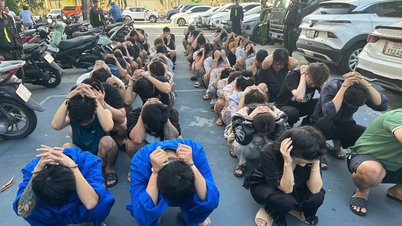
However, behind this rapid growth are gradually emerging problems. It must be acknowledged that in areas with a high concentration of foreigners, a segment of the population has engaged in law-breaking behavior. They drive recklessly without helmets, cause disturbances while drunk, walk animals haphazardly on the beach, and even attack locals. These behaviors not only directly affect public order and security but also tarnish the image of the destination in the eyes of other civilized tourists.
Another noteworthy issue is the emergence of a group of long-stay, low-cost tourists. These visitors contribute minimally to the local economy. In many cases, they are recipients of social welfare benefits from their home countries, now migrating to Vietnam to take advantage of the low cost of living. This has happened in Bali (Indonesia), Phuket and Pattaya (Thailand).
According to Thai media, despite the slowdown in tourism growth and a 7% decrease in international visitors in April, the Prime Minister has announced that he will strengthen monitoring of foreign tourists' behavior following several incidents that have damaged Thailand's tourism image.
As other countries tighten regulations and raise service prices to increase tourist spending and reduce the burden on national infrastructure, these budget-conscious international tourists will seek out new, affordable destinations. Da Nang, with its very reasonable prices, is not immune to the attention of these visitors with limited budgets but considerable financial burdens. This creates significant pressure on urban infrastructure, from transportation and healthcare to housing and public services. When the number of tourists increases rapidly but the quality of spending doesn't match, leading to security and order issues, and damaging the city's image and culture, the economic efficiency of tourism needs to be seriously considered by the city's leaders.
Quality over quantity
Given the aforementioned situation, the question is no longer "how many tourists to welcome" but "how to welcome tourists." Growth in quantity without quality control will lead to long-term consequences, ranging from overloaded infrastructure to a decline in the tourism experience and national image.
First and foremost, screening requirements should be implemented right from the entry point. Visa policies could be adjusted to clearly categorize entry purposes, length of stay, and financial capacity. High-quality tourist markets with significant spending power and civilized behavior should be prioritized. Meanwhile, cases showing signs of exploiting budget tourism for long-term stays without clear purposes need to be more strictly controlled.
Secondly, accommodation management needs to be tightened. Temporary residence registration and residency checks for foreigners should be implemented synchronously, with coordination between local authorities, the police, and accommodation establishments. Digital technology should be applied to build a real-time tourist data management system, helping to detect violations early. Effective control also aims to prevent criminals wanted by other countries and illegal immigrants from entering the country, allowing for timely deportation.
Thirdly, it is necessary to strengthen sanctions against international tourists who violate the law. The handling of these violations must be strict, transparent, and consistent to create a deterrent effect. Vietnam in general, and Da Nang in particular, will not be lenient with visitors who show disrespect for the law and local culture.
One example of how to deal with disruptive or unruly tourists is Singapore. Foreign visitors dare not even utter a word about violating local culture, even in the smallest way. This strictness forces travel companies to provide warnings to tourists planning a trip to the country. Violations can result in hefty fines or imprisonment.
Fourth, in the long term, the tourism industry needs to shift towards a "quality over quantity" strategy. This includes developing high value-added tourism products, attracting high-spending tourists, extending their stay, while still ensuring a positive contribution to the economy. On the other hand, it is necessary to enhance the capacity of domestic tourism businesses to participate more deeply in the value chain, avoiding the situation where "many tourists arrive but benefits flow out," as the head of government has noted.
Ultimately, the human and cultural elements remain at the core. Da Nang, and Vietnam in general, are always highly regarded for their friendliness and hospitality. However, our friendliness must be accompanied by principles. We are ready to welcome civilized tourists who respect the law and local culture. But we also need to firmly say "no" to tourists who behave inappropriately or do not contribute to our economy.
Source: https://baodanang.vn/du-lich-bung-no-va-bai-toan-chon-khach-cho-da-nang-3337815.html

































































































Comment (0)