

The Vietnamese-German couple's journey to this basaltic red land stemmed from very specific desires. While Thao was curious to experience firsthand the house that had appeared on the television show "Haha Family," Philipp simply wanted to see elephants in real life and observe how the local people utilize resources and maintain a sustainable lifestyle instead of relying on urban amenities.
However, the reality of the Central Highlands presented them with a completely new experience. As someone who loves travel and always meticulously plans each trip, Thảo admits this was one of the "strangest" trips of her life. She decided to go without makeup, skipping elaborate makeup routines, knowing she would be walking in the scorching heat of the mountains. For the first time, she chose to travel without any prior planning for the following days, becoming completely spontaneous.
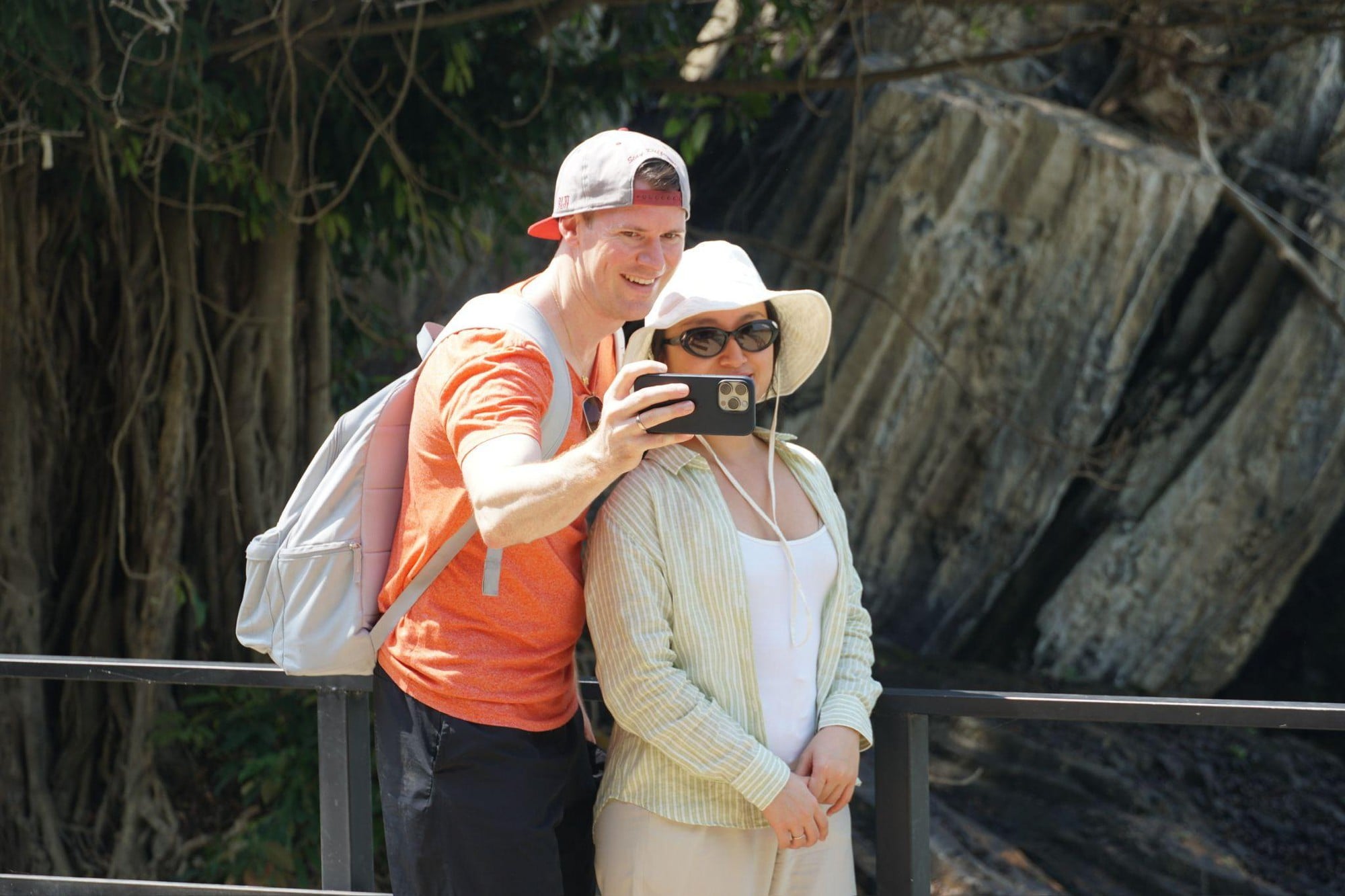
Ms. Thao and her husband visited Dray Nur waterfall ( Dak Lak ).
This comfort allows them to perceive their surroundings more clearly. Compared to living near a busy intersection in Hanoi , where Thao's family was constantly surrounded by traffic noise and even the cries of "who wants steamed buns?" at 3 a.m., Dak Lak offers an unusually tranquil space. The main sounds here are the chirping of insects, a pleasant natural symphony far more soothing than the noisy pace of urban life.
Adapting to the absence of modern amenities

Of course, returning to nature isn't always pleasant. There were times when Thao felt quite uncomfortable because of the extremely hot weather while eating a bowl of noodles in a small restaurant without air conditioning. However, the lack of air conditioning and regular laundry, towel, or bed linen changes like in five-star hotels significantly saved energy, chemicals, and clean water, resulting in a positive impact on the environment. This field trip taught them how to adapt to the weather instead of always trying to escape into air-conditioned rooms.
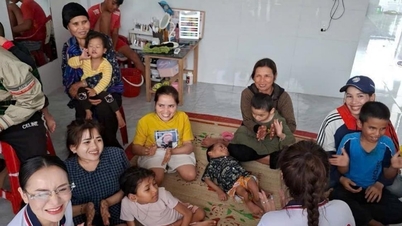
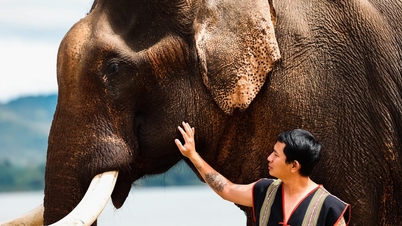
Throughout the trip, what impressed the couple most was the adaptability of the local people. Thao was incredibly surprised to see boys as young as 13 years old spending long days basking in the sun, roaming with herds of elephants in the deep forest under the scorching heat, without needing mobile phones or snacks. Seeing the children's mud-covered faces but overflowing with joy, she couldn't help but compare them to the dependence on electronic devices and lack of family connection of children in bustling cities.
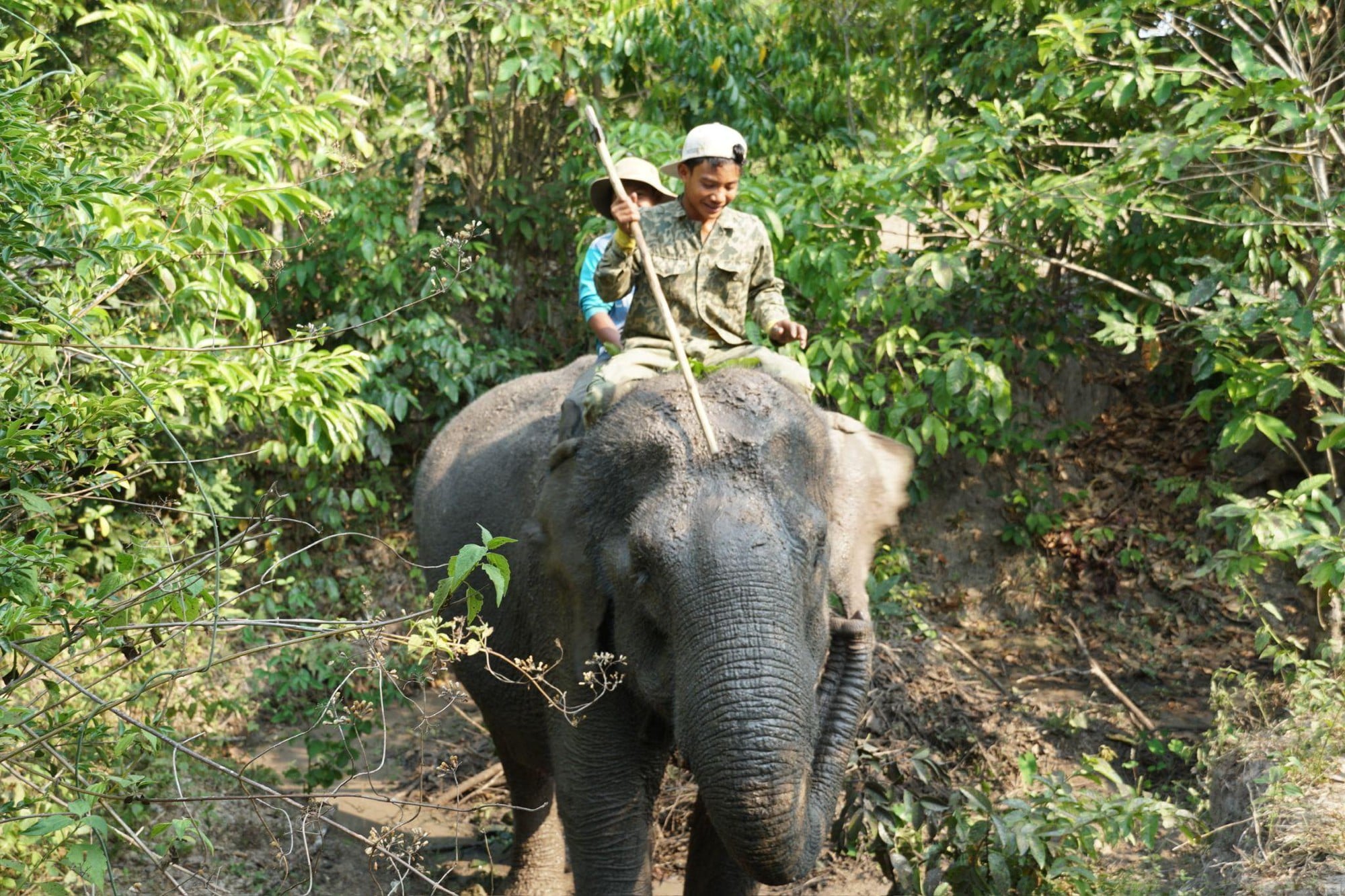
Images of children in Dak Lak spending the whole day roaming with elephants.
Changing perceptions of Dak Lak
The trip also dispelled many of the couple's initial assumptions. Before arriving, Philipp had imagined the local people living in complete isolation, their lives resembling those of 100 years ago. However, he was completely surprised to find them to be ordinary people, who had developed, learned to apply modern technology, yet still preserved their traditions intact.
As for Thao, she had always assumed that most of the people living in this area were ethnic minorities with dark skin. But when she visited the Dak Lak Museum, she was surprised to learn that 75% of the population were immigrants from other provinces and cities. She was also surprised by the standard of living in Buon Ma Thuot when a taxi driver shared that nearly 60% of households there owned cars. This prosperity was completely different from her initial image of a region in the Central Highlands.

Regarding their connection with the local people, language barriers and differences in appearance sometimes drew unwanted attention to the couple. Their eco-tourism trip to Dak Lak wasn't glamorous or luxurious, but it offered them very genuine perspectives. It not only helped them appreciate nature more but also provided a space to slow down. By setting aside meticulous planning and habits based on city conveniences, they had the opportunity to re-evaluate their lives, learn to adapt, and find comfort in the simplest, most authentic things.
Source: https://phunuvietnam.vn/du-lich-dak-lak-qua-lang-kinh-cua-cap-doi-nguoi-viet-va-duc-238260604105409213.htm









































![[Video] Sunset at Lap An Lagoon – Where the sun sets over the fishing nets](https://vphoto.vietnam.vn/thumb/1200x675/vietnam/resource/IMAGE/2026/05/31/1780192137701_beach-landscape-sea-water-nature-grass-745871-pxhere-com.jpeg)


























Comment (0)