

FROM THE LUSH ORCHARDS OF THE BORDER REGION
In recent times, various sectors and localities in the province have focused on exploiting the potential of agricultural production, especially garden-based economy , to develop tourism.
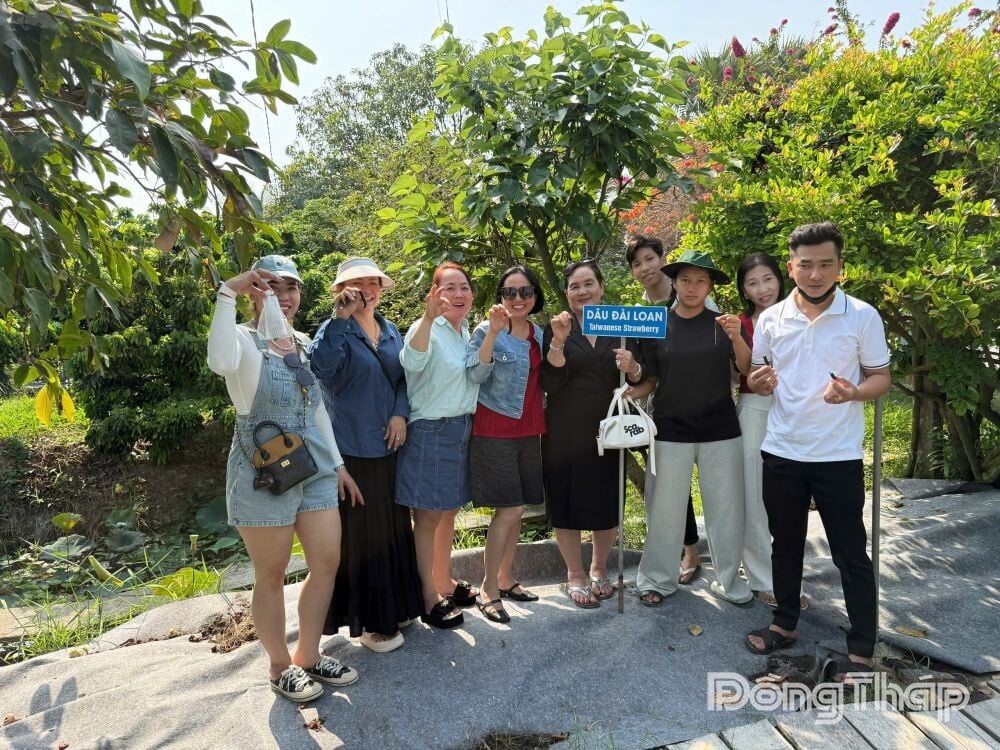
Currently, the province has 91 travel agencies, 455 tourist accommodation establishments, and 106 tourist destinations associated with agricultural activities, community development, and traditional crafts.
Of these, 32 tourist destinations have been recognized by the Provincial People's Committee as meeting the standards of a tourist destination. Many OCOP products associated with ecotourism are gradually making their own mark.
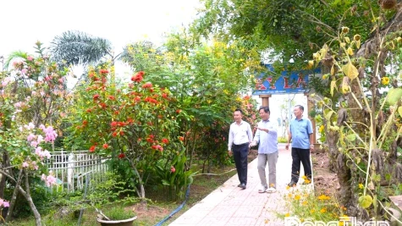
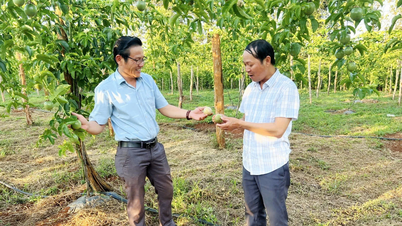
In the border area of Tan Hong commune, the approximately 2-hectare garden with over 80 varieties of unique and rare fruit trees belonging to Mr. Truong Van Mai - owner of Nam Huong Ecotourism Area - is becoming a popular destination attracting many domestic and international tourists.
Mr. Mai said that previously, the garden mainly grew traditional fruit trees, but the economic efficiency was not high due to frequent pest and disease outbreaks, high investment costs, and unstable market demand.
After numerous visits and studies of rural tourism models in various places, around 2024, he decided to shift his focus to developing ecotourism linked with agricultural experiences.
On his 2-hectare plot, Mr. Mai has planted about 80 varieties of fruit trees and valuable saplings such as: Thanh Ca mangoes, elephant mangoes, fragrant sand mangoes, turmeric jackfruit, Japanese cherries, Thai tamarind, Thai red pomelos, etc.
Thanks to meticulous planning and the continuous addition of many specialty plant varieties, the garden is increasingly attracting tourists. A special feature is that, due to seasonal cultivation, the garden bears fruit almost year-round.
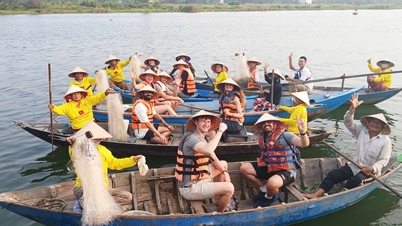
Therefore, visitors can pick and enjoy fresh fruit on the spot at any time. Besides touring the orchard, visitors can also experience rowing boats, fishing, enjoying traditional cakes and dishes typical of the Southern Vietnamese countryside. In 2024, the orchard's star apple product received OCOP 4-star certification.
At the same time, Mr. Mai was also granted the trademark "Nam Huong Star Apple". This is considered an important step in enhancing the value of agricultural products associated with the development of local ecotourism.
Meanwhile, at The Mango Trail Farmstay (My Tho commune), the experiential tourism model associated with the specialty mango brand is also making its own mark.
Visitors to this area not only get to learn about rural life in the Dong Thap Muoi region, but also have the opportunity to enjoy many dishes made from mangoes, along with other characteristic culinary delights of the Mekong Delta.
Ms. Ho Thi Thu Thuy, owner of The Mango Trail Farmstay, said that what tourists love most is the rustic atmosphere and the experiences that bring them closer to the lives of the local people.
"This model not only helps families increase their income but also creates stable jobs for about 10 local workers," Ms. Thuy shared.
In Tan Phong islet (Hiep Duc commune), many farmers are gradually shifting towards developing eco-tourism in their orchards right on their family's land.
Besides taking advantage of their specialty fruit orchards, local households also exploit the simple charm of the riverside countryside to create intimate experiences for tourists. With 8 acres of orchard land, Mr. Nguyen Van Nhan, owner of the "Grandma's Garden" tourism service business, boldly collaborates with travel companies to welcome international tourists to visit, experience picking, and enjoy fruits in his orchard.
Besides visiting the orchards, tourists can also participate in making traditional cakes, learn about different types of fruit trees, and experience weaving water hyacinth – activities that are deeply rooted in the culture of the Mekong Delta.
According to Mr. Nhan, the garden used to mainly grow longan trees. However, to cater to tourism, his family renovated it and interplanted durian, rambutan, and star apple trees to diversify the products offered to visitors.
Currently, local fruit sources meet about 50% of customer demand; the remaining 50% is purchased from other orchards to ensure a year-round supply of 6-7 different fruit varieties.
Currently, the garden receives between 700 and 1,000 visitors per month, contributing to a stable income for the family and creating jobs for local workers.
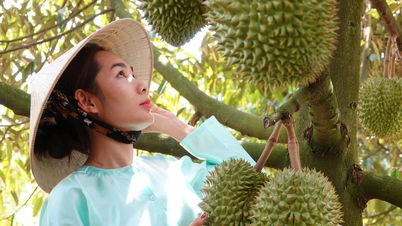
Building upon the traditional fruit orchard model, Mr. Nguyen Van Xam, owner of Mekong Rustic Riverside tourism facility on Tan Phong islet, has shifted his focus to developing ecotourism right on his family's durian orchard.
Mr. Xam collaborated with travel companies to develop a model that combines relaxation with experiencing life in a traditional garden setting.
After nearly a year of operation, Mekong Rustic Riverside is gradually becoming an attractive accommodation destination for both international and domestic tourists.
His family allocated about 2 acres of land to build facilities for tourism, while the remaining 5 acres were used to maintain a durian orchard with an annual yield of about 8 tons of fruit.
Currently, the facility has completed 18 guest rooms and is continuing to expand to meet the needs of tourists. The highlight of the model is the accommodation area and swimming pool built amidst a long-standing durian orchard. The cool, peaceful green space characteristic of the island region becomes an attractive experience for many tourists when learning about the journey of durian trees taking root in Tan Phong land.
VISITING VINEYARDS AND APPLE TREES laden with fruit along the coast
Not only developing in the delta areas, the eastern coastal region of Dong Thap province is also seeing the emergence of many unique garden tourism models.

Ms. Nguyen Thi Ngoc Mai, owner of Khanh Mai vineyard (Go Cong Dong commune), currently owns about 7 acres of land planted with grapes, apples, and plums. With the advantage of being close to Tan Thanh beach tourist area, her family's model is well-suited to attracting visitors after they enjoy beach activities and seafood.
According to Ms. Mai, in addition to revenue from tourists, her family also earns extra income from selling fruit to regular customers.
Visitors can take photos, check in, pick apples themselves, tour the vineyard, and learn about grape cultivation techniques.
During a weekend trip with his family from Ho Chi Minh City to Dong Thap, Mr. Lang Hoang Khang said that what his family enjoyed most was being able to directly select their favorite bunches of grapes and enjoy them right in the vineyard.
For young children, this is also an opportunity to get closer to nature and learn more about agricultural production.
Along with the vineyard model, Mr. Tran Van Hoi's apple orchard (Go Cong Dong commune) is also a popular destination for many tourists visiting the Tan Thanh beach area.
Mr. Hoi's family currently owns about 1 hectare of apple trees that are between 10 and over 30 years old. Previously, the produce was mainly sold to traders; however, recognizing the growing demand for experiencing the countryside, about 8 years ago, he boldly shifted his focus to tourism right in his family's orchard.
Currently, the apple orchard receives an average of 50-70 visitors per day; the number of visitors increases significantly during holidays and festivals.
With years of experience in apple cultivation, he proactively manages the trees to bear fruit in multiple cycles, providing visitors with a year-round experience.
Visiting the apple orchard for the first time with friends from Ho Chi Minh City, Ms. Lieu Que Tram said she was delighted to be able to pick and enjoy the fruit right in the orchard.
"Initially, I didn't know how to choose good fruit, but after being guided, I was able to select the ripest and tastier ones myself. It was a very interesting experience," Ms. Tram shared.
It is evident that Dong Thap is reaping the rewards of exploiting tourism from its fruit orchards. This is also considered a promising direction for the locality to continue developing sustainable agricultural tourism in the future.
H. THONG - V. THAO - N. KHANH
Source: https://baodongthap.vn/khai-thac-tiem-nang-cay-an-trai-de-phat-trien-du-lich-a241540.html


















![[Photo] Reception to welcome General Secretary and President To Lam and his wife on their State visit to the Philippines](https://vphoto.vietnam.vn/thumb/1200x675/vietnam/resource/IMAGE/2026/06/01/1780295488620_vna-potal-chieu-dai-chao-mung-tong-bi-thu-chu-tich-nuoc-to-lam-va-phu-nhan-tham-cap-nha-nuoc-toi-philippines-8798060-7855-jpg.webp)
















































Comment (0)