

The "filter" after the major merger
Ninh Binh is entering a pivotal historical phase following its major administrative merger, rising to a new level and status as a Millennium Heritage City. Facing the growth pressure of a newly expanded area, possessing both the depth of its forests, the breadth of its plains, and the expansiveness of its sea, a major contemporary question arises: How can we develop without losing our identity? In fact, even before the merger, Ninh Binh was a shining example of successfully shifting its development model from "brown" to "green." And now, with new opportunities for development, this core principle has not only remained intact but is being strictly preserved. The province remains steadfast: "We will never sacrifice the environment for economic gain."
To realize this vital commitment, the provincial government is implementing a distinct and constructive strategy: elevating the tourism industry to the status of a "central ecosystem." This is not simply about prioritizing a single, self-sustaining key economic sector, but rather transforming tourism into a core axis that harmonizes, guides, and reshapes the production mindset of both the industrial and agricultural sectors, shifting them towards a "green" direction.

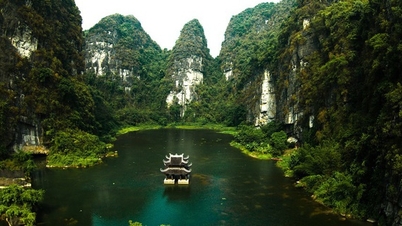
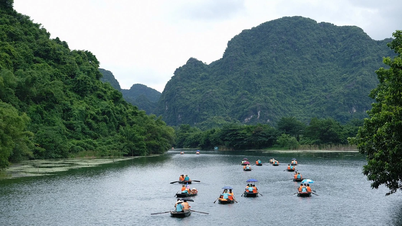
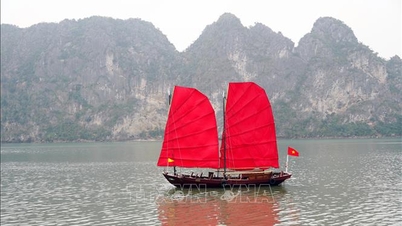
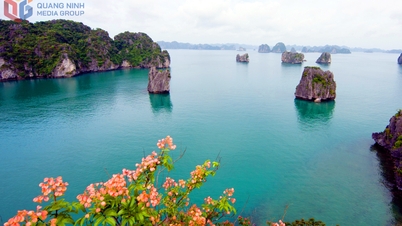
Ninh Binh is currently one of the bright spots in successfully shifting its development model from 'brown' to 'green'. Photo: Ninh Binh Department of Tourism.
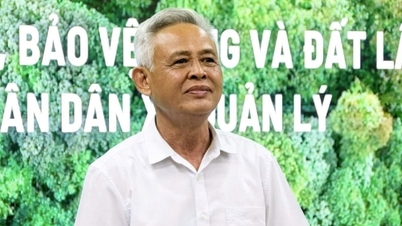
Looking at the reality, while expanding administrative boundaries offers vast development opportunities, it also poses a thorny issue of conflicting interests between economic development and heritage preservation. Responding to this question, Mr. Tran Song Tung, Permanent Vice Chairman of the Ninh Binh Provincial People's Committee, affirmed the province's strong political resolve: "The province is determined not to open its doors to projects with crude, outdated technology and high emission risks. Heritage identity and the stringent environmental standards of the tourism industry are no longer obstacles to development, but have become natural filters to select and attract high-quality investment capital."
The leaders of the Ninh Binh Provincial People's Committee further stated that the new tourism space after the merger is no longer confined or putting pressure on the old heritage core area. The tourism industry is urgently replanning the landscape axes, proactively bringing new areas into the high-end and healing tourism value chain to extend the length of stay, increase tourist spending, and simultaneously reduce the burden on the core natural areas.
Twenty years of persistent movement and a new core spatial axis oriented towards the sea.
To achieve the clear ecological mindset it possesses today, Ninh Binh has actually undergone a persistent journey spanning more than two decades, overcoming many important transformation stages. According to historical documents and shared by the head of the local tourism industry, the story of Ninh Binh's transformation from "brown" to "green" began in 2002. At that time, the province started shifting its focus to tourism linked with heritage preservation through small-scale projects of 30 to 50 hectares such as the Trang An Eco-tourism Area, the Van Long Wetland Conservation Area, and the ancient capital of Hoa Lu.
A major turning point came from Resolution 03 of the Provincial Party Committee's Standing Committee – the first thematic resolution on tourism, marking a fundamental shift in mindset: moving from exploiting construction materials, stone, lime, and cement production to green, sustainable tourism. By 2009, Resolution 15 was issued as a strategic "backbone," promoting scientific research and archaeology, leading to the Trang An Scenic Landscape Complex becoming a World Heritage Site, and simultaneously shaping a series of mega-projects such as Bai Dinh, Yen Thang Lake, and the Trang An golf course...

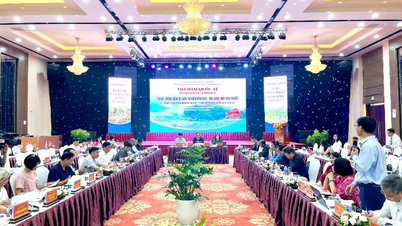
Tourism events in Ninh Binh receive attention from central and local leaders. Photo: Xuan Hao.
Amidst skepticism suggesting that the transition from "brown" to "green" tourism would face significant obstacles after the merger, Mr. Bui Van Manh, Director of the Ninh Binh Department of Tourism, affirmed, "This is not a difficulty but rather an expansion of space and a much greater advantage. Based on this understanding, Ninh Binh province has issued Resolution No. 07 on the development of cultural industries and tourism for the period 2026-2030, with a vision to 2045, affirming that tourism and cultural industries are two inseparable entities, developing to preserve and vice versa."

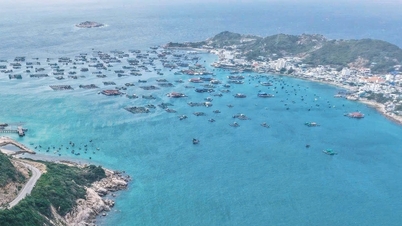
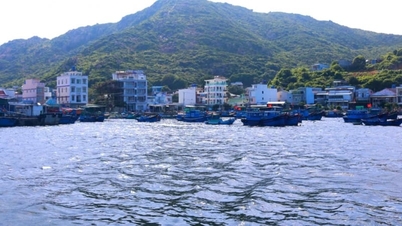
Ninh Binh's new spatial core is now strongly oriented towards the sea, with the Thinh Long beach resort area (a newly merged area) as its focal point. However, Ninh Binh's beach tourism development does not follow the beaten path of "concretization" or aggressive intervention, but relies entirely on nature, utilizing the existing mangrove ecosystem of Xuan Thuy National Park and the coastal alluvial plains of Nghia Hung and Giao Thuy to create unique and distinctive marine ecotourism products.
Agriculture adapts, industry transforms, and the "soft links" of traditional craft villages emerge.
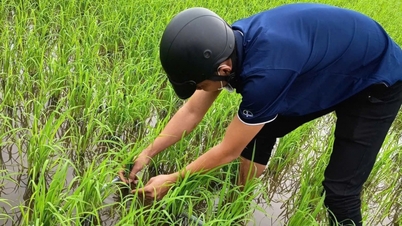
Within the workings of this central ecosystem, the actual "clash" between economic sectors has created very clear shifts in the thinking and actions of each entity. In the agricultural sector, the shift from "agricultural production" to "agricultural economy" has never been as profound as it is today. Fields are no longer just for harvesting rice; they are now an integral part of the landscape for tourism. Specialty products, from mountain goat meat and herbal tea to organic rice, are no longer sold raw or individually in rural markets but are supplied directly to high-end restaurants and hotels serving tourists.

Traditional industries in Ninh Binh, such as cement and mining, are facing the challenge of green transition. Photo: CTV.
The tourism ecosystem is playing a crucial role as a solid consumer base, providing farmers with high and stable incomes, encouraging them to persevere in farming, practicing clean agriculture, and protecting water resources. Conversely, traditional industries in Ninh Binh, such as cement and mining, are frankly facing pressure. As Ninh Binh province tightens regulations on green corridors and heritage buffer zones, businesses that do not proactively invest in circular technology to reduce dust and emissions will eliminate themselves from the game. In contrast, high-tech companies, automobile assembly plants, and electronics manufacturers are pioneering the "factory park" model, producing clean, low-emission products, and even opening their doors to tourists, aligning with the province's green development goals.

Tourism serves as a platform for "soft links" like Sinh Duoc to infuse cultural elements into their products. Photo: SD.
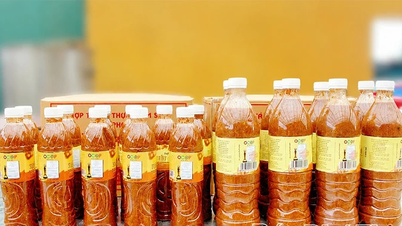
To gain a deeper understanding of how a rural economic entity operates within this ecosystem, let's look at the journey of Sinh Duoc Cooperative. As a local non-agricultural cooperative, Sinh Duoc views Ninh Binh's "brown" to "green" transformation as a golden opportunity for rural economy, traditional crafts, and culture to coexist. According to Sinh Duoc's representative, the cooperative is participating in this value chain in three very specific ways: elevating local agricultural products by developing herbal body care products; transforming production spaces into tourism destinations for experiencing traditional crafts; and maintaining green, controlled production processes to protect the environment. Tourism serves as a platform for "soft links" like Sinh Duoc to infuse cultural elements into products, create sustainable livelihoods for the people, and add depth and identity to the province's green ecosystem.
Creating a legal framework to realize the strategic multi-sectoral partnership.
Although the strategic direction has been clearly defined and sparks of brilliance have been kindled, frankly speaking, the linkage between tourism, agriculture, and industry in Ninh Binh currently still largely reflects the spontaneous development of individual businesses, like small streams yet to find a larger river. For these "soft links" such as agricultural cooperatives or traditional craft villages to take root and thrive within the green ecosystem of the heritage city, the ancient capital urgently needs a comprehensive legal framework, a unifying "red thread" to unlock the hidden resources. This is not about dry administrative orders, but about creating a sustainable symbiotic environment through four pillars of humanistic and practical policies.
First and foremost, it's about cherishing and standardizing these tangible spaces. The government needs to support and empower local craft villages and cooperatives to transform themselves into more professional communities through clearly defined guidelines. From a welcoming house for guests, a small path to a production workshop, to the smile of a farmer providing services, everything needs careful attention and systematic guidance. Even with the expansive open spaces of the newly incorporated sea, the upgrading of infrastructure, waste management, and improvement of rescue capabilities must be in harmony with nature, absolutely preserving the original green corridor and preventing the wave of "concretization" from damaging the shoreline.

The 'heritage co-management' mechanism will enhance the value and help communities confidently and proudly preserve their ancestral heritage. Photo: Xuan Hao.
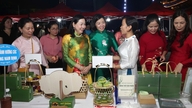
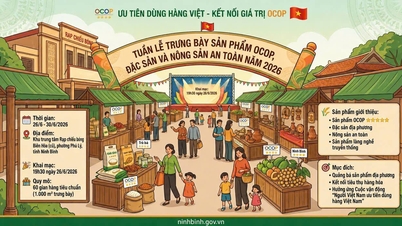
Furthermore, to ensure that tourism revenue truly stays and enriches the homeland, the management agency needs to act as a "matchmaker," forging lasting partnerships between travel corporations, luxury hotels, and the gardens and production facilities of farmers. When OCOP products and exquisite local herbal gifts are respectfully integrated into a closed supply chain, the "Co-management of Heritage" mechanism will be able to demonstrate its value, helping the community confidently and proudly preserve their ancestral heritage. For this underlying current to continue flowing, the province needs to remove the bottlenecks related to land and capital, and provide cooperatives with the technological "fishing rods" to confidently improve production, deep processing, and create the highest quality products.
Ultimately, in the digital age, a good product that doesn't speak for itself will remain confined within the village boundaries. Ninh Binh needs to help its farmers learn how to "tell the story of their homeland" through technological platforms, digitizing their identity to touch the hearts of global tourists. When all agricultural destinations, traditional crafts, and coastal tourism are seamlessly linked on a common heritage map, we will no longer witness fragmented and spontaneous developments.
The Finale…
Transforming tourism into a "central ecosystem" to lead the transformation of other economic sectors is a smart and bold solution to the economic and environmental challenges facing Ninh Binh after the merger. The government's commitment to creating the right mechanisms is key to turning short-term conflicts of interest into sustainable symbiotic relationships. Nature, millennia-old heritage, and the vast sea and islands of the ancient capital are never a burden on conservation; on the contrary, they are invaluable assets that generate lasting profits for a prosperous millennium heritage city, developing towards the green standards of the future.
Source: https://nongnghiepmoitruong.vn/du-lich--he-sinh-thai-trung-tam-giu-xanh-cho-ninh-binh-d814843.html






































![[Video] Sunset at Lap An Lagoon – Where the sun sets over the fishing nets](https://vphoto.vietnam.vn/thumb/1200x675/vietnam/resource/IMAGE/2026/05/31/1780192137701_beach-landscape-sea-water-nature-grass-745871-pxhere-com.jpeg)























Comment (0)