

"The two sides of the street are clearly separated by buildings and houses."
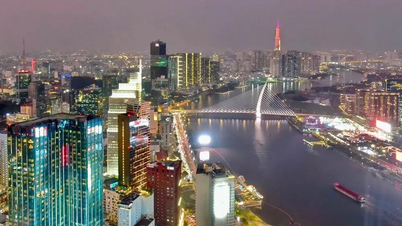
In the early 19th century, the scenery of Saigon - Gia Dinh was described in Trinh Hoai Duc's Gia Dinh Thanh Thong Chi (Chronicle of Gia Dinh City). In 1882, Truong Vinh Ky published Co Gia Dinh Phong Canh Vinh (Ancient Gia Dinh Landscape) and Kim Gia Dinh Phong Canh Vinh ( Modern Gia Dinh Landscape), giving later readers an overview of Saigon - Gia Dinh through poetry. For example, in Kim Gia Dinh Phong Canh Vinh, there is a line that reads , "There are gardens for raising animals and birds / Thousands of plants, hundreds of insects," referring to the Botanical Garden built in 1864, now the Saigon Zoo; and the modernity of the bustling metropolis of Saigon was evident from the late 19th century with "Streets and buildings stretching in rows / There are shops selling goods from the North and shops selling goods from the South."
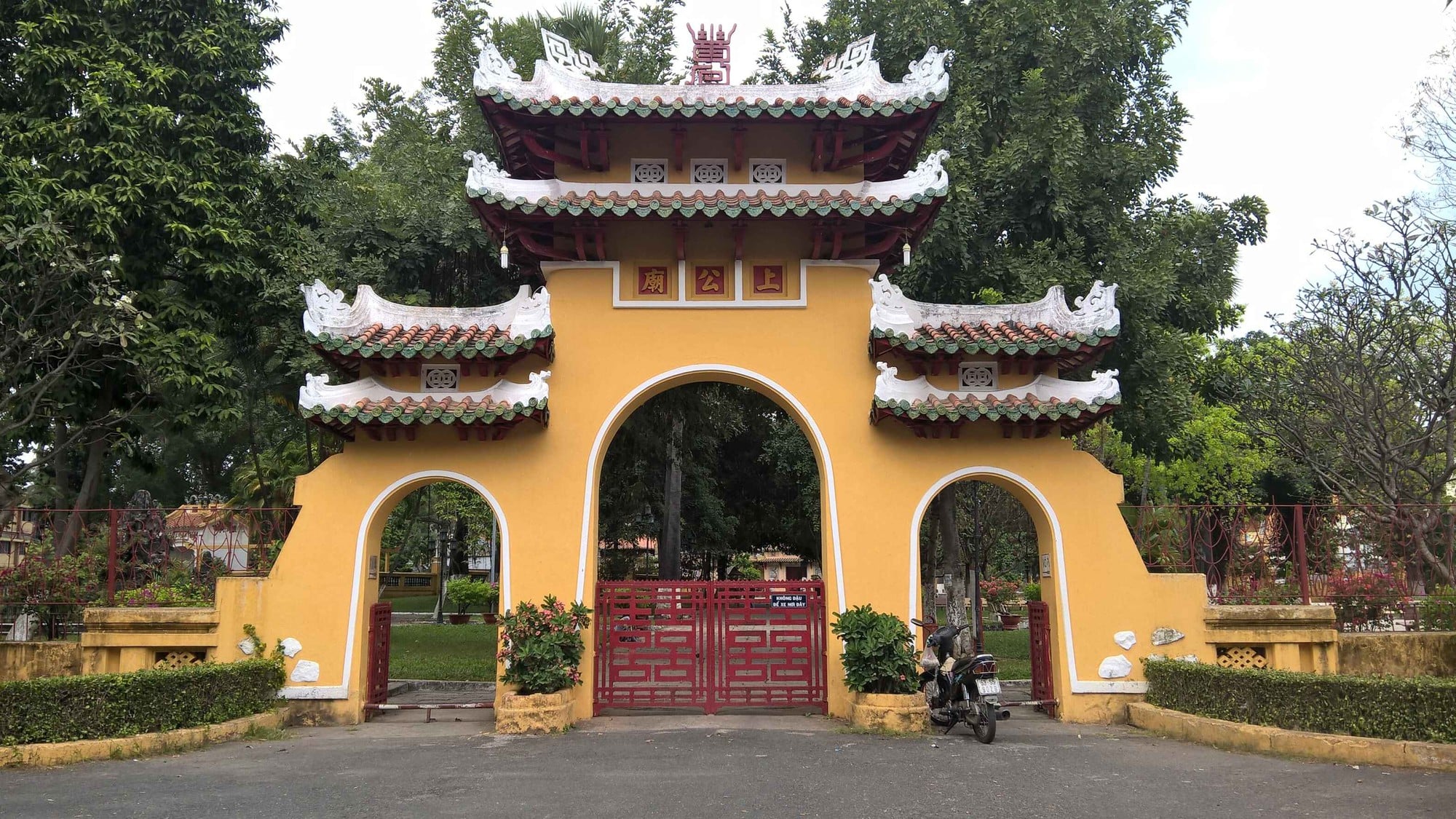
The triple gate of the Ông Mausoleum
PHOTO: TRAN DINH BA
At the beginning of the 20th century, Pham Quynh traveled by ship from Tonkin to Saigon in 1918, and recorded his visit to the "Pearl of the Far East" in his book *A Month in Southern Vietnam* . Having been familiar with the streets of Hanoi , the editor-in-chief of the Nam Phong magazine was not surprised or overwhelmed by Saigon, but was nonetheless impressed by a city with a Western character.
Catinat Street (now Dong Khoi Street) became a symbol of Saigon's development, compared by Pham Quynh to Paul Bert Street (now Trang Tien Street) in Hanoi. "Large shops, Western goods, Vietnamese goods (mostly from Northern Vietnam), and Indian goods (mostly from Bombay in India), with crowds of people jostling. In addition, there were several large hotels, cinemas, and Western theaters, so from five o'clock onwards, people came and went like a flowing river. The wealthy and upper class had to stroll along Catinat Street every evening. The young men and women of Saigon considered it the epitome of refined elegance." Earlier, Nguyen Lien Phong had also praised the prosperity of this street in his *Nam Ky Phong Tuc Nhan Vat Dien Ca* (1909): "Especially Catinat Street/On both sides, the buildings and houses are clearly defined/The steps are paved with clean, pristine stone/The shops selling elegant and fine goods are all…"
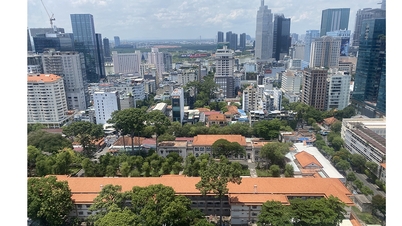
Many of Saigon's buildings were noted by the Pham family as beautiful: the Governor's Palace of Cochinchina, the Western Theater, the Western District Palace, the Saigon Cathedral (Notre Dame Cathedral), the Telegraph House (City Post Office ), the New Market (Ben Thanh Market)... The Western District Palace, for example, was praised for its "general style, similar to Western town halls, with a tall, multi-story square tower on top. The front faced directly onto the long and wide Charner Street, giving it a dignified appearance from afar, befitting a government office in a major metropolis like Saigon." Regarding Saigon's streets, he praised their meticulous planning, saying they were "as if drawn by hand, marked with a ruler, regular, straight, spacious, and well-maintained."
"Anyone... want mung bean sweet soup... or fish porridge...?"
The journey of the journalist from the North across the Bong Bridge to visit the Mausoleum of Ông, a sacred place in Southern Vietnam, was poetically described by Nguyễn Liên Phong: "The rise and fall of life have separated us / Lê Công's loyalty and bravery remain to this day / Now only the tomb and temple remain / The custom is to call it the mausoleum and shrine within the grounds." Upon visiting the mausoleum, Phạm Quỳnh noted, "The magnificent temple, the tall, lush trees, are enough to stir the nostalgic feelings of a traveler from afar... Now, having come to Gia Định to see the remains of the hero from that time, I am even more impressed by the unwavering spirit and the glorious reputation of a first-class meritorious official of our Southern country." Despite being a newcomer, with the keen insight of a journalist, Phạm Quỳnh quickly grasped information related to the people's beliefs about the Mausoleum of Ông. Specifically, the Mausoleum of Ông is considered a sacred place, attracting many visitors from all directions seeking fortune telling.
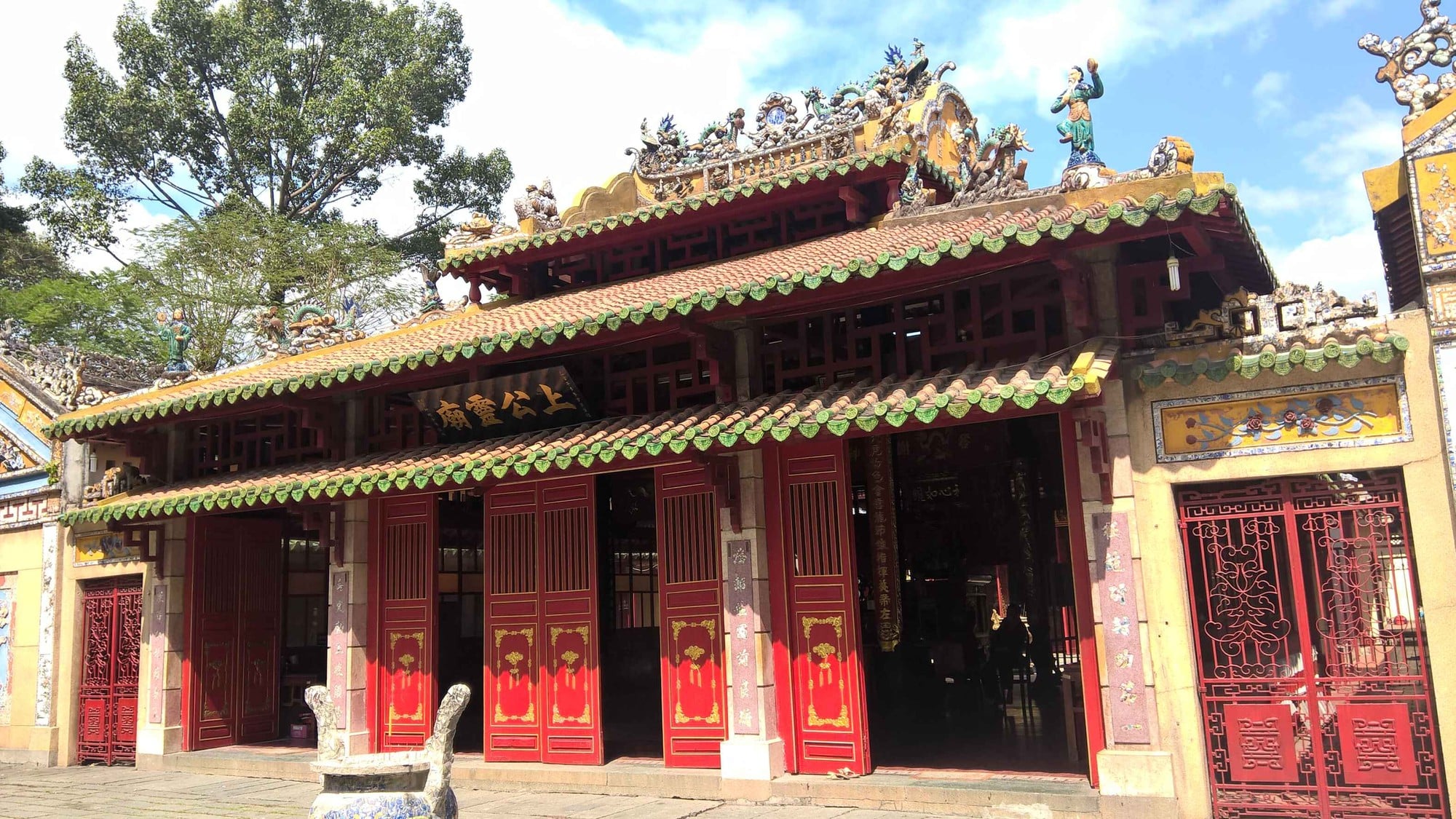
The Upper Shrine dedicated to Governor-General Lê Văn Duyệt
PHOTO: TRAN DINH BA
For Binh Nguyen Loc (1914 - 1987), the author of "The Ferry," Saigon was beloved for its historical sites, trees, and food, hence his travelogue "Wandering Footsteps ..." which recorded the tamarind trees, nighttime treats, temples, and shrines of this land. Those familiar tamarind trees were the old market tamarind trees, the tamarind trees on Gia Long (Ly Tu Trong) Street, and Tan Da Street, "the tamarind trees whose branches intertwined to provide shade, the tamarind trees that kept the pedestrians company at midday, the tamarind trees that curiously peeked into the windows of private homes."
Even the late-night snacks create a unique culinary identity, distinctly Saigon, that is difficult to recognize unless one truly appreciates and loves it. Simple dishes like mung bean sweet soup, fish porridge, and fish noodle soup are not just for satisfying hunger; they also leave a lasting impression. "The fish noodle soup from the street vendor is a 'unified' dish: broth, fish cake, onions, and pepper. All four combine to form a single entity with a distinct flavor, different from the individual taste of each component. These flavors complement each other; lacking one would be incomplete, and the others would readily attack the salivary glands of late-night diners."
Living here is so familiar, but when you're far away, you'll miss the night cries of the street vendors: "Panh pho, banh tiu, do cho quay!" with their slightly accented voices, "Peanut candy, Hue tea?", "Anyone... mung bean sweet soup... fish porridge...?". Wandering around, gathering, feeling, wandering, remembering. And when you write it down and read it, those who are from Saigon, or those who aren't from Saigon but have a connection with Saigon, will always feel a lingering nostalgia. (to be continued)
Source: https://thanhnien.vn/du-son-ngoan-thuy-pho-phuong-toa-doc-day-ngang-185260513224530756.htm

![[Image] Hanoi's urban life under the challenge of a "scorching hot" environment](https://vphoto.vietnam.vn/thumb/1200x675/vietnam/resource/IMAGE/2026/05/25/1779706979265_nang-nong-t5-2026-minh-duy-7-4636-jpg.webp)
![[Image] Close-up view of the interchange connecting the two expressways and Long Thanh Airport.](https://vphoto.vietnam.vn/thumb/1200x675/vietnam/resource/IMAGE/2026/05/25/1779703378210_ndo_br_z7863716673926-224453a31600126cce10622af6290afd-4549-jpg.webp)






































































Comment (0)