

The Nazca lines, found in the Nazca Desert in southern Peru, are one of Peru's most popular tourist attractions and have fascinated scientists since their discovery about a century ago.
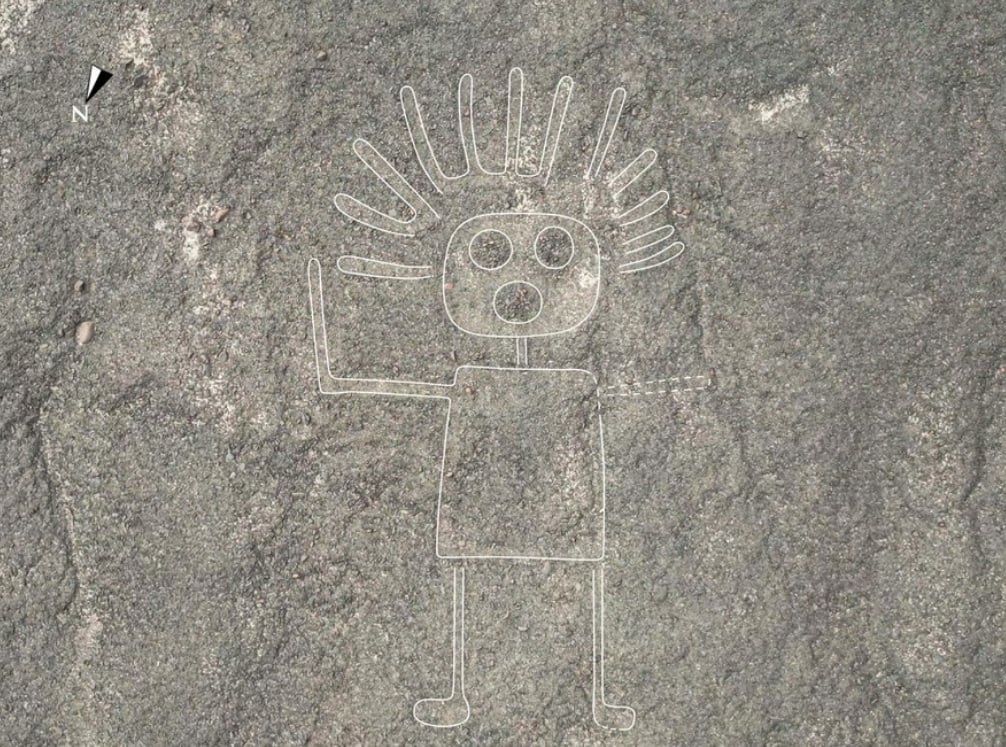
One of the Nazca lines has just been discovered using AI.
Viewed from above, the images consist of large lines, depicting various symbolic representations of plants, animals, imaginary creatures, and geometric shapes on the ground. These drawings remain shrouded in mystery, attracting the attention of archaeological researchers to this day.
AFP reported on September 24th that in a new study, archaeologist Sakai Masato from Yamagata University (Japan) said his team used artificial intelligence (AI) to map the distribution of Nazca lines faster and more accurately.
According to the study, AI helped the scientific team identify 303 new drawings on the Nazca plateau after six months of field surveys, while it took the world nearly a century to discover the 430 drawings carved there.
The latest research, published in the journal Proceedings of the National Academy of Sciences (PNAS) on September 23, highlights the potential for AI to be used to accelerate discoveries in archaeology, including at famous sites.
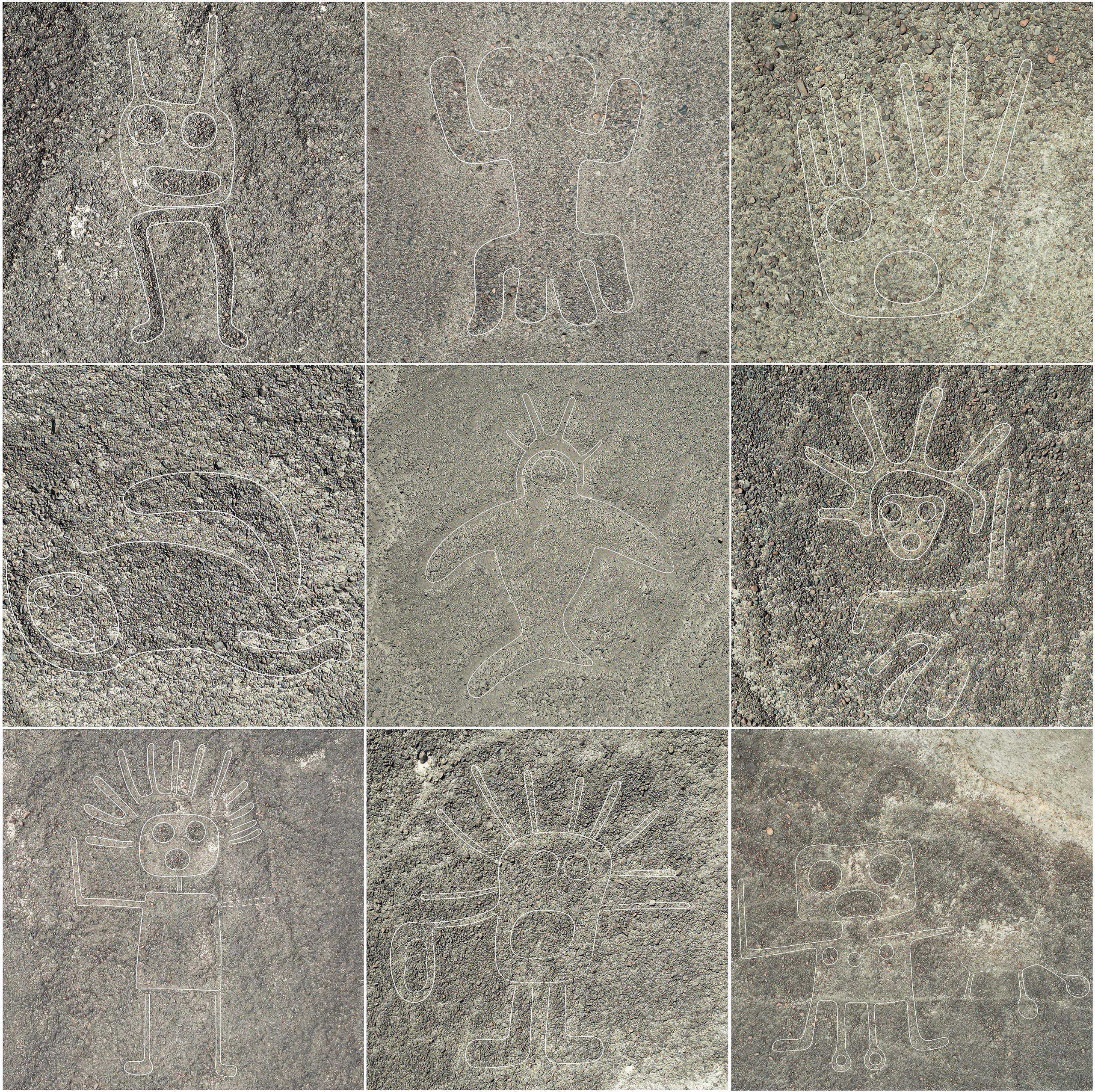
Some new images of the Nazca plateau were discovered using AI.
Mr. Sakai stated that traditional research methods, including visually identifying drawings from high-resolution images of the Nazca plateau, are often time-consuming and may miss some drawings. Meanwhile, AI models are particularly effective at detecting smaller drawings that are difficult to spot with the naked eye.
These drawings are believed to have been created by people from a pre-Inca civilization 2,000 years ago, who lived in the Nazca region of southern Peru from 200 BC to 700 AD. First discovered in 1927, they were recognized as a UNESCO World Heritage Site. What motivated these ancient people to create these drawings remains a mystery. Some scientists suggest they held astrological and religious significance.
Source: https://thanhnien.vn/dung-ai-phat-hien-hon-300-hinh-ve-bi-an-o-cao-nguyen-nazca-185240925204455135.htm


![[Photo] Prime Minister Pham Minh Chinh presides over a meeting on private sector economic development.](/_next/image?url=https%3A%2F%2Fvphoto.vietnam.vn%2Fthumb%2F1200x675%2Fvietnam%2Fresource%2FIMAGE%2F2025%2F12%2F20%2F1766237501876_thiet-ke-chua-co-ten-40-png.webp&w=3840&q=75)



















































































Comment (0)