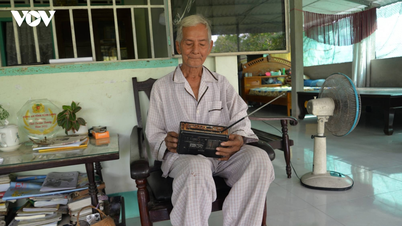
Late at night. Outside, the wind had begun to howl. In the small, one-story house nestled near the coast of Central Vietnam, the family's breadwinner still dared not close his eyes. His wife and children urged him to go to bed, but he kept scrolling through his phone, searching for a clear answer: would the storm really hit, what time, and should he wake the whole family up and evacuate immediately in the middle of the night? The news on the screen was a jumble of conflicting reports. One place said the storm had weakened. Another ran a headline about a dam breaking and an entire village being swept away. The more he read, the more confused he became, unsure where to place his trust at a time when he needed certainty most.

It is nights like these that show why the General Secretary and President 's article prioritizes the word "correct." For that man, on that night, the most precious thing was encapsulated in one word: correct. A news report with an incorrect storm timing, an inflated figure, could plunge an entire village into panic, causing people to flee in the wrong direction, or worse, lull people into believing they are safe in dangerous areas.
The General Secretary and President pointed out the greatest danger of the digital age: " Misinformation can spread far before the truth can be verified . " An old storm photo taken years ago, a spliced clip – just a few shares and it's already "breaking news" overnight. Meanwhile, a carefully verified news item, recorded at the correct time, at the correct level, and in the correct affected area, is worth more than a thousand rumors.


To get a "correct" news report like that, sometimes it all comes down to a very brief pause in the newsroom. That moment when the editor hesitates for about half a second before pressing the publish button, to make another phone call to the local area, to double-check with the meteorological agency. No one sees that half-second, but often it's the dividing line between life-saving information and a rumor that sends people to their deaths.

But simply knowing the "right" isn't enough. People in storm-affected areas need to know more than just the exact time of the storm. They need to understand why the storms are more frequent this year, how upstream reservoirs are regulating water levels, which low-lying areas are prone to flooding, and which roads are still passable if evacuation is necessary. That's the depth of understanding that a hurried social media post can hardly provide. To write about these things, some reporters have waded through knee-deep mud, their raincoats soaked, their phones clutched in plastic bags, just to send back a report that accurately reflects what's really happening, instead of sitting at home speculating.
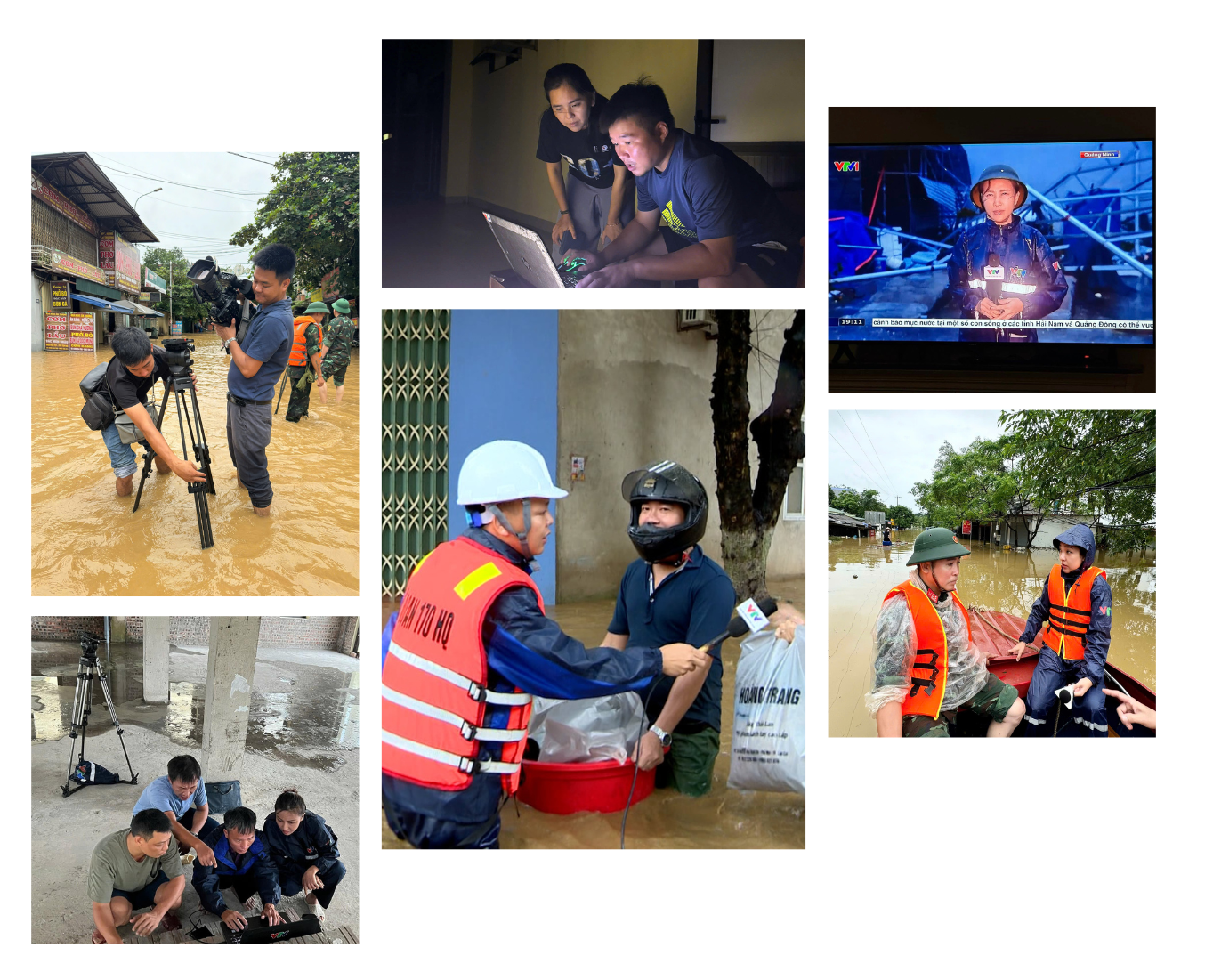
VTV reporters are always present at flood-affected areas to provide information to the public.
And finally, there's the word "useful." A useful storm report is one that helps people do something specific: reinforce their roofs before strong winds, evacuate the elderly and children in time, and avoid flooded roads. Being useful also means knowing when to stop. It means not turning the pain of those who have lost their homes and loved ones into tearjerker films to attract viewers. Decent journalism shines a light on storm-affected areas so that people can receive help and protection, not to satisfy the curiosity of crowds in dry areas.
Every rainy and stormy season, at VTV Times, there are people on night duty by the screen, silently monitoring the storm's path to promptly warn the public. For them, a timely news report, a warning delivered a few minutes early, is sometimes more valuable than any number of views. Because the ultimate measure of their work, on nights like these, turns out to be very simple: how many people were able to get home safely thanks to their news reports.



Returning to the man in the seaside house that night, what he needed, ultimately, was simply a reliable source of information to reassure him and help him decide: to stay or leave, now or wait. "More accurate, deeper, more useful"—it sounds grandiose, but it's actually that simple. It's about finding a reliable hand of information, offered at the right time and in the midst of a stormy night, so that he can grasp it and weather the tempest.
Vu Thanh Thuy - Editor-in-Chief of VTV Times
Source: https://vtv.vn/dung-hon-sau-hon-co-ich-hon-thuoc-do-cua-bao-chi-trong-thoi-dai-so-10026062114170422.htm


![[Photo] Prime Minister Le Minh Hung presides over the thematic session on promoting science and technology development and innovation.](https://vphoto.vietnam.vn/thumb/1200x675/vietnam/resource/IMAGE/2026/06/23/1782207872934_ndo_br_dsc-1724-jpg.webp)