

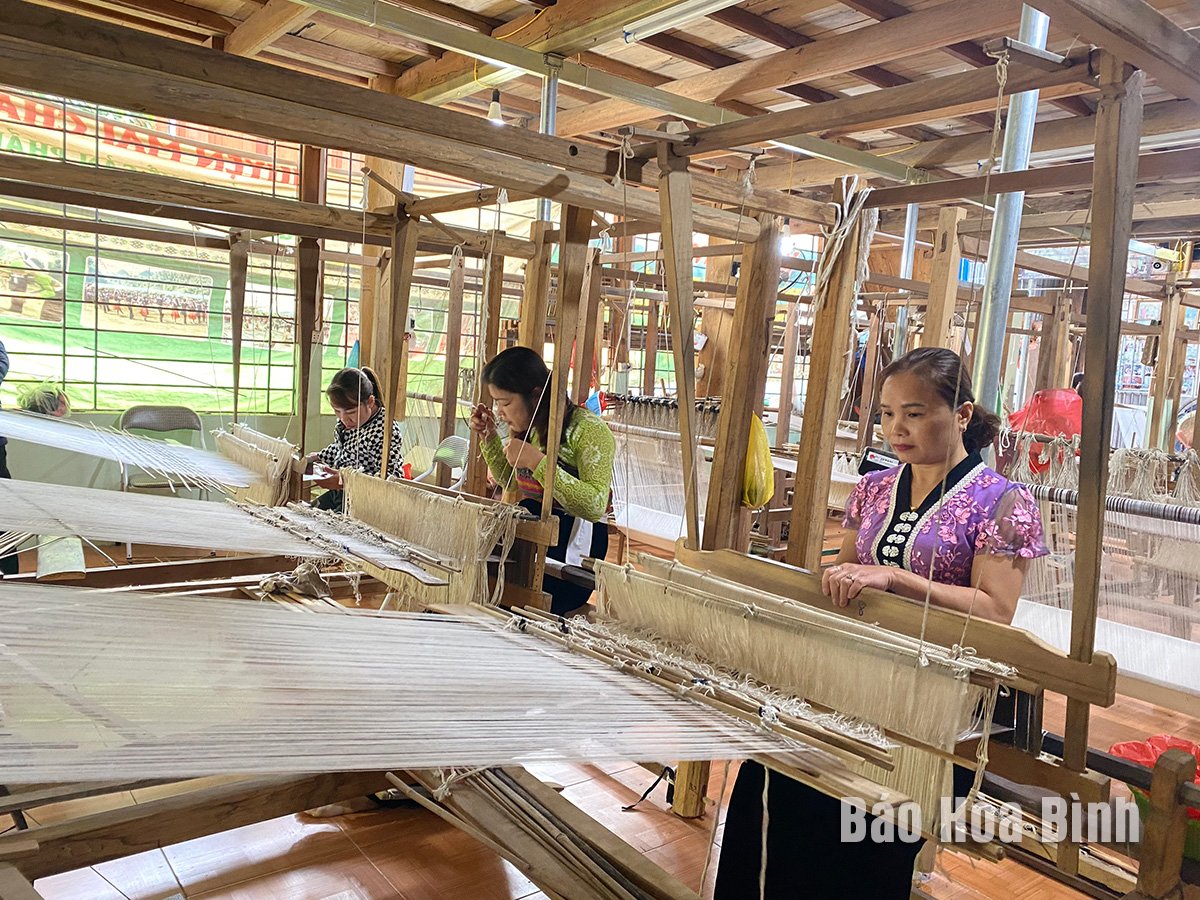
Chiềng Châu commune (Mai Châu district) is focusing on building green craft villages, aiming for sustainable development.
Investigations reveal that, before the concept of "green craft villages" emerged, many craft villages in Hoa Binh province suffered from pollution caused by smoke, dust, chemical odors, and waste from production activities in the workshops. In the driftwood craft village, sawdust covered the village roads; some brocade weaving facilities used to discharge dyed water directly into drainage ditches, causing the water color to change according to the fabric color. The living space of the people and the production space were not separated, causing environmental disruption and serious impacts. The conflict between economic development and air environmental protection had been a difficult problem to solve for many years in these traditional craft villages.
In recent years, changes have begun in rural areas in general and in craft villages in particular, starting with small things. In many places, people have stopped burning garbage indiscriminately. Stone carving workshops have started spraying materials with water before cutting to avoid creating dust, and waste is collected instead of being dumped into streams. Brick kilns that once emitted thick smoke into the environment have been upgraded, and many facilities have completely switched to producing unburnt bricks.
A change in awareness is at the core of environmental protection efforts. From 2020 to 2022, Hoa Binh province organized more than 180 conferences, training courses, and awareness campaigns on environmental protection; and more than 100 campaigns to collect pesticide packaging, attracting over 4,000 participants. Furthermore, environmental protection awareness campaigns have become an integral part of the community's spiritual and cultural life, clearly demonstrated through 4 theatrical exchange events, more than 30 launching ceremonies, painting competitions, and knowledge quizzes.
Instead of one-sided propaganda, the people are "empowered" to proactively act and strive to change production habits that harm the surrounding environment through movements such as "Self-governing residential areas for environmental protection," and nationwide solidarity in building a cultural life associated with green, clean, and beautiful criteria. These movements have helped people gradually change their lifestyles. Environmental self-governing groups have been established in many craft villages. Each hamlet has a regular cleaning schedule. Small-scale producers have begun investing in wastewater settling tanks, dust barriers, and personal protective equipment. This has put an end to the practice of discharging untreated production waste and emissions directly into the environment.
Ms. Vi Thi Oanh, Deputy Director of the Chieng Chau Brocade Weaving and Tourism Service Cooperative (Mai Chau), said: "In the Chieng Chau brocade weaving village, people also proactively plant flowers along the roadside and hang signs that read 'green, clean, and beautiful road' as a gentle reminder every day. We understand that if the workshop is clean, the products will sell; if the craft village is green, tourists will return, and those who directly work in the craft are the ones who breathe that same air every day."
Beyond isolated transformations, many craft villages in Hoa Binh have become model examples of developing production while simultaneously protecting and preserving the environment.
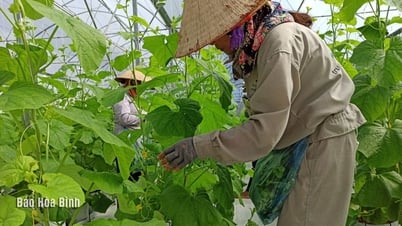
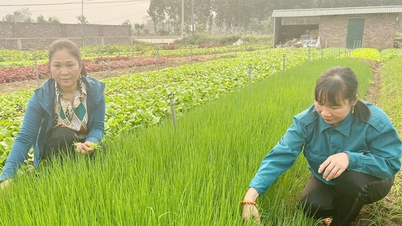
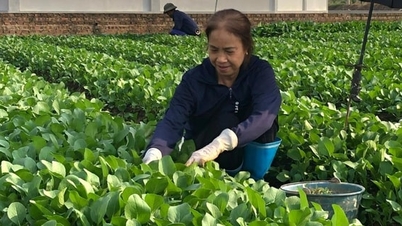
Tan My commune (Lac Son district) was once home to one of the five facilities listed as causing serious pollution. In an effort to eliminate pollution, residents have proactively changed their farming methods, adopting biogas digesters, separating solid waste, and planting trees around the factory area. The air in the villages is no longer affected by the pungent odor; rice fields that suffered crop failures due to wastewater have also been "revived." Each household, each small action, when combined, has created significant changes and noticeable improvements, restoring clean air to the people.
Air is a concept seemingly invisible to the naked eye. However, it is the most essential thing for human survival; present in every breath, every meal, every sleep. Therefore, protecting the air environment is also protecting the lives of the people, of every village and craft village. "Clean village roads, green craft villages" - this is not just a slogan. It is a journey of silent but persistent change, starting from the smallest things to create a significant difference. It is the people working in these crafts who can bring back clean, green air to their own lives.
Thao Uyen
Source: https://baohoabinh.com.vn/12/200171/Duong-lang-sach,-lang-nghe-xanh.htm

![[Photo] Prime Minister Pham Minh Chinh presides over meetings of the Government Standing Committee to discuss several important issues.](https://vphoto.vietnam.vn/thumb/1200x675/vietnam/resource/IMAGE/2026/03/16/1773674631996_ndo_br_img-5789-jpg.webp)














![[Photo] Prime Minister Pham Minh Chinh holds a phone call with Angolan President João Manuel Gonçalves Lourenço](https://vphoto.vietnam.vn/thumb/1200x675/vietnam/resource/IMAGE/2026/03/16/1773674632171_ndo_br_dsc-4772-jpg.webp)






















































Comment (0)