

With a preliminary total investment of over 67 billion USD and a route that is "as straight as possible," the Ministry of Transport has just issued a document responding to the issues that the State Appraisal Council requested clarification on in the pre-feasibility report of the North-South high-speed railway project.
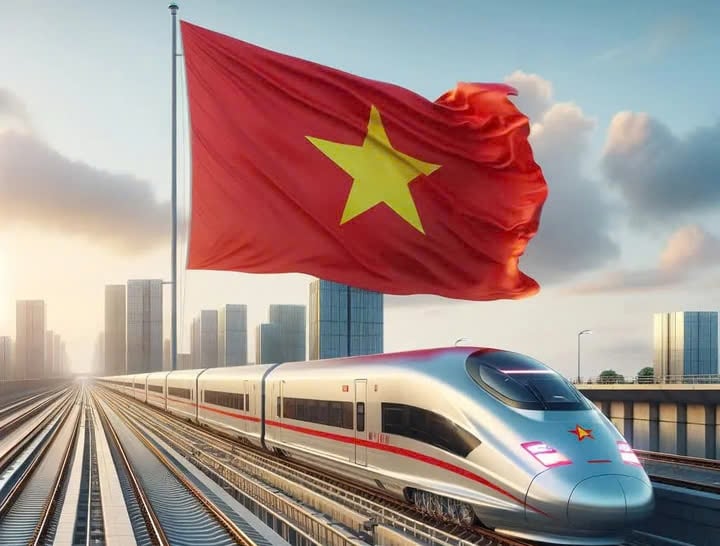
Preliminary estimates suggest the total investment for the North-South high-speed railway project is approximately US$67.34 billion. (Illustrative image: Al)
This includes points where the Ministry of Transport justifies its decision to maintain the chosen plan; other points where the Ministry incorporates the Council's feedback and promises to update details during the feasibility study phase.
The consultants preparing the pre-feasibility study report have preliminarily determined the total investment for the North-South high-speed railway project to be approximately US$67.34 billion (approximately VND 1,713 trillion).
Over the past few days, the Ministry of Transport and the State Appraisal Council have been urgently compiling and finalizing the contents of the pre-feasibility report and the verification report for the North-South high-speed railway project. It is expected that the pre-feasibility report will be submitted by the Government to the National Assembly at its 8th session, which will take place from tomorrow (October 21st) to November 30th.
Regarding the review of the high-speed railway route, the Ministry of Transport said that the route has been studied according to the principle of being "as straight as possible," and all curves have been audited to ensure safety and a smooth ride for passengers.
Furthermore, the route also meets five principles, including: conformity with national and local sectoral planning; shortest route length between stations; meeting technical requirements and ensuring a smooth ride for passengers; suitability to the terrain; avoidance of sensitive areas and historical sites; minimal land acquisition; and ensuring connectivity between the East-West corridor and railway lines connecting China, Laos, and Cambodia.
Responding to the proposal from Binh Thuan province, the Ministry of Transport agreed to relocate Muong Man station to a new location approximately 4km north of the old one (Phan Thiet station). Furthermore, in the feasibility study phase, the Ministry of Transport will consider potential station locations and assign the local authorities to lead the investment attraction process using the PPP (Public-Private Partnership) model.
Regarding the location of the cargo station in the Hanoi area, in response to the proposal from the Hanoi People's Committee, the Ministry of Transport will relocate the cargo station from Ngoc Hoi to Thuong Tin.
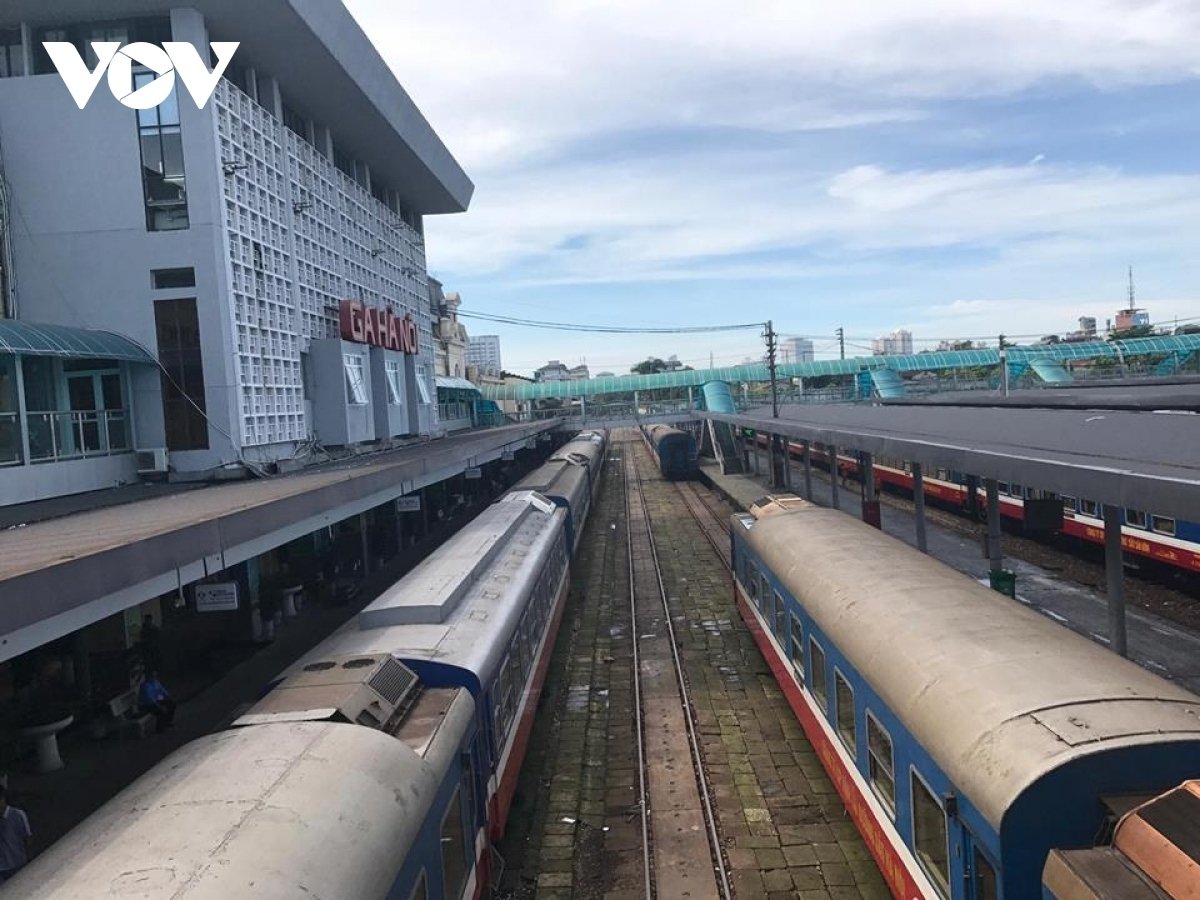
In the feasibility study phase, the Ministry of Transport will direct the consultant to continue coordinating with local authorities to review and adjust the route and station locations (if any), especially those with advantageous connections to major transport hubs and economic zones, including the section through Nam Dinh province.
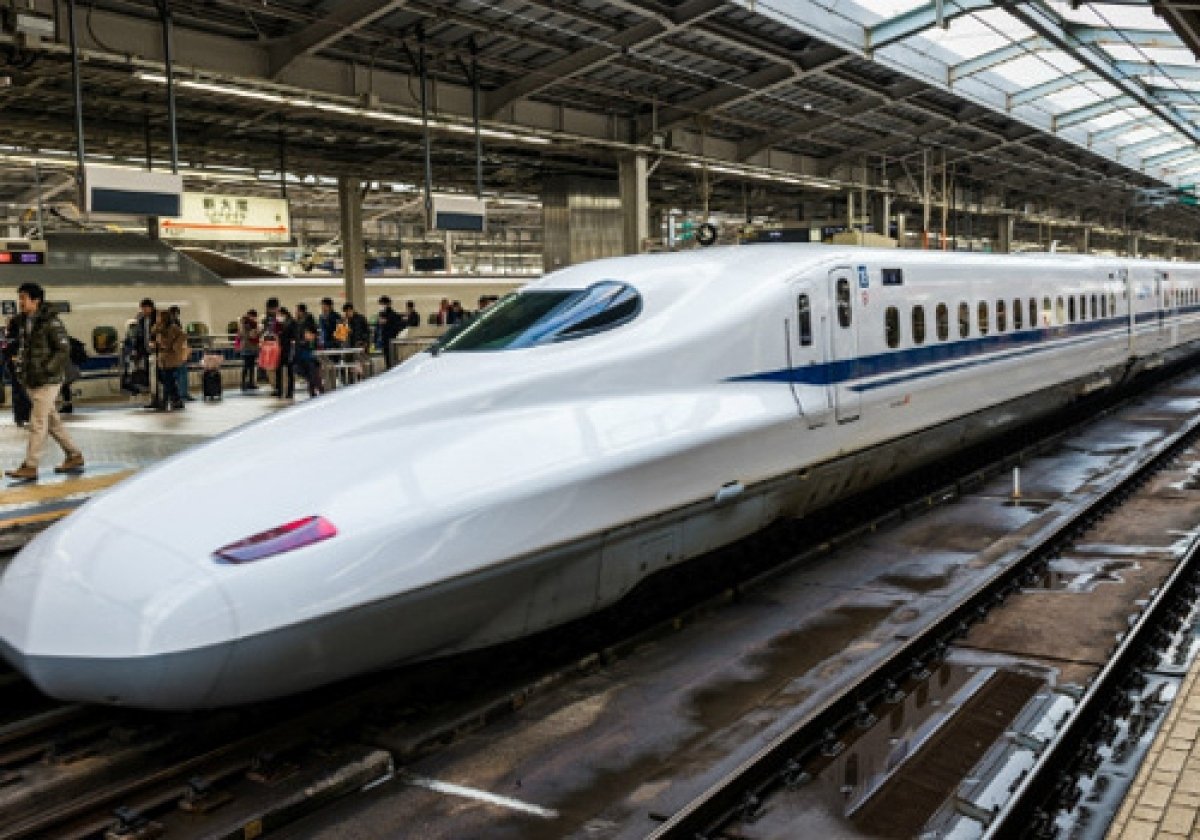
Passenger trains operate at 320 km/h, freight trains at 120 km/h.
According to the pre-feasibility report, the North-South high-speed railway line has a design speed of 350 km/h for passenger trains and 160 km/h for freight trains.
According to the Ministry of Transport, experience in countries with newly commissioned railways shows that the operating speed is approximately 90% of the design speed. Therefore, the ministry has determined that in the initial phase, the maximum operating speed for passenger trains will be 320 km/h, and for freight trains 120 km/h.
During the operation phase, the maximum operating speed will be summarized, evaluated, and tested. Regarding station locations, the Ministry of Transport said that the entire North-South high-speed railway line will have 23 passenger stations and 5 freight stations.
The consultation involved using curve radii and superelevation calculations according to European standards, thereby demonstrating that the route's technical requirements meet the conditions for safe operation. During operation, the increase in maximum operating speed will be summarized, evaluated, and tested.
Taking into account the opinions of the Appraisal Council, the Ministry of Transport will direct the consultant to continue making specific calculations to ensure safe operation and exploitation in the feasibility study phase.
Regarding the request for a thorough review of the total investment cost, the Ministry of Transport has directed the consultant to review and update the preliminary total investment cost of the project based on the principles of accuracy, completeness, and compliance with legal regulations.
The Ministry of Transport stated that since the project spans over 10 years, the preliminary total investment cost may fluctuate due to objective factors (natural disasters, epidemics, environmental incidents, etc.) or subjective factors (changes in planning, policies, price indices, slow land clearance implementation, insufficient allocated capital, etc.).
During the feasibility study phase following the detailed design phase, the Ministry of Transport will continue to review and calculate the total investment cost of the project to ensure accuracy, completeness, and suitability with the technology and scale of the project.
Regarding the arrangement of investment capital, the project consultant proposed using state budget funds in medium-term public investment periods. The investment period is 12 years, with an average of approximately 5.6 billion USD per year.
Identifying this project as requiring the highest priority in terms of funding allocation, the Ministry of Transport stated that in the event of a funding shortage, the Government will issue bonds or borrow ODA to compensate for the shortfall.
In addition, the profits generated from the exploitation of land in the vicinity of the high-speed railway station (TOD model) by local authorities will contribute 50% to the central budget to balance the state budget invested in the project (estimated at approximately 8.5 billion USD compared to land acquisition costs of approximately 6.5 billion USD).
An iconic landmark in the nation's era of progress.
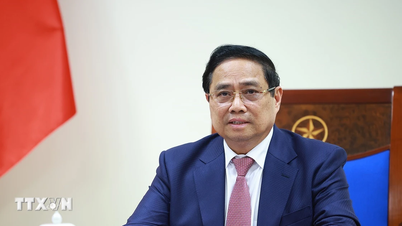
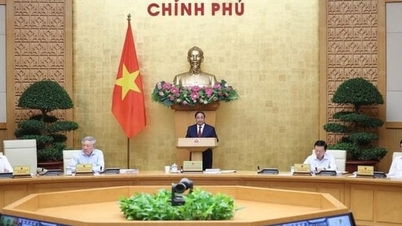
At the National Conference on the implementation of the Resolution of the 10th Plenum of the 13th Central Committee, organized by the Politburo and the Secretariat on October 20th, Prime Minister Pham Minh Chinh directly delivered a presentation on a topic that included the policy of investing in a high-speed railway on the North-South axis.
According to the Prime Minister, the policy of investing in the North-South high-speed railway is an objective requirement and a strategic choice for developing the country's infrastructure. It also creates new development opportunities, increases land value, facilitates convenient travel for citizens, and enhances the competitiveness of goods.
Prime Minister Pham Minh Chinh stated that in the past, we faced difficulties, with a GDP per capita of just over $1,000 and a GDP of over $100 billion, which prevented us from investing in the North-South high-speed railway.
Vietnam's GDP has now tripled or quadrupled, leaving ample room for investment in a North-South high-speed railway.
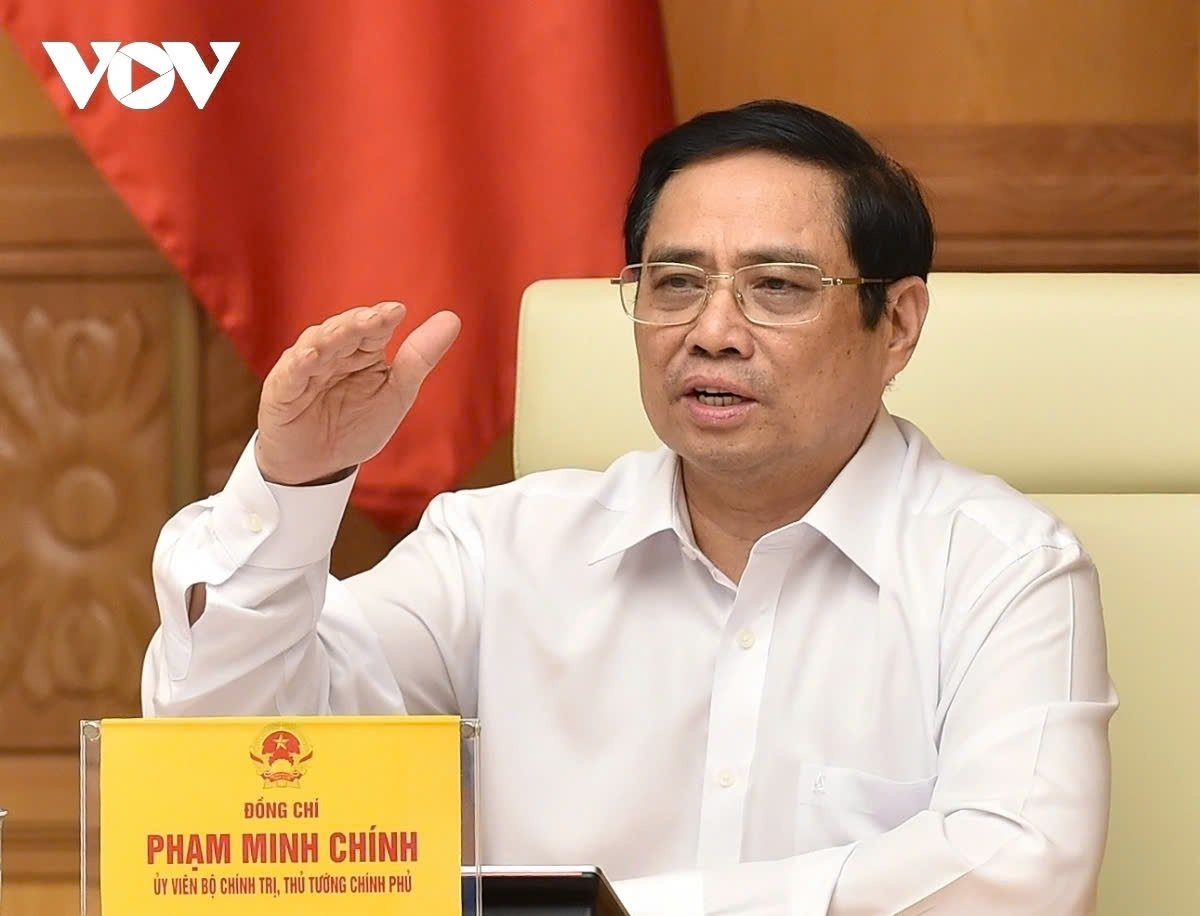
“Where do the resources come from? Resources include central government resources, local government resources, borrowed resources, bond issuance resources, and public-private partnership resources. There are many, diverse resources available, and we have the necessary conditions to do so,” the Prime Minister stated, emphasizing the need for determination to act.
Prime Minister Pham Minh Chinh cited the example of the rapidly developing world and China, which currently has 47,000km of high-speed railway, developing 3,000km of high-speed railway each year. He noted that the North-South high-speed railway project is planned to be completed within 10 years, with completion expected by 2035.
Prime Minister Pham Minh Chinh also pointed out that if things continue as they are, "frankly, it will take another 50 years," so there must be new approaches, reforms in governance and management, ways of mobilizing resources, especially in consulting and combating corruption, waste, and negative practices.
"We need innovative approaches to ensure success," he added, expressing his hope for support as this is one of the "iconic projects in the era of national development."
The Prime Minister informed that the focus is currently on constructing sections connecting with China, including the Lao Cai – Hanoi – Hai Phong section. He emphasized the view that "railways must be modern," and that they cannot be anything less than modern.
Regarding the socio-economic development strategy for 2026-2030, the Prime Minister stated that the Central Committee of the Communist Party of Vietnam basically agreed with the overall objectives.
The goal is to become a developed country with a modern industrial base, a high middle income, and among the top 30 economies in the world by GDP size by 2030.
Creating a solid foundation for our country to become a developed, high-income, wealthy, prosperous, civilized, and happy nation by 2045…
The socio-economic development strategy for 2026-2030 also sets out key targets, including an average GDP growth rate of 7.5-8.5% per year and a per capita GDP of 7,400-7,600 USD by 2030…
vov.vn
Source: https://vov.vn/xa-hoi/duong-sat-toc-do-cao-bac-nam-phai-la-cong-trinh-bieu-tuong-o-ky-nguyen-vuon-minh-cua-dat-nuoc-post1129689.vov
![[Photo] General Secretary and President To Lam visits and delivers a policy speech at Tsinghua University.](https://vphoto.vietnam.vn/thumb/1200x675/vietnam/resource/IMAGE/2026/04/14/1776164592318_vna-potal-tong-bi-thu-chu-tich-nuoc-tham-va-phat-bieu-chinh-sach-tai-dai-hoc-thanh-hoa-trung-quoc-8700658-5437-jpg.webp)



























































Comment (0)