

Famous in its time
When mentioning Lu Cam village, many older people will immediately think of durable pottery with its distinctive orange-pink color, such as water jars, yin-yang roof tiles, earthenware pots, clay pots, incense burners, and stoves... These products are common and familiar in Vietnamese households. Their reputation spread far and wide, and Lu Cam pottery became popular and found in many places. The bustling scene of trade on the docks and boats was once depicted in an old folk song: "The pottery boats have arrived at Thanh Bridge/Why aren't they going to the market instead of sitting here?"
 |
| These are the remaining sections of walls made from broken pipes. |
Besides transportation along the Cai River, the dirt road leading into the village is also bustling with rudimentary carts carrying pottery for distribution everywhere. Along the village road, one easily spots kilns burning day and night, with newly fired pottery batches stacked high, waiting to be shipped out. The village road is dusty, littered with clay fragments, but it carries the joy of the craftspeople. This bustling trade route and traditional craft village have brought prosperity and abundance to many households in the village.
 |
| Lu Cam Temple. |
In my childhood memories, every year on the 23rd day of the 12th lunar month, the day the Kitchen Gods ascend to heaven, every household would replace their old stoves with new ones. My grandmother would take us grandchildren to the production site to personally select the perfect clay stoves to replace the old ones in our house. She meticulously chose the stoves drying in the yard, using her experience to check if the stove door fit, the liner had small holes, and the three legs were evenly spaced. The pottery products from Lu Cam village weren't overly elaborate or ornate, but they were popular for their durability and variety of sizes. Sometimes, we mischievously stole leftover pieces of clay that the workers discarded to bring home and play with, using our tiny hands to mold them into funny animal shapes. Near Tet (Lunar New Year), our uncles and aunts would also entrust us with the task of cleaning the various sizes of earthenware jars to use as flower vases on the guest table, windowsill, or near the steps leading into the house. The bamboo pipe is present in people's lives due to its versatility and very low cost.
Remnants of the past remain.
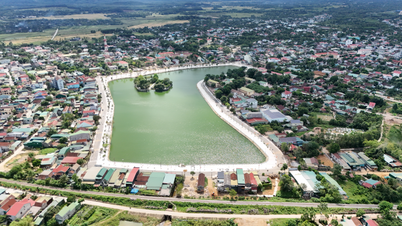
Over time, the Lu Cam pottery village has entered a period of decline. The scenes of yesteryear now only remain in memories, perhaps only vividly remembered by many children who are now middle-aged. The road leading into the village is now built with sturdy concrete, the road widened to serve the people's travel, but the bustling crowds buying and selling pottery from years past are gone. The pottery kilns are also deserted, with few craftsmen and few households still clinging to the craft. Along the Ngoc Hiep Huong Highway, from the Luong Dinh Cua intersection to the end of Ben Ca road, no one can recognize the once famous craft village anymore, as high-rise buildings and shops have sprung up everywhere.
 |
| The earthenware jars, teapots, cups, pots... of Lu Cam village from a bygone era. |
 |
| The earthenware jars, teapots, cups, pots... of Lu Cam village from a bygone era. |
Perhaps the remnants of the past still remain in the majestic Lu Cam village communal house or the tranquil Vinh Hoi communal house, silently enduring the unpredictable flow of time. Occasionally, only the villagers take the time to carefully examine the bare foundation of the old kiln or the walls built from earthenware pipes, covered in moss and dust from the passage of time. Strolling along the street corner, touching those familiar walls, a sudden feeling of nostalgia and regret for a village renowned far and wide arises within.
Walking along the road leading into the village today, how many people still remember the scene of the past, when every nook and cranny of the countryside was imprinted with the colors of pottery spread out amidst the golden sunlight and green fields?
LE DUC BAO
Source: https://baokhanhhoa.vn/van-hoa/nhung-goc-pho-nhung-con-duong/202605/duong-ve-lang-gom-nam-xua-8c7028f/
![[Photo] General Secretary and President To Lam presides over a working session with the Central Policy and Strategy Committee on the development of the materials industry.](https://vphoto.vietnam.vn/thumb/1200x675/vietnam/resource/IMAGE/2026/05/21/1779359935432_a3-bnd-3129-1412-jpg.webp)



![[Photo] National Assembly Chairman Tran Thanh Man working with the Standing Committee of the Law and Justice Committee](https://vphoto.vietnam.vn/thumb/1200x675/vietnam/resource/IMAGE/2026/05/21/1779378929214_ndo_br_1-4610-jpg.webp)










































































Comment (0)