

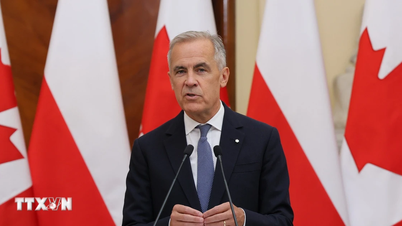
For the first time, the EPC organized a summit in the Caucasus region and invited Canada, a non-European country, to participate. The summit took place against the backdrop of the ongoing Ukraine conflict, while Armenia and Azerbaijan had reconciled and both had distanced themselves from Russia, leaning heavily toward the West.
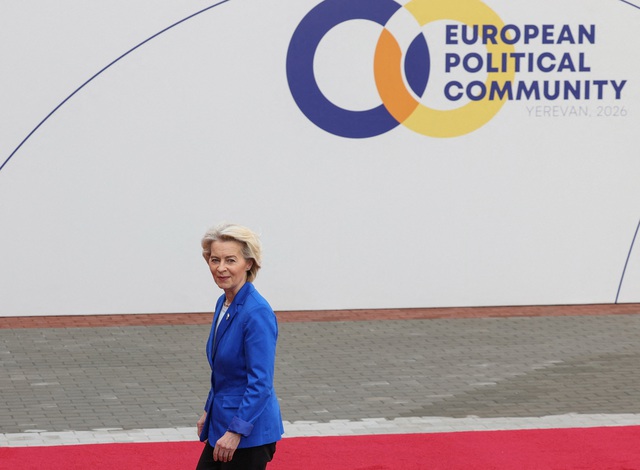
European Council President Ursula von der Leyen attended the EPC summit on May 4 in Armenia.
Photo: Reuters
US President Donald Trump has posed significant political , security, economic, and trade challenges for European nations, virtually leaving the EU and NATO to handle matters such as supporting Ukraine and confronting Russia on their own. Trump also imposed protectionist tariffs on the EU and partially withdrew US troops from Germany, Italy, and Spain. Furthermore, the Iran conflict and the US-China trade war have severely impacted global supply chains for energy, rare earth elements, and precious metals.
In this situation, Europe was forced to become more self-reliant than before to overcome its difficulties. At this EPC summit, the agenda was dominated by this need for self-rescue. The event did not yield any concrete results, but the political messages it conveyed were very significant for the continent.
First and foremost, the message is that Europe is determined to overcome difficulties, maintain internal unity, unify its views, and coordinate its actions to overcome challenges, especially in matters involving Russia, the US, China, and support for Ukraine.
Next came the message that the Caucasus region was the focus of the new policy priorities, pushing back against Russian influence and countering the influence of the US and China. Then came the message about strengthening self-reliance in ensuring security, energy supply, and raw materials. These messages gave meaning to what seemed like a major event, a mere formality.
Source: https://thanhnien.vn/eu-tim-cach-thoat-kho-185260505202527441.htm

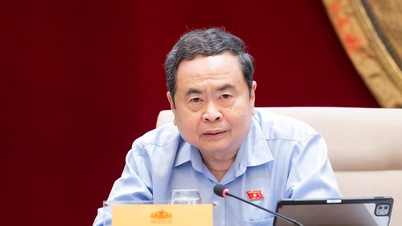
![[Photo] National Assembly Chairman Tran Thanh Man working with the Standing Committee of the Law and Justice Committee](https://vphoto.vietnam.vn/thumb/1200x675/vietnam/resource/IMAGE/2026/05/21/1779378929214_ndo_br_1-4610-jpg.webp)
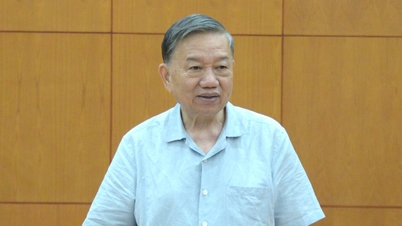
![[Photo] General Secretary and President To Lam presides over a working session with the Central Policy and Strategy Committee on the development of the materials industry.](https://vphoto.vietnam.vn/thumb/1200x675/vietnam/resource/IMAGE/2026/05/21/1779359935432_a3-bnd-3129-1412-jpg.webp)















































Comment (0)