After a long sea voyage on the hospital ship Khanh Hoa-01, the first place we visited upon arriving on Truong Sa Island was the town's
medical center. It has 30 beds and a full range of functional rooms, including: outpatient clinic, internal medicine clinic, emergency room, surgery room, midwifery room, X-ray room, and laboratory. To serve officers, soldiers, and fishermen, in addition to the functional rooms found in mainland hospitals, the center also has a decompression room to regulate pressure, which is essential for treating the specific illnesses of divers and fishermen.
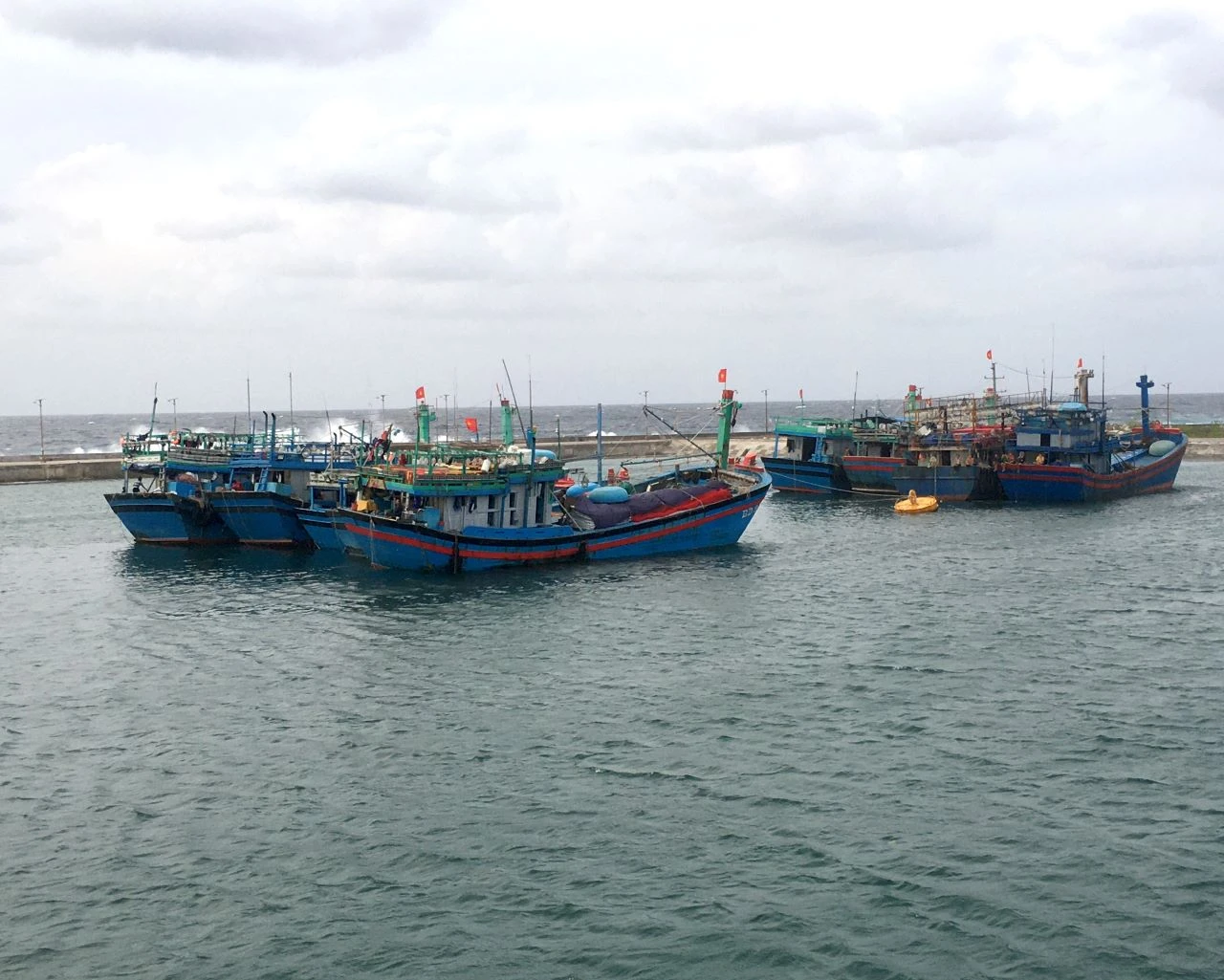
Ship shelters from storms on Truong Sa Island.
Each year, the center provides medical examinations and medication to approximately 2,000 people, more than half of whom are fishermen. Since its establishment in 2018, the center has examined over 10,000 officers, soldiers, and fishermen; admitted and provided emergency care to thousands of cases; and performed surgery and transported hundreds of patients to the mainland for treatment, ensuring patient safety.
Doctors assigned to the islands, despite the lack of adequate facilities and technology compared to the mainland, are strengthened and resilient by their dedication to their work, professional ethics, and the discipline honed by the military. They are a solid support for fishermen and their comrades.
Military doctor Bui Cong Hung
Dr. Bui Cong Hung, a military doctor who has worked on the islands of the Truong Sa archipelago for many years, said that understanding the anxiety and fear of patients working in fishing grounds, doctors must not only provide prompt and timely emergency care but also encourage and comfort them. This helps them calm down and feel secure during treatment. He shared that although the doctors working on the islands face more challenging conditions in terms of facilities and technology compared to the mainland, their dedication, professional ethics, and military discipline have strengthened them, making them more resilient and capable. They are a solid support for fishermen and their comrades.
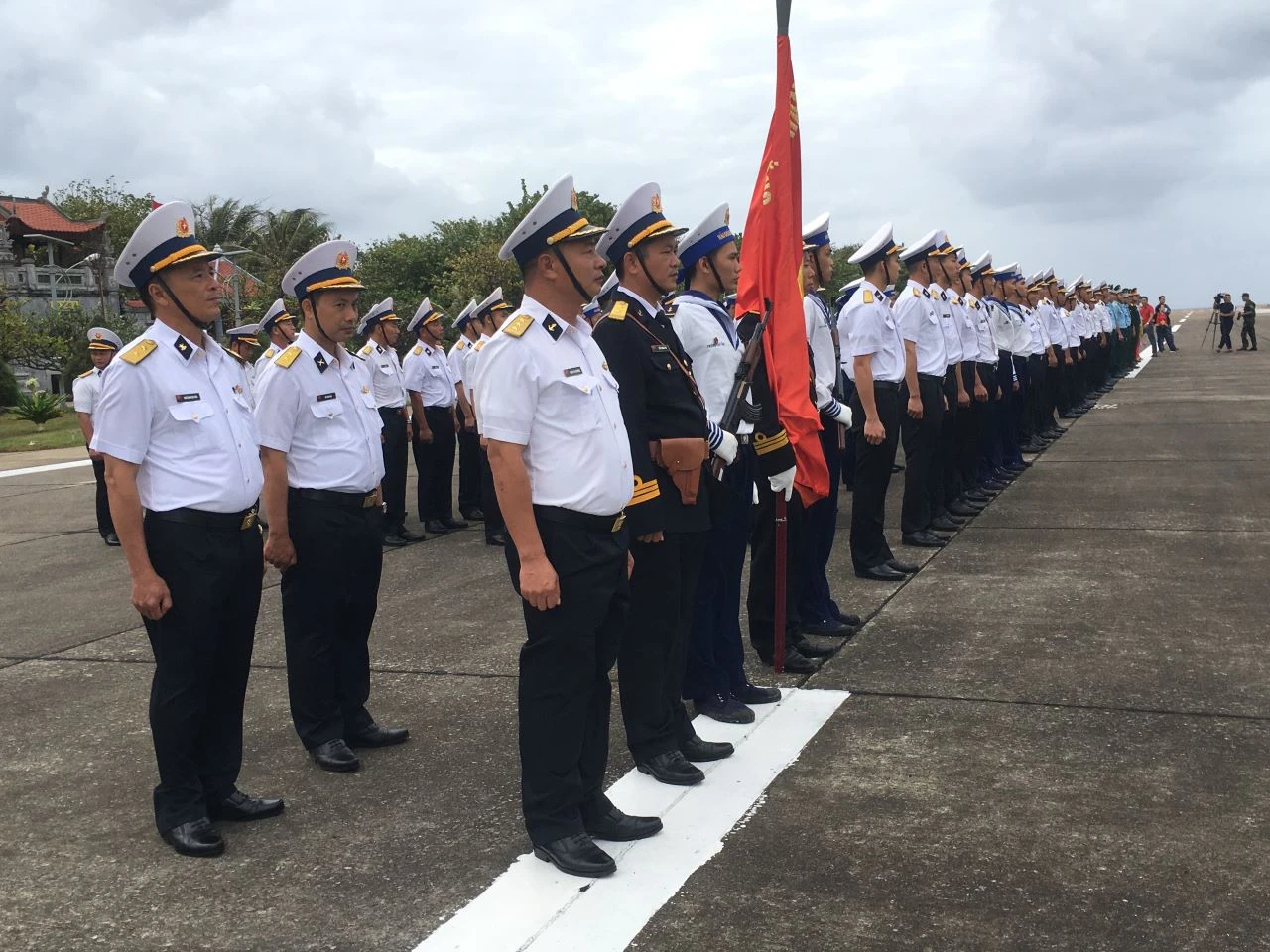
The weekly flag-raising ceremony.
Along the concrete road leading to the island's command headquarters, bathed in sunlight filtering through the leaves of the Terminalia catappa trees, Lieutenant Colonel Pham The Nhuong shared that, in addition to providing medical care and ensuring the safety of fishermen venturing out to sea, the soldiers in Truong Sa must also be trained to effectively guide fishing boats into shelters, assist fishermen with maritime skills, teach them how to self-treat illnesses when traveling alone at sea, and provide survival skills in case of accidents or emergencies. Together with the specialized medical force, the soldiers on the island regularly assist fishermen in unexpected situations, focusing on rescuing and protecting them in all circumstances. Officers and soldiers on the islands, as well as when performing duties at sea, regularly coordinate closely with troops and people on other islands of the Truong Sa archipelago, naval vessels, fisheries patrol boats, and fishing boats to effectively carry out maritime patrols, disseminate information on legal fishing practices, and engage in fishing activities while firmly protecting
the sovereignty of the nation's maritime territories.
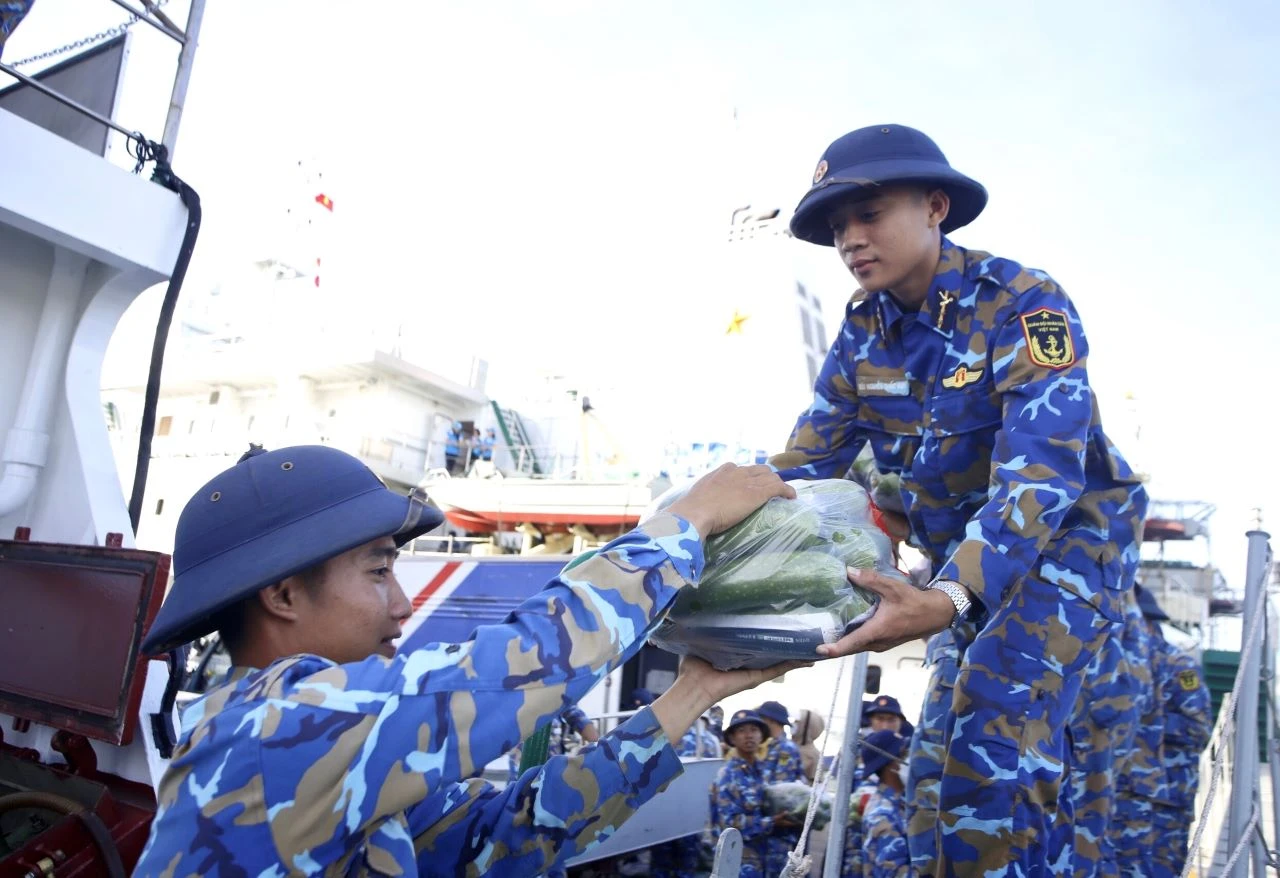
Receiving gifts sent from the mainland to the island.
Currently, many fishing village harbors have been established on the islands of the Truong Sa archipelago. Some harbors can accommodate hundreds of boats and ships. This has created favorable conditions for fishermen's vessels to take shelter during rough seas, high waves, and strong winds. Truong Sa Island now has a modern harbor with a large capacity, fairly complete logistical services, and a 24-hour on-call team. Mr. Pham Thi An, a fisherman from Binh Dinh province whose boat is being repaired at the Truong Sa harbor, said that whenever there is a weather incident, all fishing boats entering the harbor are assisted and inspected by staff from the Technical Logistics Center. They are carefully secured, fenders are prepared, fishing boats are moored appropriately, accommodation and meals are arranged, and plans are in place to evacuate fishermen to the island if necessary. After the weather stabilizes, doctors and nurses examine and assess the health of the fishermen, providing fresh water, fuel, and food so that they can continue their fishing trips. Not only on Truong Sa Island, but also on Da Dong, Da Tay, An Bang, Song Tu Tay, Sinh Ton islands, etc., safe harbors have been built to shelter hundreds of fishing boats annually whenever they lack fuel, fresh water, encounter problems, or experience bad weather at sea.
 |
|
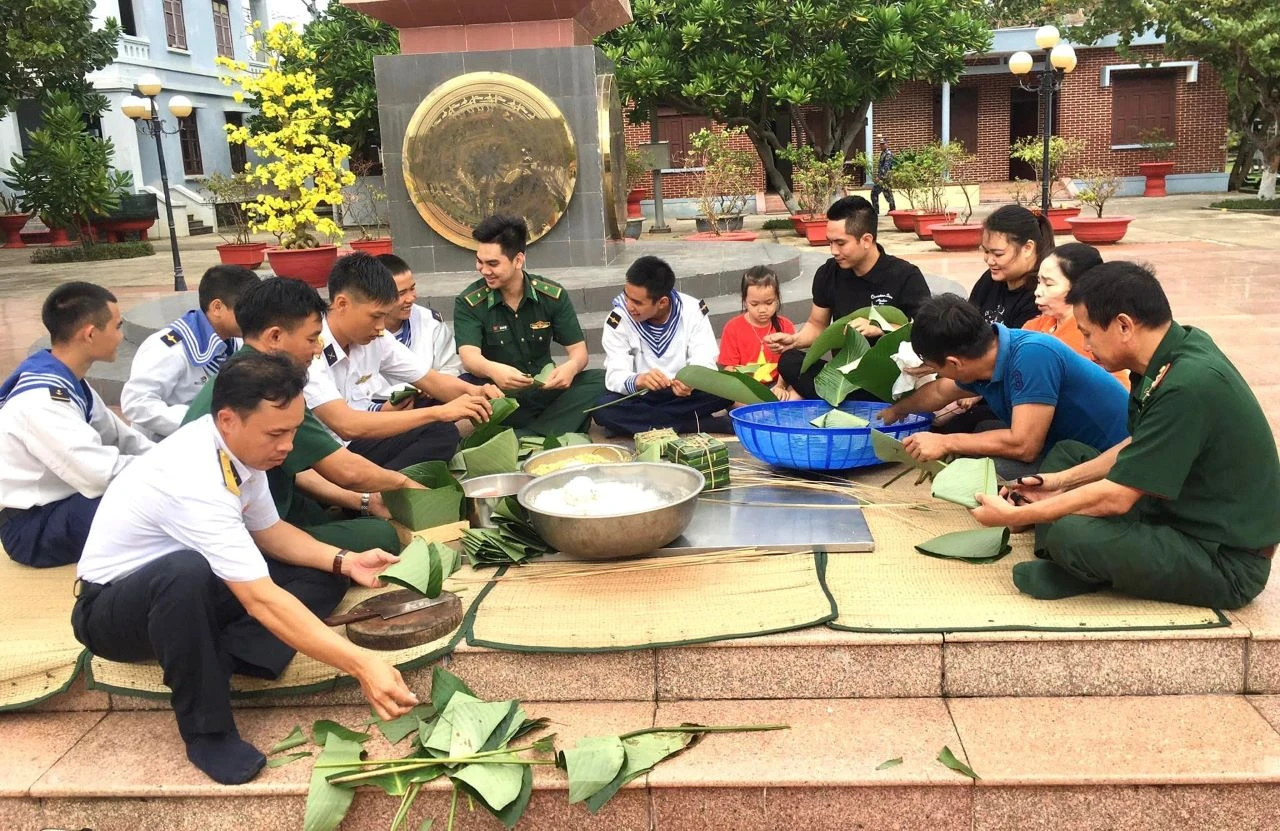
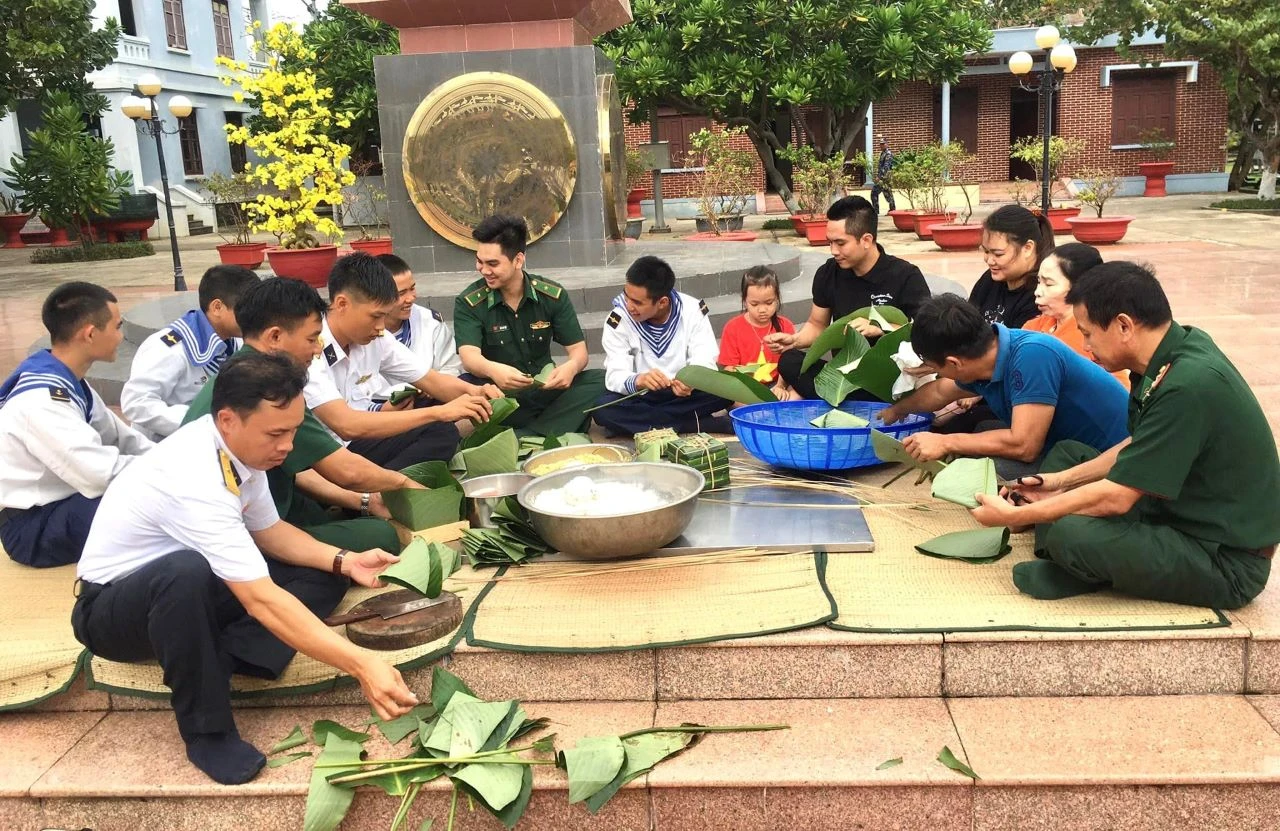
Soldiers and civilians on Truong Sa Island wrap banh chung (traditional Vietnamese rice cakes) to celebrate Tet (Lunar New Year).
Arriving in Truong Sa during the Lunar New Year season, we felt the bustling and warm atmosphere of spring preparations among the officers and soldiers on duty on the island, just like in our own villages. A commanding officer shared that he had spent many years celebrating Tet in Truong Sa and on ships. On the islands, every Tet, the soldiers and civilians gather together to make banh chung (traditional Vietnamese rice cakes), light incense, and prepare offerings for the altars dedicated to the Fatherland and their ancestors. The most joyful part is preparing the offerings and making banh chung. Now, sitting and making banh chung with the soldiers, we suddenly remembered the significance of the sacks of banana leaves, sticky rice, fat pigs, kumquat trees, and apricot blossom branches that filled the railings on our journey to the island.
With more boat trips from the mainland to the island, the ingredients for making the rice cakes are more readily available, and the taste is now much closer to the traditional Tet rice cakes, no longer having the pungent smell of the salty sea air and the fragrant aroma of the square-leaved Terminalia catappa tree as before.
Officer Doan Trieu Nhon, originally from Son Hoa district (
Phu Yen province), who had just arrived on the island to replace troops, was also among the officers and soldiers working in logistics. He said this was his third time serving in Truong Sa. In previous years, there weren't as many ships visiting the island as there are now, so the ingredients for making banh chung (traditional Vietnamese rice cakes) were very scarce. To overcome this, the soldiers in Truong Sa had to wrap banh chung in square banyan leaves because there weren't enough dong leaves.
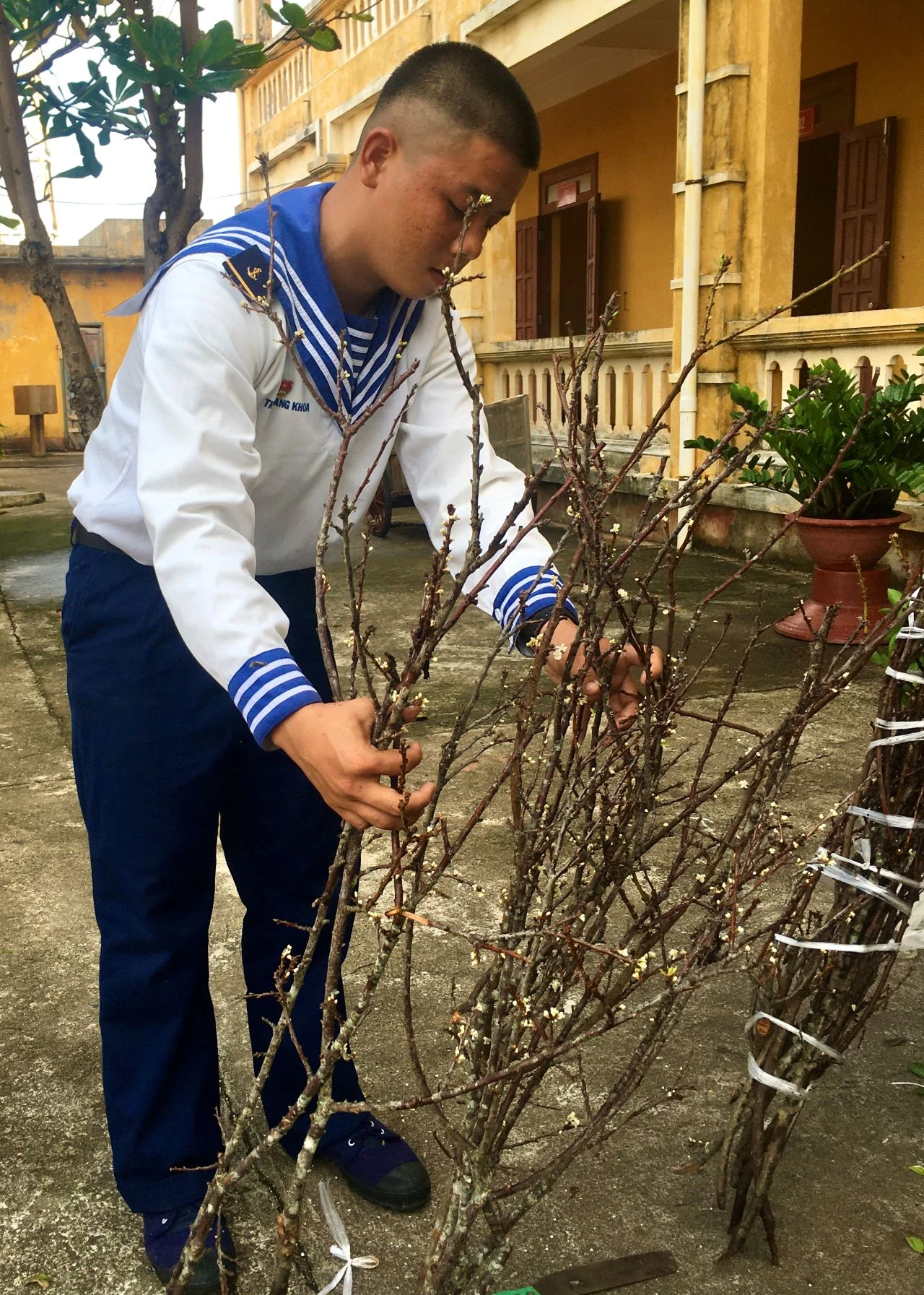
Received branches of peach blossoms sent from the mainland for Tet (Lunar New Year).
Things are different now. With more ships from the mainland visiting the island, the ingredients for making the rice cakes are more readily available, and the taste is much closer to the traditional Tet rice cakes, no longer having the pungent smell of the sea and the fragrant aroma of the square-leaved Terminalia catappa tree as before. On the island, after witnessing and participating in the solemn parade and flag-raising ceremony, we enjoyed a warm and cozy New Year's Eve dinner with the officers and soldiers on the island.
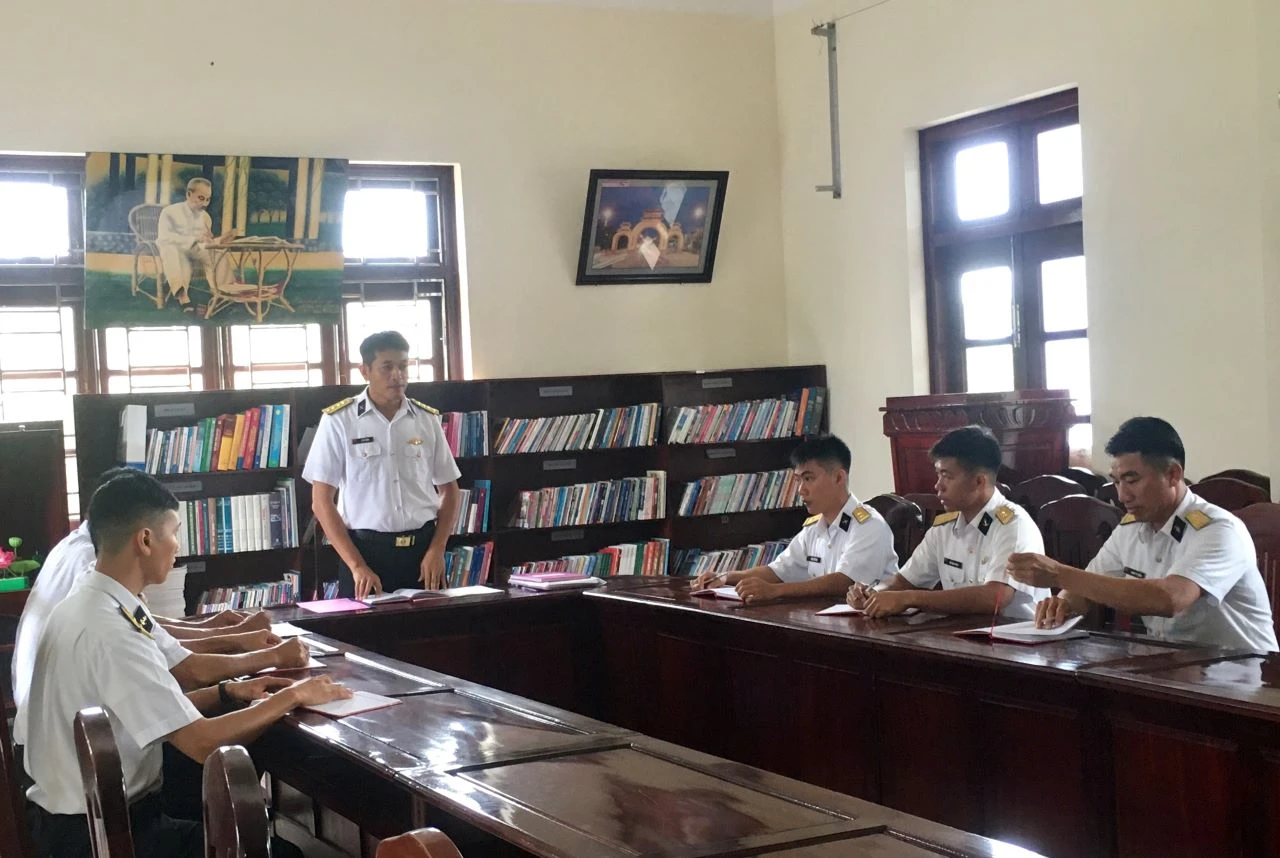
A party meeting of the Party Branch of Combat Cluster No. 2.
In the afternoon, after training on the parade ground, the volleyball courts, football fields,
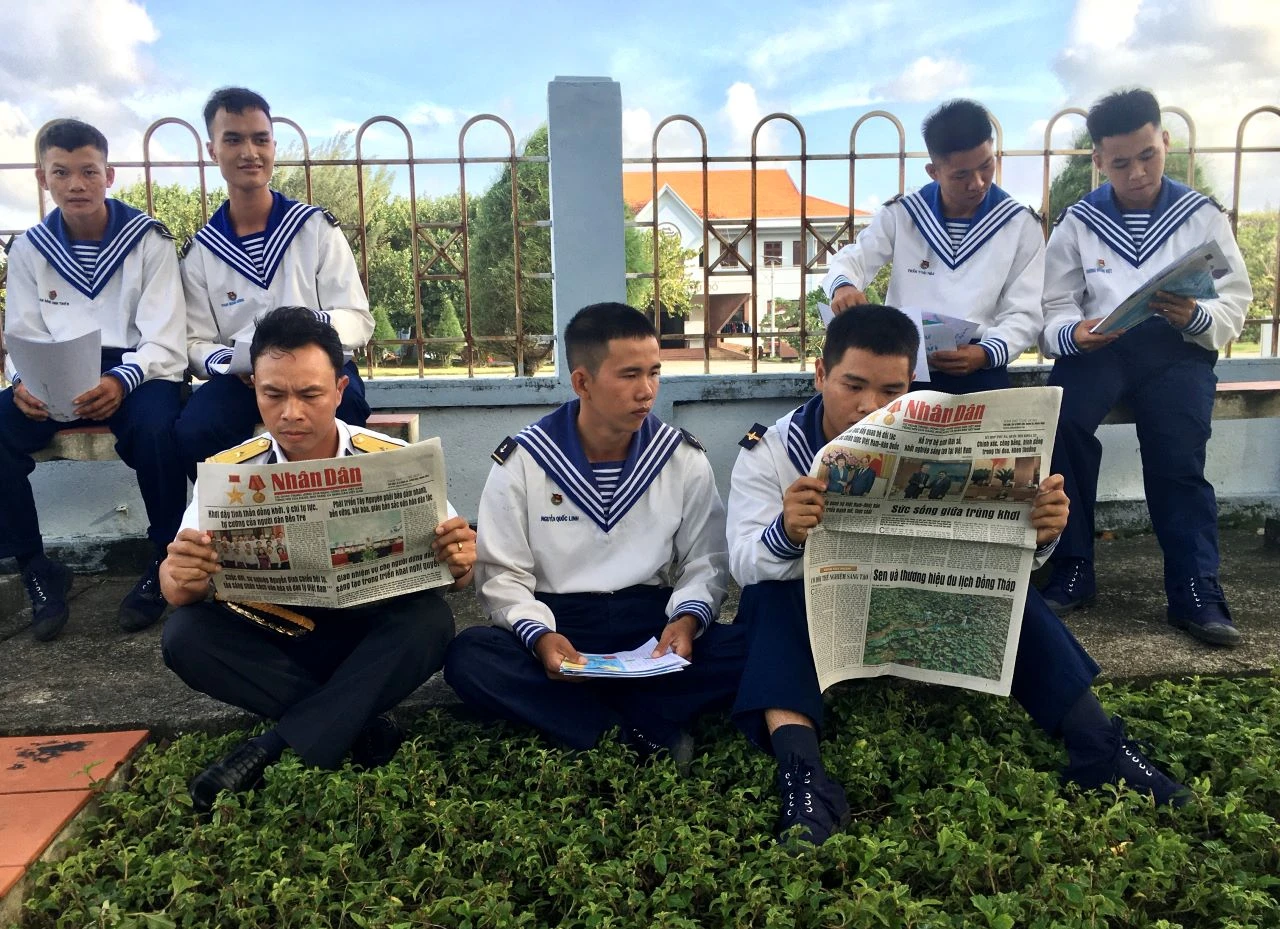
sports training grounds, and multi-functional fitness rooms are filled with the laughter of young soldiers. In the evening, the library with over 1,000 books and newspapers attracts a large number of officers and soldiers. They read aloud to each other the articles that have traveled across the sea to the island; though they arrived late, for the soldiers on the island, these are all the information sent from the mainland and the rear, helping them to focus on their work.
Newspaper reading time for soldiers in Truong Sa.
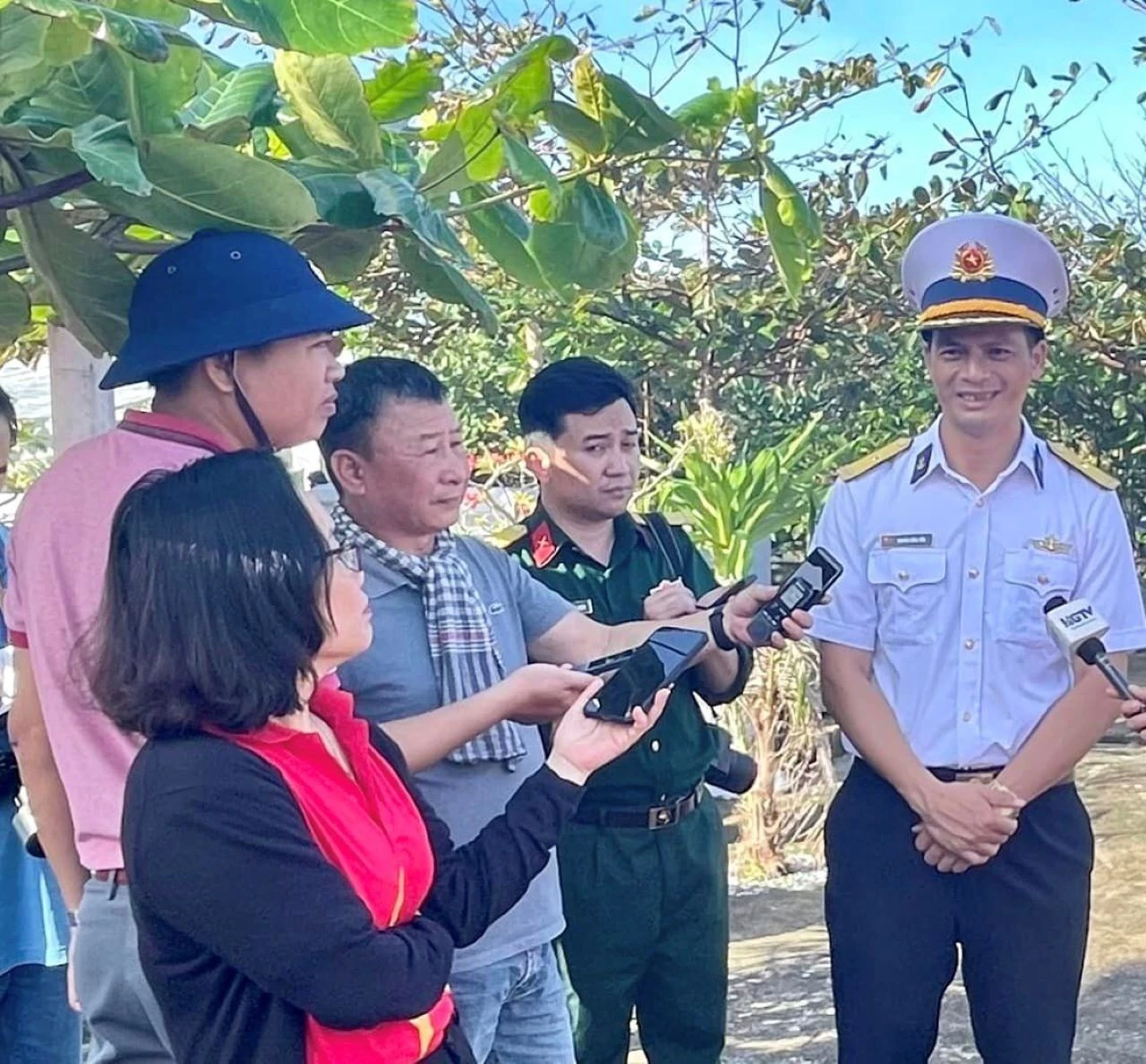
Each member of the reporting team had a specific task when they went to the islands. The important thing was that time was limited, so they had to be quick, organize their work efficiently, and adhere to general regulations. As reporters specializing in
agriculture , we often paid close attention to what animals were raised and what crops were grown for the soldiers to supplement their food on the islands. One feeling that always stayed with us was that, upon arriving at the islands of the Truong Sa archipelago, the vast expanse of green foliage covered every corner of the island.
Journalists working on the Trường Sa (Spratly) Islands.
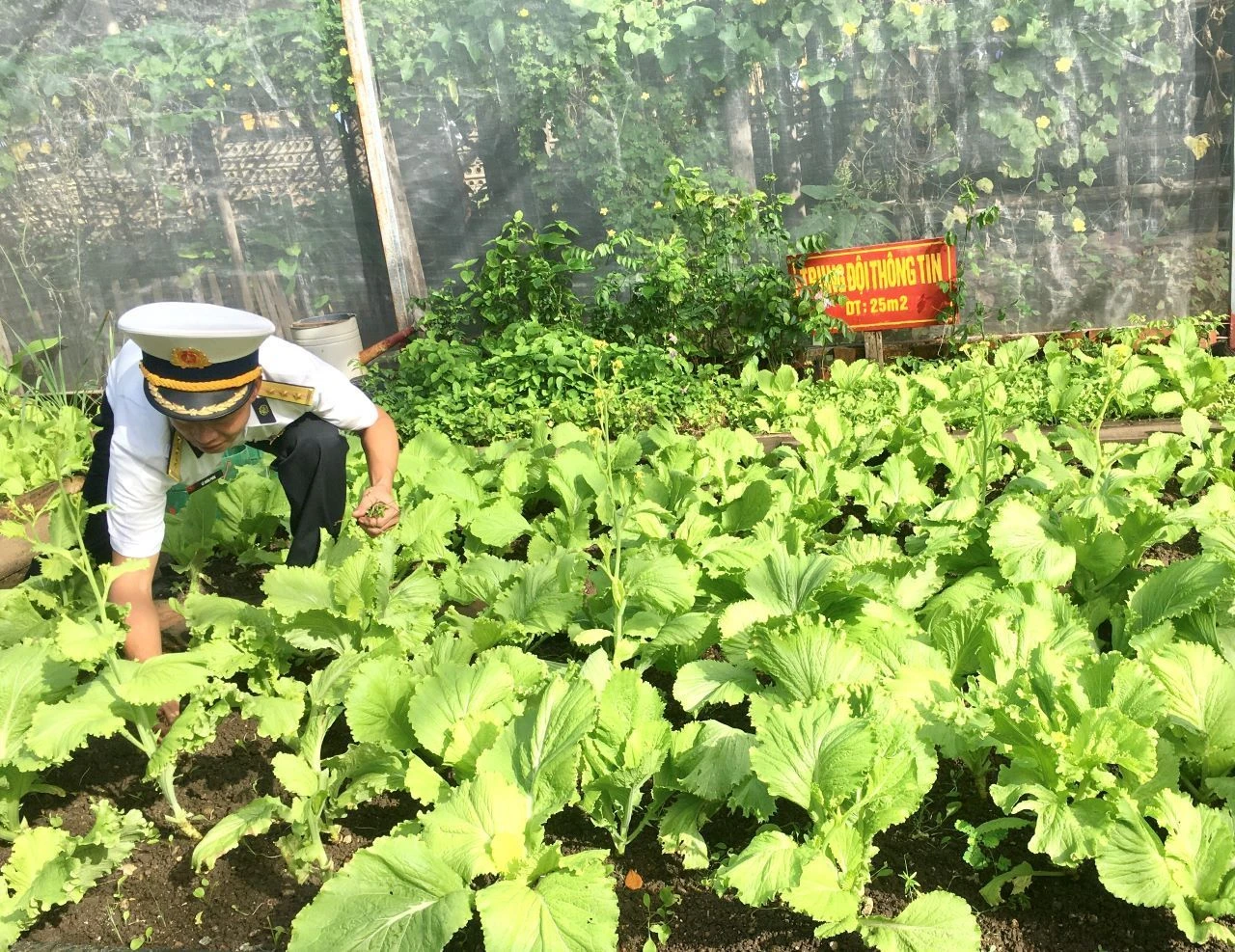
Previously, green vegetables were a "specialty" of the islands due to their scarcity and difficulty in cultivation. But now, most islands grow a variety of fresh vegetables, significantly improving the meals for the soldiers and civilians on the islands. The islands all have freshwater reservoirs, supplied by ships or from rain. Beside the mangrove trees, the sea almond, and the Terminalia catappa are colorful flowering plants and lush green vegetable patches cultivated by the military units and civilians. Each season brings its own vegetables. When we arrived, the mainland was experiencing a severe cold spell, yet Truong Sa was enjoying scorching sunshine. In the gardens, trellises of gourds, pumpkins, and squash were laden with fruit; rows of amaranth, sweet potato leaves, water spinach, and jute mallow thrived thanks to the diligent care of the officers, soldiers, and civilians living there.
Soldiers in Truong Sa are tending to a vegetable garden.
Many families live on Truong Sa Island. Before moving to the island, these families were all farmers from Khanh Hoa province. Visiting the family of Mr. and Mrs. Nguyen Minh Vinh and Ms. Va Thi Song, originally from Ninh Hoa district, we learned that their family has four members. Their eldest child is now attending junior high school on the mainland, while their youngest daughter is in the third grade at Truong Sa Primary School. As one of the families who settled on Truong Sa Island, they brought their family's traditional farming and livestock raising skills with them, which has improved their
economic situation. Mr. Vinh shared that farming on the island is always very difficult due to sea winds, intense heat, and limited fresh water. Growing vegetables requires a good growing medium and a greenhouse with a tight roof to protect against wind, sand, and sea salt. Livestock farming is also very difficult due to a lack of feed, so only easy-to-care-for animals like chickens, ducks, dogs, and pigs can be raised successfully. His family now has lush vegetable gardens that thrive year-round, and a large flock of poultry that provides enough food not only for the family but also contributes to the communal meals of the soldiers on the island.
Farming on the island is always very difficult due to sea winds, intense heat, and limited fresh water. Growing vegetables requires a good growing medium and a greenhouse with a tightly sealed roof to protect against wind, sand, and sea salt. Livestock farming is also very challenging due to a lack of feed, so only easy-to-care-for animals like chickens, ducks, dogs, and pigs can be raised successfully," said Nguyen Minh Vinh, currently living on Truong Sa Island.
Along with Vinh's family and Song's family, other households on Truong Sa Island are now also becoming skilled farmers, actively contributing abundant green vegetables and food to the meals of the soldiers and civilians on the island.
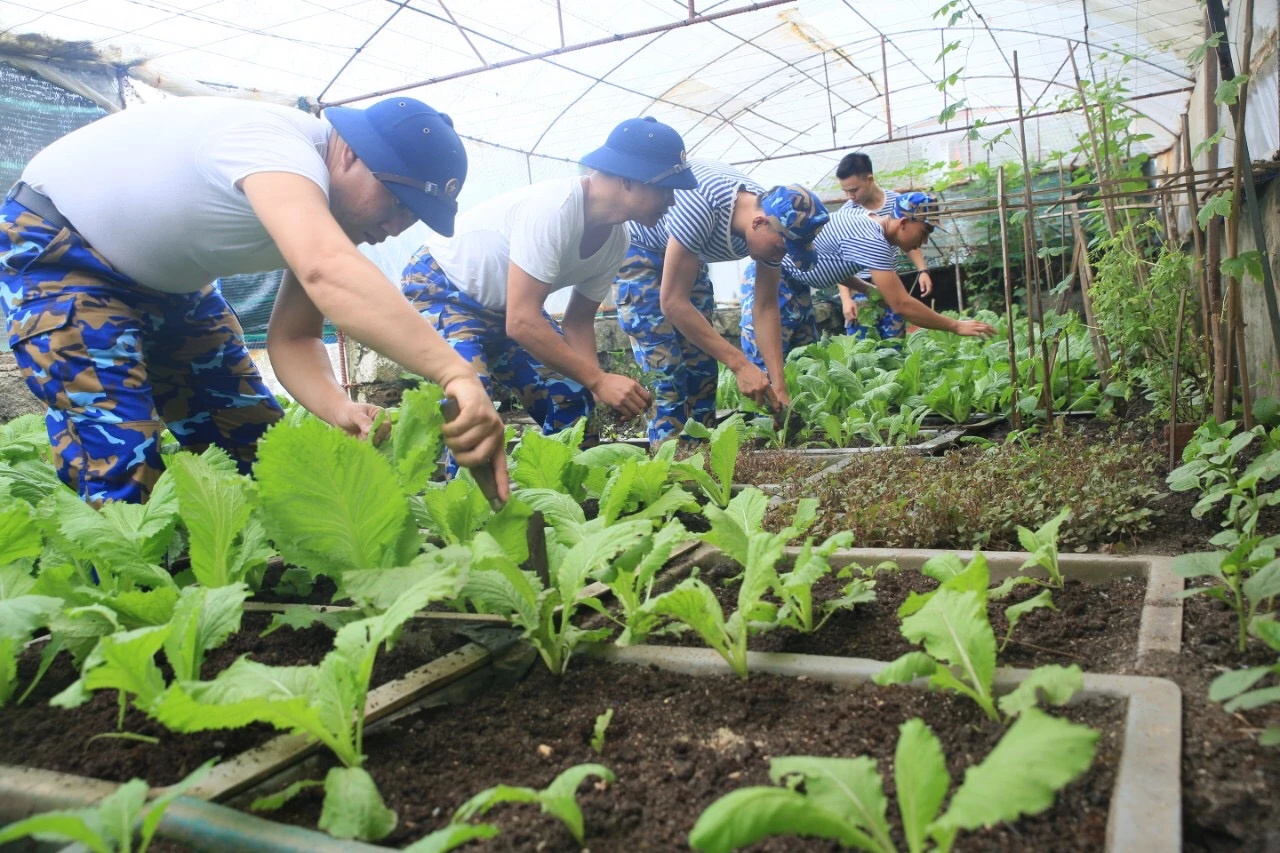
Soldiers in Truong Sa tend to the vegetable garden.
Besides their excellent training and combat skills, the soldiers of Truong Sa have also become true "farmers." Visiting the gardens of Combat Group No. 2, we found the officers and soldiers harvesting vegetables for their evening meal. In the garden, trellises of gourds and pumpkins were laden with fruit, and rows of spinach, water spinach, and various types of cabbage were thriving. In the middle of the vegetable garden, there was a well providing fresh water for the entire group's daily life and for irrigating the vegetables. Captain Ly Quy Cuong, Party Secretary, said that for many years, the group has consistently been an outstanding unit on the island in terms of agricultural production. Outside of working hours, after training sessions on the field, the officers and soldiers of the unit focus on raising livestock and caring for the vegetable garden. Thanks to this, the unit's daily meals always include fresh vegetables and livestock feed to improve the lives of the soldiers. Combat Groups No. 1 and No. 3 also have flocks of chickens, ducks, and geese, as well as vegetable gardens cultivated by the soldiers. Currently, fresh vegetables and clean food produced by the soldiers and civilians on the island are included in daily meals. Caring for vegetable gardens and raising livestock on the island is much more difficult than on the mainland. However, the plants, flowers, vegetables, and animals that survive on the island are usually very healthy and resilient. Vegetables grown on the island must withstand salinity and strong winds, so they often have thicker leaves and larger stems than those on the mainland. To develop agricultural and livestock products, the Truong Sa soldiers annually hold emulation campaigns, which include evaluating the results of efficient vegetable cultivation and livestock farming by combat groups and units throughout the island.
 |
|
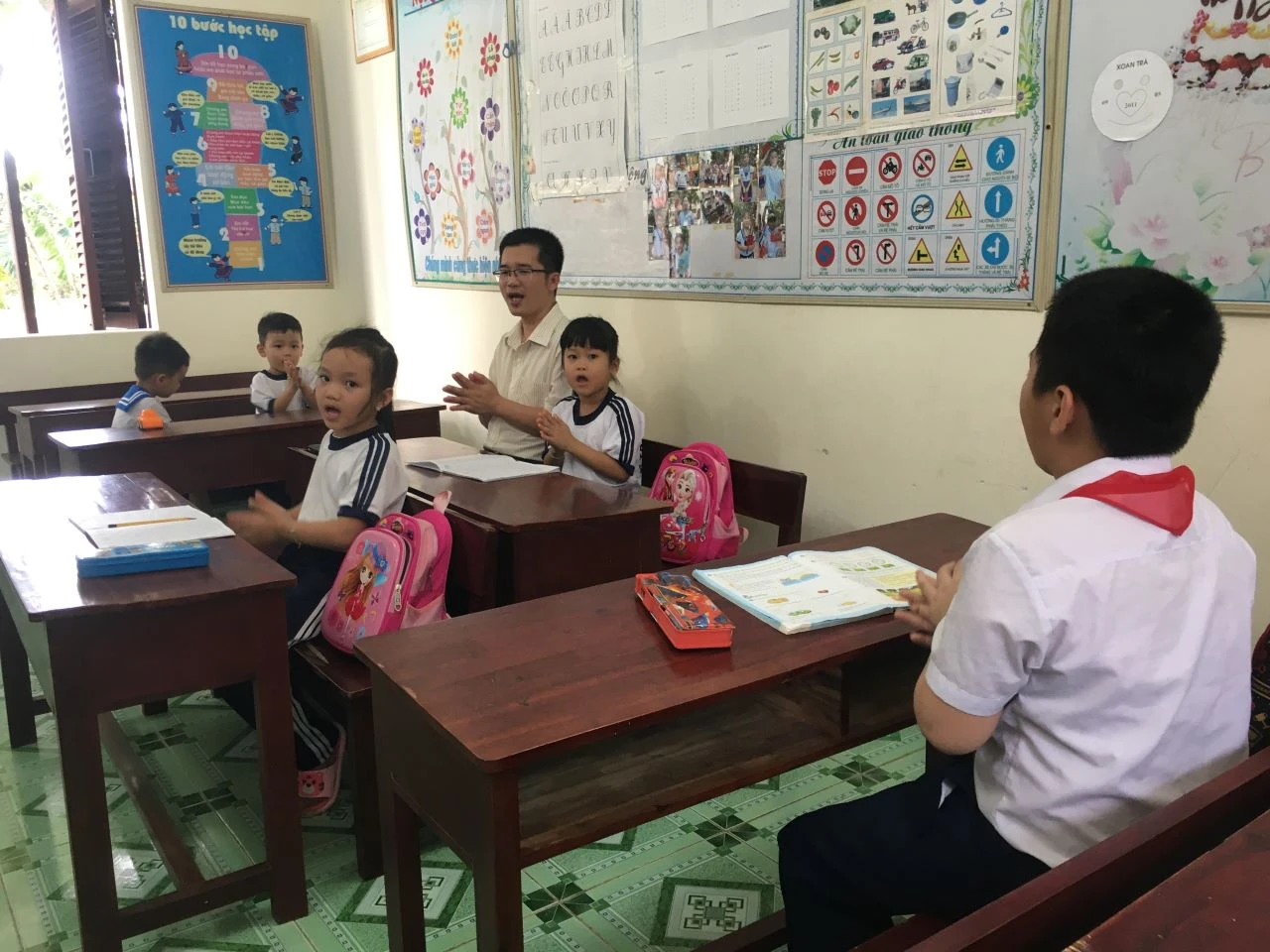
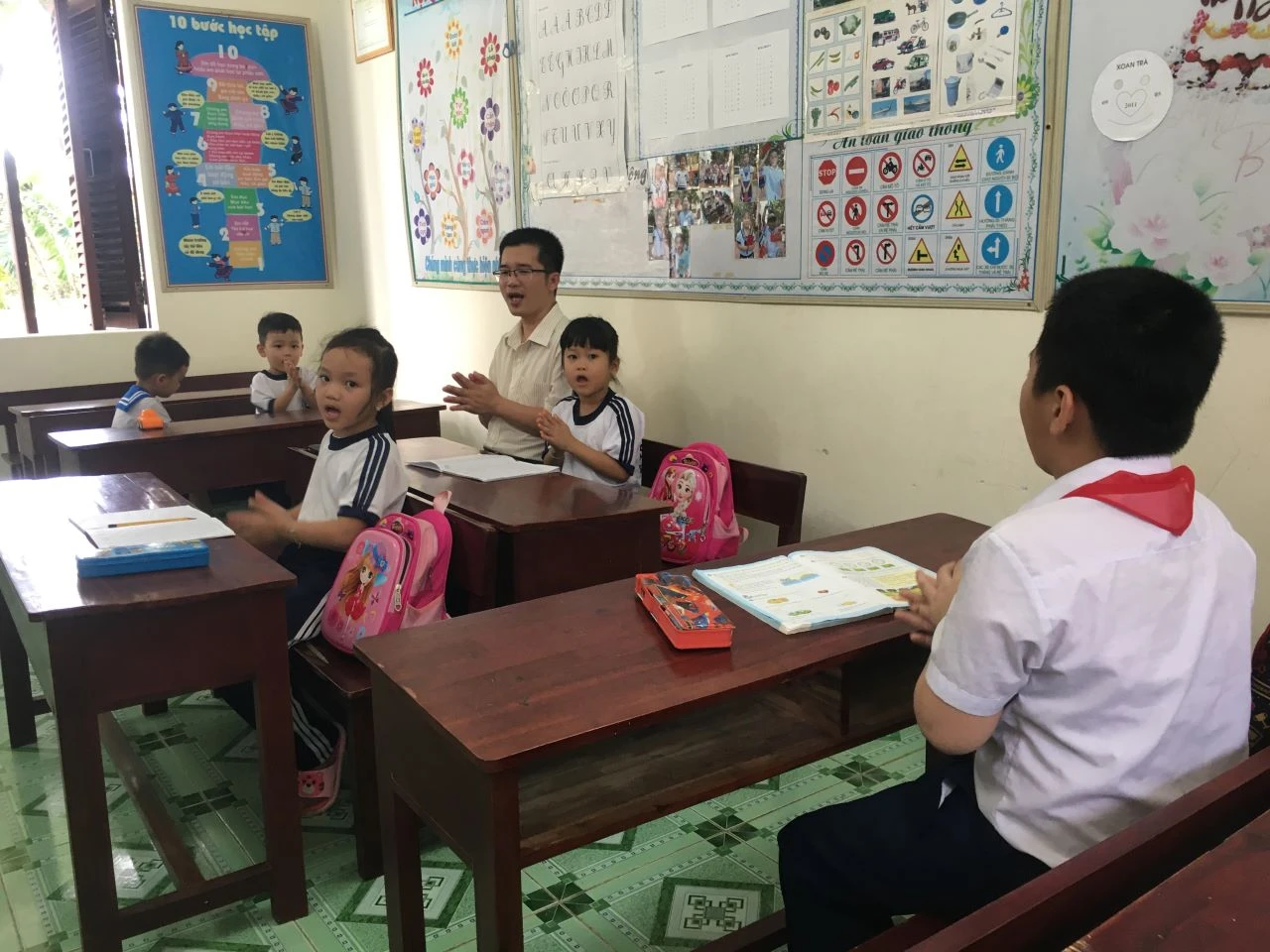
A lesson at Truong Sa Town Primary School.
The islands of the Truong Sa archipelago are entering spring. Morning glory flowers have begun to bloom profusely on the golden sandy beaches, bathed in sunlight. We said goodbye to Truong Sa with mixed feelings. Even after boarding the ship, the clear, cheerful voices of the teachers and students from Truong Sa Town Primary School still echoed, as if wanting to hold us back: “In the vast ocean, where waves crash on all sides, beside the young soldiers, we sing a love song. So close, Truong Sa, not far… Oh, Truong Sa!”
Nhandan.vn
Source link



![[Hightling] Conference on the Implementation of Tasks for 2026](/_next/image?url=https%3A%2F%2Fvphoto.vietnam.vn%2Fthumb%2F402x226%2Fvietnam%2Fresource%2FIMAGE%2F2026%2F01%2F27%2F1769477856197_dsc01637.jpeg&w=3840&q=75)


![OCOP during Tet season: [Part 2] Hoa Thanh incense village glows red.](/_next/image?url=https%3A%2F%2Fvphoto.vietnam.vn%2Fthumb%2F402x226%2Fvietnam%2Fresource%2FIMAGE%2F2026%2F01%2F27%2F1769480573807_505139049_683408031333867_2820052735775418136_n-180643_808-092229.jpeg&w=3840&q=75)
![OCOP during Tet season: [Part 1] Ba Den custard apples in their 'golden season'](/_next/image?url=https%3A%2F%2Fvphoto.vietnam.vn%2Fthumb%2F402x226%2Fvietnam%2Fresource%2FIMAGE%2F2026%2F01%2F26%2F1769417540049_03-174213_554-154843.jpeg&w=3840&q=75)


Comment (0)