

Mortgage interest rates are trending upwards again from the beginning of 2026. Many expect that high capital costs will put pressure on real estate prices, causing them to fall. However, the market is showing the opposite trend. House prices remain high, and are even continuing to rise in some segments. Experts believe that the increase in interest rates mainly reduces liquidity rather than being sufficient to lower overall prices.
Interest rates have risen sharply, but house prices continue to climb.
Mr. Dinh Minh Tuan, Director of the Southern region of Batdongsan.com.vn, believes that high interest rates only slow down the market, but are not enough to bring down house prices. The common sentiment among investors is that when interest rates rise or the global economy fluctuates, money will withdraw from risky assets like real estate and return to banks or gold.
However, according to Mr. Tuan, actual data from recent years does not entirely support this view. Interest rates have risen sharply, but house prices have continued to increase.
A market survey by batdongsan.com.vn in early March 2026 showed that interest rates for home loans have increased significantly compared to the same period last year. State-owned banks are currently applying preferential interest rates of around 7-9% per year for the first 6-12 months. After the preferential period, the prevailing floating interest rate ranges from 10-12% per year, depending on customer conditions.
For example, at a bank branch in Ho Chi Minh City, the interest rate for home loans with existing certificates or sales contracts is currently at its lowest level of 9.6% per year. In contrast, during the same period last year, the fixed interest rate was only around 6-7% per year, representing an increase of nearly 60%.
Similarly, many other banks have also significantly increased their interest rates. Some have raised the fixed 24-month interest rate to over 12% per year, or applied rates of 9.7–13.5% depending on the term. Private banks are also following this trend, with common interest rates ranging from 8.5% to 12% in the initial period and gradually increasing over the loan term – Mr. Tuan cited as an example.
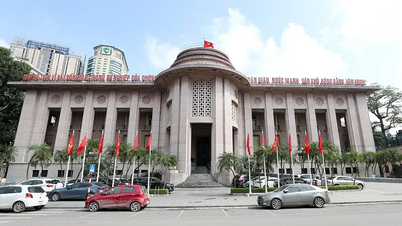
Not only are capital costs rising, but real estate credit is also being more tightly controlled. The State Bank of Vietnam requires credit institutions to limit the growth rate of real estate loan balances, aiming for a proportion of around 25% of total outstanding loans. This makes it more difficult for both homebuyers and project development businesses to access capital.
Mr. Dinh Minh Tuan also pointed out three reasons why house prices are difficult to fall. Firstly, the real estate market has a significant time lag. Unlike stocks or gold, real estate is a high-value asset with low liquidity and a long cycle. When the market faces difficulties, the first reaction is usually a sharp decrease in transactions. Buyers delay decisions, while sellers are not in a hurry to lower prices. Therefore, liquidity declines before prices make a noticeable adjustment.
Next, the limited supply is a contributing factor. For many years, the supply of apartments in major cities has been constrained by legal obstacles and lengthy project approval processes. The number of new projects entering the market is insufficient to meet the growing demand for actual housing. When supply is scarce, developers tend to maintain or increase prices to maximize profits, regardless of a sluggish overall market – Mr. Tuan analyzed.
The third reason is that the financial pressure on sellers is not significant. According to Mr. Tuan, unlike some international markets where the rate of financial leverage is high, many property owners in Vietnam do not rely too heavily on borrowed capital. This helps them avoid being forced to sell off their properties when interest rates rise. Instead, they can wait for the market to recover, holding onto their assets as a long-term investment channel.
Sharing the same view, Mr. Nguyen Van Dinh – Vice Chairman of the Vietnam Real Estate Association – also stated that interest rates are only one of many factors affecting the market. Real estate prices largely depend on supply and demand. When supply has not improved, it is difficult to expect a sharp price drop simply because interest rates increase. Therefore, it is impossible to expect house prices to decrease proportionally with the increase in interest rates.
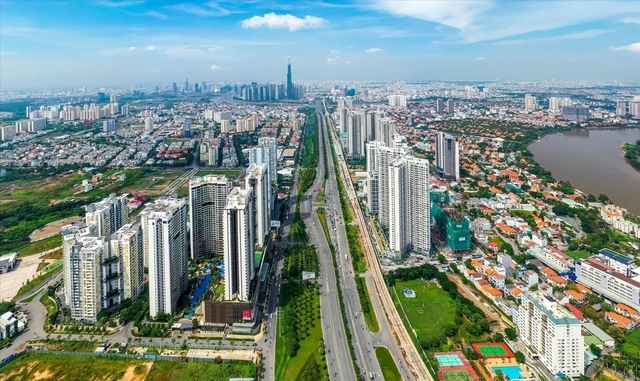
2026 will be a period of market stabilization, but this will be uneven across segments.
The market is fragmented, prioritizing intrinsic value.
According to market data from batdongsan.com.vn, during the period 2022–2025, despite the real estate market experiencing difficulties with sharply declining liquidity, apartment prices in the two major cities still increased significantly.
In Hanoi , apartment prices increased from approximately 40 million VND/m2 to nearly 87 million VND/m2. Ho Chi Minh City also recorded an increase from about 46 million VND/m2 to about 75 million VND/m2. Notably, the rate of increase in Hanoi even surpassed that of Ho Chi Minh City – a rare occurrence in previous years.
This development highlights an important characteristic of the real estate market: prices do not immediately react to short-term fluctuations in capital costs or market sentiment.
Experts predict that 2026 will be a period of greater market stability, but unevenly across segments. Mr. Su Ngoc Khuong, Senior Director of Investment at Savills Vietnam, believes that high interest rates will make investors more cautious, especially with large loans. However, this does not necessarily mean that asset prices will fall.
"In the context of rising capital costs, the market will self-regulate. Products with real utility value, clear legal status, and the ability to generate cash flow will still be prioritized, thereby maintaining better prices," Mr. Khuong analyzed.
This trend also aligns with Mr. Dinh Minh Tuan's assessment that segments serving real housing needs will continue to lead the market. Apartments in major cities and satellite areas with good infrastructure connectivity are predicted to maintain stable liquidity.
Furthermore, new supply is likely to shift to suburban areas, where land is still abundant and infrastructure is being heavily invested in. This expands development space without putting downward pressure on prices in the city center.
One notable point is that the social housing and affordable housing segments are expected to increase in the near future thanks to supportive policies. However, according to experts, this increase will mainly help improve the overall supply, rather than creating a widespread price reduction.
According to Mr. Nguyen Van Dinh, the market is entering a restructuring phase. Investors using high leverage and expecting short-term gains will face difficulties, while real buyers and long-term investors will prevail.
Current developments show that high interest rates are not a strong enough "lever" to bring down house prices. Instead, they act as a filter, slowing down the market and forcing participants to adjust their strategies. The continued high price of real estate is no longer a paradox but accurately reflects the nature of supply and demand and the specific characteristics of a real estate market.
Source: https://vtv.vn/gia-nha-van-neo-o-muc-cao-100260320183544717.htm







































































































Comment (0)