

Fertilizer prices will continue to rise sharply in the first half of 2026.
Given the current geopolitical tensions in the Middle East, fertilizer prices in Vietnam are projected to continue rising sharply in the first half of 2026, then remain at a high base level, due to India continuing to tender for the purchase of 1.5 million tons of urea before March 2026 and the continued high demand for fertilizer in that country.
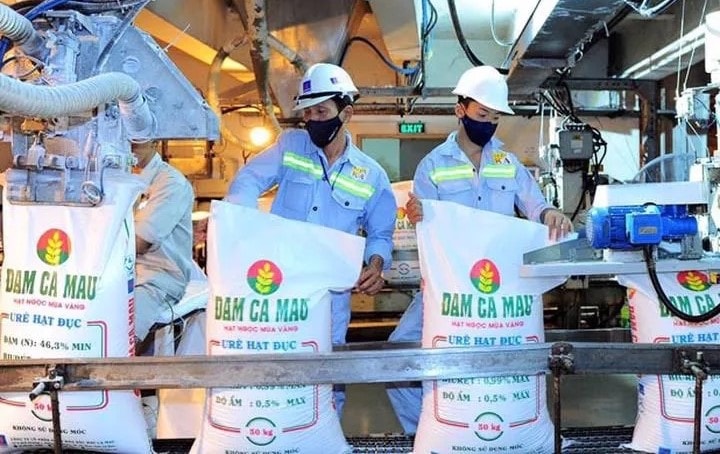
Geopolitical tensions in the Middle East are increasing insurance and logistics costs. In addition, China is restricting exports in the first half of 2026. Particularly, the EU's new import tariffs on fertilizers from Russia and Belarus are tightening supply, with import tariffs on fertilizers expected to gradually increase over three years, from 6.5% to around 100% by 2028.
According to information from the Vietnam Commodity Exchange, as of mid-March 2026, all eight key fertilizer types on the market recorded steep price increases. World urea prices reached $674/ton. DAP phosphate fertilizer reached $851/ton.
However, experts expect that rice prices will remain at a reasonable level, improving farmers' affordability. This is coupled with high demand for fertilizers for the spring-summer crop in the region and the need to accelerate land reclamation and replanting after the storm.
Notably, the 5% VAT tax on fertilizers, officially effective from July 1, 2025, helps increase the competitiveness of domestic fertilizer businesses. The 5% tax on fertilizers allows businesses to deduct input tax, while also increasing their competitiveness against imported fertilizers.
For Vietnam, a country still heavily reliant on imported fertilizers such as urea, potassium, and DAP, this price shock could spread throughout the entire agricultural value chain. Not only would it increase production costs and put pressure on agricultural prices, but this volatility would also directly impact inflation through the food sector, thereby affecting farmers' incomes and domestic consumption.
Vu Duy Hai, General Director of Vinacam Fertilizer Group Joint Stock Company, expressed concern that the domestic fertilizer market could "escalate" from April 2026 onwards, as fertilizer reserves held by farmers are dwindling and demand for fertilizer increases as the main planting season approaches.

Diversifying import sources improves efficiency of use.
To respond to this situation, many experts agree that it is necessary to diversify import sources and build appropriate reserve mechanisms to reduce the risk of supply chain disruptions. Simultaneously, improving fertilizer efficiency, promoting the transition to organic fertilizers, and strengthening domestic production capacity will be fundamental solutions.
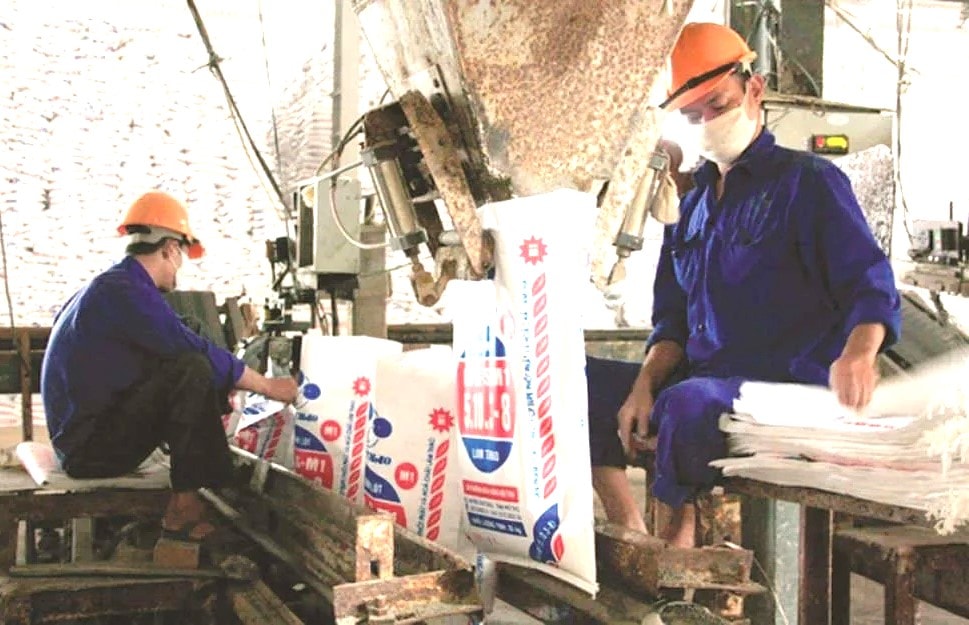
Dr. Phung Ha, Chairman of the Vietnam Fertilizer Association, stated that Vietnam has now basically achieved self-sufficiency in domestic urea supply, which helps reduce the pressure of supply shortages compared to the past. However, Vietnam may still be indirectly affected by rising fertilizer prices, especially input materials such as sulfur.
Therefore, fertilizer manufacturers need to maintain and increase production under favorable conditions, prioritizing the domestic market while simultaneously enhancing energy efficiency and developing high-performance fertilizer lines. Trading companies also need to diversify their supply sources, seeking additional partners outside the Middle East to reduce dependence on a single market.
Advising farmers, expert Nguyen Lan Hung – General Secretary of the Vietnam Association of Biological Industries – suggests that the most effective solution is to apply the "four correct" principles (correct type, correct dosage, correct timing, correct method), replace chemical fertilizers with organic and microbial fertilizers, and improve soil to enhance nutrient absorption efficiency and reduce fertilizer use.
According to Nguyen Quang Hieu, Deputy Director of the Department of Crop Production and Plant Protection (Ministry of Agriculture and Environment), one of the important orientations is to ensure a balance between domestic supply and demand, maintain stable operation of production plants, and at the same time enhance market information transparency to avoid speculation and hoarding that cause unreasonable price fluctuations.
Currently, the Ministry of Agriculture and Environment is coordinating with the Ministry of Industry and Trade and other relevant agencies to closely monitor fertilizer exports, ensuring priority is given to supplying the domestic market, especially during peak periods of agricultural production.
In the event of significant fluctuations in the global market or a risk of supply-demand imbalances domestically, state management agencies will consider appropriate management measures in accordance with the law, including trade and market regulation tools.
"Currently, the domestic supply of fertilizers remains basically stable, so there is no need to apply strong administrative measures such as restricting exports. The priority is still to closely monitor market developments and manage flexibly," said Mr. Nguyen Quang Hieu.
According to information from the Vietnam Commodity Exchange, fertilizer prices in the North on March 30th were as follows: Ha Bac urea at 560,000 – 590,000 VND/bag, Phu My from 540,000 – 580,000 VND/bag. Viet Nhat NPK 16-16-8+TE fluctuated between 420,000 – 440,000 VND/bag. Common NPK 16-16-8 at 730,000 – 760,000 VND/bag. Lam Thao superphosphate from 250,000 – 270,000 VND/bag. Canada and Ha Anh powdered potassium fluctuated between 510,000 – 540,000 VND/bag…
Source: https://hanoimoi.vn/gia-phan-bon-se-tiep-tuc-tang-manh-ung-pho-cach-nao-742088.html













































![[Video] Sunset at Lap An Lagoon – Where the sun sets over the fishing nets](https://vphoto.vietnam.vn/thumb/1200x675/vietnam/resource/IMAGE/2026/05/31/1780192137701_beach-landscape-sea-water-nature-grass-745871-pxhere-com.jpeg)































Comment (0)