


A nurse looks through a shattered window of Jabal Amel Hospital after an Israeli airstrike in the southern Lebanese city of Tyre on June 2. - Photo: AP
On June 1st, Iranian media reported that Tehran had suspended indirect talks with Washington and declared it would pursue the goal of "completely closing the Strait of Hormuz," following Israel's intensified attacks in Lebanon.
Iran asserts that any violation of the ceasefire on one front would mean the ceasefire agreement as a whole has been broken.
The risk of opening a new front.
According to Tasnim News Agency, Iran's negotiating team will cease exchanging messages with the US through intermediaries. It is unclear whether this move means all channels of communication will be cut off.
Iranian Foreign Minister Abbas Araghchi emphasized on Platform X on June 1st: "The agreement between Iran and the US is clearly a ceasefire agreement on all fronts, including Lebanon. A violation on one front means a violation of the ceasefire agreement on all fronts."
According to Tasnim, Iran and the "Resistance Front"—comprising Shiite Muslim allies in Yemen, Lebanon, and Iraq—have agreed on a program of action aimed at completely blockading the Strait of Hormuz and activating other fronts, including the Bab el-Mandeb Strait, in order to "punish" Israel and those who support Tel Aviv.
If Houthi forces—Iran's allies in Yemen—open a new front, one of the most vulnerable targets would be the Bab el-Mandeb Strait off the coast of Yemen—a narrow waterway controlling shipping access to the Suez Canal.
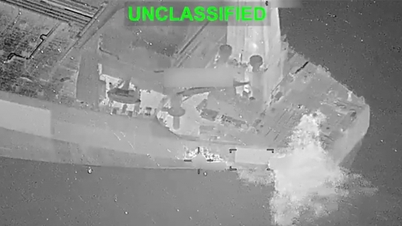
The US-Iran conflict has escalated directly in recent days, not just in Lebanon. The US military said it attacked Iranian radar and drone sites near the Strait of Hormuz over the weekend.
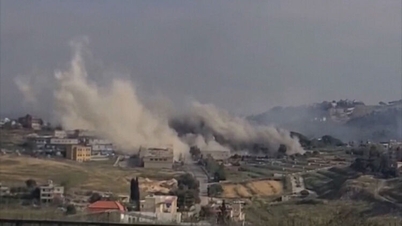
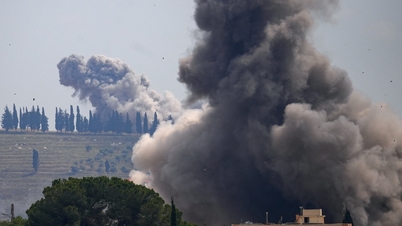
In response, on June 1st, Iran launched missiles at a US military base in Kuwait. Over the weekend, Israeli ground forces also advanced deeper into Lebanese territory than at any time in decades, further complicating negotiations, as Tehran insists that ending the fighting in Lebanon is part of the ceasefire agreement announced in April.
Mr. Trump "doesn't care".
Against this backdrop, Trump is sending out unpredictable signals. On the one hand, he wrote on social media on June 1st: "Negotiations with the Islamic Republic of Iran are continuing at a rapid pace."
Trump also said Hezbollah and Israel had agreed to a ceasefire, but shortly afterward Israeli Prime Minister Benjamin Netanyahu declared that Israeli forces "will continue to operate as planned in southern Lebanon."
On the other hand, when asked by a CNBC reporter about the possibility of Iran ending negotiations, he responded bluntly: "Frankly, I don't care if they end."
However, there are many reasons to doubt that Trump is truly so indifferent. Gasoline prices in the U.S. have skyrocketed since the war began, and a senior member of the oil and gas giant ExxonMobil recently warned that fuel prices could rise even further.
Meanwhile, Republican members are finding that a war with Iran is increasingly opposed by their voters.
For the past three months, Trump has focused his efforts on this conflict: planning a 38-day offensive, attempting to reopen the Strait of Hormuz, even declaring that "an entire civilization will disappear tonight," only to back down and announce a ceasefire and blockade Iranian ports by naval forces.
However, on June 1st, after days of negotiations through intermediaries regarding a preliminary agreement, Mr. Trump said that things were starting to "get very boring."
Trump continues to assert that the U.S. has inflicted a major military defeat on Iran and can force Tehran to accept Washington's core demands – including ending its nuclear program and controlling its enriched uranium stockpile.
Iran also made tough demands: refusing to completely dismantle its nuclear program, requesting the release of billions of dollars in frozen assets, and demanding a significant loosening of sanctions.
Speaking to the Washington Post on June 1, an Iranian official said he had little hope of reaching an agreement soon, and that the US's unexpected last-minute revision of the terms over the weekend had also slowed down the negotiation process.
The negotiations are now aimed at reaching a memorandum to extend the ceasefire for another 60 days and pave the way for a new round of talks on Iran's nuclear program.
US Vice President JD Vance said last week that the two sides were still debating some points in the text and that "it's difficult to say exactly when or whether the President will sign the memorandum."
Iran has not yet responded to the agreement.
On June 2nd, Mehr News Agency, citing a source close to the Iranian negotiating team, reported that Tehran had not yet responded to the proposed final agreement aimed at ending the conflict with the US, while discussions on the final text were still ongoing in Tehran.
Sources indicate that Iran is considering the proposal cautiously, as Tehran believes Washington has repeatedly failed to fulfill its commitments.
"Based on past experiences, Iran is seeking concrete and tangible benefits," the source said.
Source: https://tuoitre.vn/trung-dong-chien-su-leo-thang-20260603002402943.htm



![[Photo] First session of the 14th Congress of the Vietnam Trade Union](https://vphoto.vietnam.vn/thumb/1200x675/vietnam/resource/IMAGE/2026/06/03/1780465947883_ndo_br_img-3852-jpg.webp)





















































![[Video] Sunset at Lap An Lagoon – Where the sun sets over the fishing nets](https://vphoto.vietnam.vn/thumb/1200x675/vietnam/resource/IMAGE/2026/05/31/1780192137701_beach-landscape-sea-water-nature-grass-745871-pxhere-com.jpeg)



































Comment (0)