

The probability of El Niño occurring is as high as 80-90%.
According to the latest El Niño/La Niña update from the WMO, the probability of El Niño occurring between June and August 2026 has reached 80%. The likelihood of this phenomenon lasting at least until November is predicted at 90%.
Although the exact timing and intensity of its peak cannot yet be determined, most climate models suggest that El Niño is likely to develop at a moderate to strong level.
The WMO's El Niño/La Niña updates are considered a vital source of information for governments, humanitarian organizations, and sectors directly impacted by climate change, such as agriculture , health, energy, and water resource management.
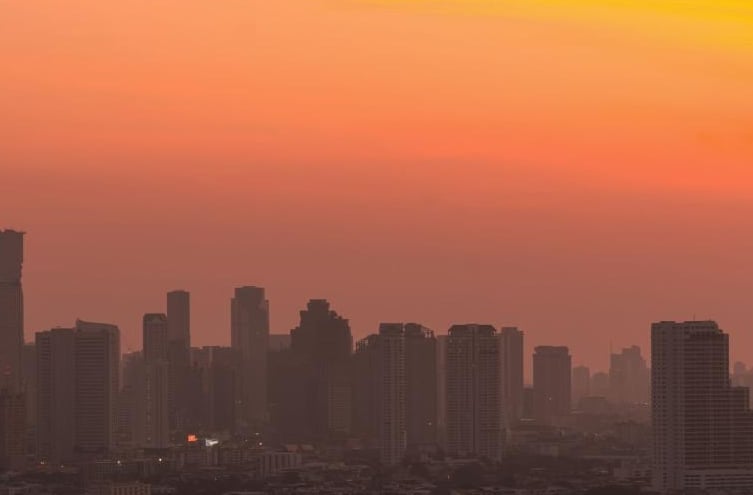
The probability of El Niño occurring between June and August 2026 has reached 80%. Photo: WMO.
The forecast is based on a synthesis of results from models of the WMO's Global Forecasting Centres, combined with assessments from national meteorological and hydrological agencies and international climate centers, under the coordination of the WMO and the International Institute for Climate and Society Research (IRI).
WMO observational data shows that from late April to mid-May, sea surface temperatures in the central and eastern Pacific Ocean approached the threshold defining El Niño.
According to the WMO, the main cause is the appearance of an unusually warm layer of water beneath the surface in the tropical Pacific. In some areas, subsurface water temperatures are more than 6 degrees Celsius above average, creating a major heat source that further drives up sea surface temperatures.
In addition, the Southern Oscillation Index (SOI) – an atmospheric component of the ENSO phenomenon – is also showing clear signs of El Niño formation.
WMO Secretary-General Celeste Saulo warned the world needs to prepare for the possibility of a strong El Niño event, which could exacerbate droughts and heavy rainfall, and increase the risk of heatwaves on both land and sea.
She stated that the 2023-2024 El Niño event is among the five strongest El Niño events ever recorded and is one of the factors contributing to record-high global temperatures in 2024.
According to Ms. Saulo, the WMO will continue to closely monitor the developments of this phenomenon in the coming months in order to provide timely information to governments, humanitarian organizations, and sectors vulnerable to climate change.
She emphasized that seasonal climate forecasts and early warning systems play a crucial role in protecting people's lives and minimizing economic and social damage.
In parallel, the WMO also released the Global Seasonal Climate Update, incorporating more climate-impacting factors to improve the accuracy of regional forecasts.
UN Secretary-General António Guterres also stated that current scientific evidence indicates El Niño is almost certain to occur in the coming months.
He called on the international community to consider this a serious climate warning, emphasizing that El Niño could amplify the already evident impacts of climate change. He argued that extreme weather events risk occurring with greater intensity, on a wider scale, and affecting more countries.
How might El Niño have an impact?
El Niño and La Niña are two opposing phases of the El Niño Southern Oscillation (ENSO) – one of the most powerful natural climate oscillation patterns on Earth.
El Niño is characterized by unusually high sea surface temperatures in the central and eastern Pacific Ocean. This phenomenon typically occurs in cycles of 2 to 7 years and lasts for about 9 to 12 months.
Typically, El Niño begins to form between March and June, reaching its peak intensity from November to February of the following year. The most noticeable impacts on global temperatures usually appear in the following year.
The impact of each El Niño or La Niña event depends on its intensity, duration, timing of formation, and interaction with other climate oscillations, such as the Indian Ocean Dipole.
The impact of ENSO varies across regions and can even differ within the same geographic area. Even when ENSO is in a neutral state, extreme weather events can still occur.
The WMO also noted that there is currently no evidence to suggest that climate change is increasing the frequency or intensity of El Niño. However, rising ocean and atmospheric temperatures due to climate change could exacerbate El Niño-related impacts, particularly extreme heatwaves and rainfall.
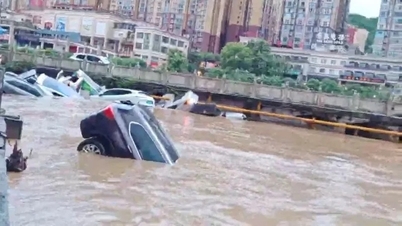
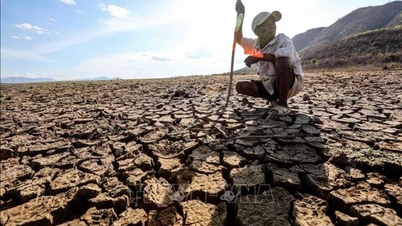
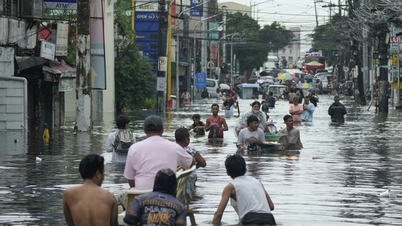
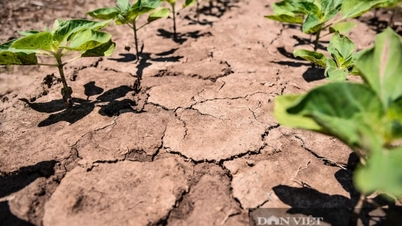
Increased risk of drought and extreme rainfall.
Each El Niño event has different patterns and levels of impact. However, this phenomenon typically increases rainfall in certain areas of southern South America, the southern United States, the Horn of Africa, and Central Asia.
Conversely, drought conditions are common in Central America, northern South America, the Caribbean, Australia, Indonesia, and many areas of South Asia.
During the Northern Hemisphere summer, the warm ocean waters created by El Niño can increase tropical storm activity in the central and eastern Pacific Ocean, while limiting storm formation in the Atlantic basin. Therefore, the U.S. National Oceanic and Atmospheric Administration (NOAA) predicts this year's Atlantic hurricane season may be below average.
National meteorological and hydrological agencies, WMO Regional Climate Centres, and Regional Climate Forecasting Forums are continuously updating their assessments to support decision-making at the national and regional levels.
In the Horn of Africa, the GHA Climate Outlook for the Region (GHACOF) forecasts that much of the northern region will experience below-average rainfall during the crucial monsoon season from June to September.
Similarly, the South Asia Climate Outlook Forum forecasts that rainfall in the region is likely to be below average, while the Central American Climate Outlook Forum warns of drier and hotter-than-normal weather conditions in the coming months.
Source: https://nongnghiepmoitruong.vn/wmo-canh-bao-el-nio-90-keo-dai-den-cuoi-nam-d814658.html
![[Photo] General Secretary and President To Lam presides over a meeting with the Central Organizing Committee.](https://vphoto.vietnam.vn/thumb/1200x675/vietnam/resource/IMAGE/2026/06/03/1780482764658_a1-bnd-4741-3342-jpg.webp)

![[Photo] First session of the 14th Congress of the Vietnam Trade Union](https://vphoto.vietnam.vn/thumb/1200x675/vietnam/resource/IMAGE/2026/06/03/1780465947883_ndo_br_img-3852-jpg.webp)
![[Photo] Secretary of the National Assembly Party Committee, Chairman of the National Assembly presides over the meeting of the Standing Committee and Executive Committee of the National Assembly Party Committee.](https://vphoto.vietnam.vn/thumb/1200x675/vietnam/resource/IMAGE/2026/06/03/1780480353201_ndo_br_bnd-2585-jpg.webp)




































![[Video] Sunset at Lap An Lagoon – Where the sun sets over the fishing nets](https://vphoto.vietnam.vn/thumb/1200x675/vietnam/resource/IMAGE/2026/05/31/1780192137701_beach-landscape-sea-water-nature-grass-745871-pxhere-com.jpeg)






























Comment (0)