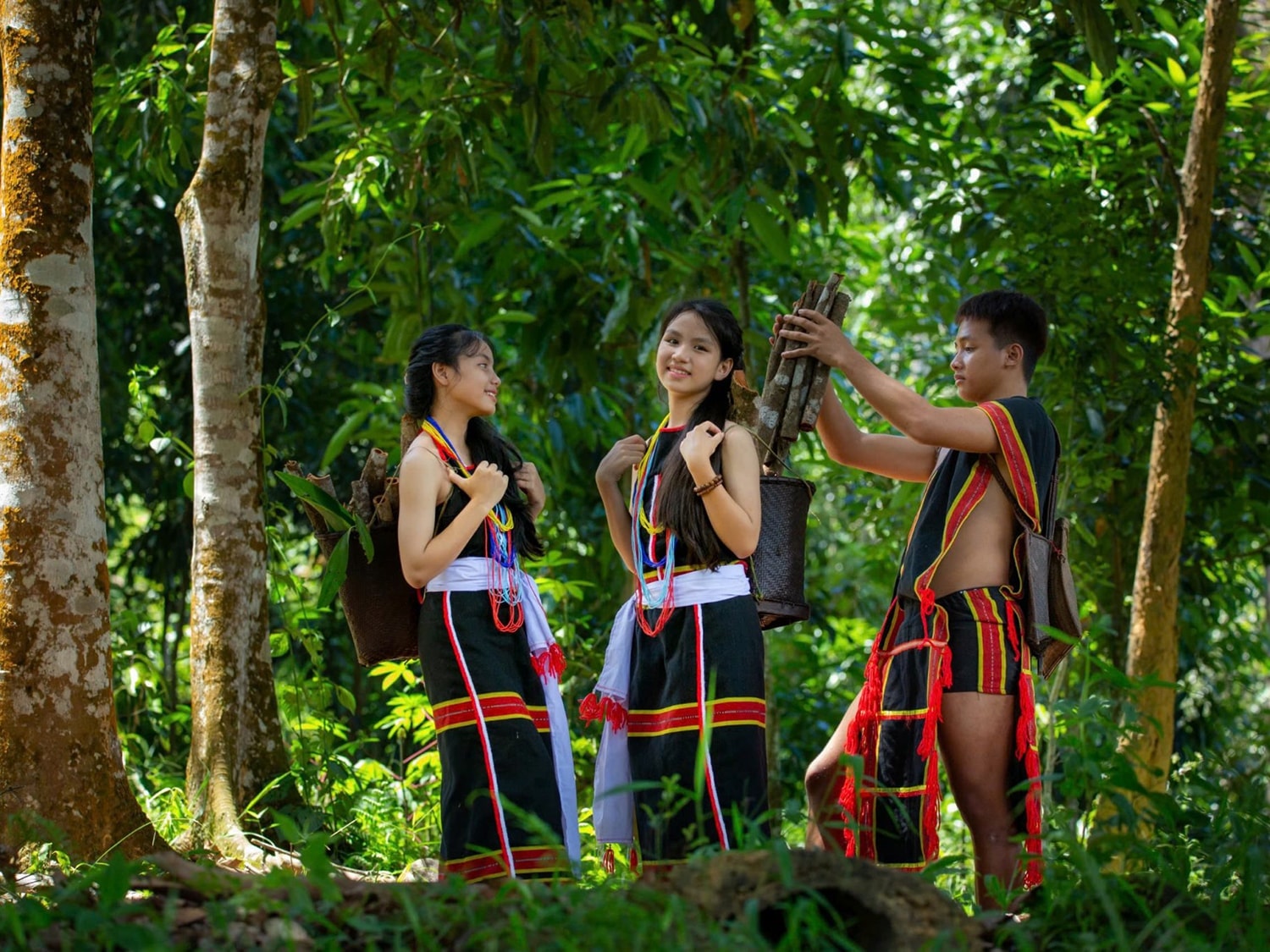
Viewing cinnamon solely as a crop or a commodity is insufficient. Behind the cinnamon forests lies an entire ecological space, a treasure trove of indigenous knowledge, and a unique culture that has been formed and preserved through generations.
In the context of Da Nang's expanding development space after the merger, the question is not just about how many more hectares of cinnamon trees to plant or how much production to increase. More importantly, it's about how to transform the heritage values of Tra My cinnamon into a development asset, creating sustainable livelihoods for people in mountainous areas and contributing to the city's future goals of green economy and green tourism.
Green economy from forests
For hundreds of years, cinnamon has been closely intertwined with the lives of the Ca Dong, Xe Dang, Bh'noong, and many other ethnic minority communities in the Tra My region. Cinnamon is present in their daily lives, in traditional rituals, in folk medicine, and in the cultural memory of the communities. The people here not only cultivate cinnamon but also possess a rich system of indigenous knowledge related to seed selection, care, harvesting, and preservation.
These experiences are passed down from generation to generation, becoming part of the local cultural identity. Therefore, Tra My cinnamon is not simply an agricultural product; it is a living cultural heritage. Each cinnamon tree not only holds economic value but also contains stories about the history of habitation, about human adaptation to nature, and about the harmonious relationship between the community and the forest.
In the context of modern development, many countries have realized that indigenous cultural values are not merely relics of the past but can become crucial resources for the future. Heritage only truly comes alive when it is preserved and its value is promoted in contemporary life. For Tra My cinnamon, this is an opportunity to transform from "heritage" into "asset."
Currently, the cinnamon growing area in Tra My covers nearly 4,000 hectares and aims to expand to approximately 10,000 hectares by 2030. This represents a significant resource for the mountainous southwestern region of Da Nang city. However, the added value of the cinnamon industry remains low. Most products are still consumed as raw materials or through simple processing. The supply chain linking cinnamon growers, cooperatives, businesses, and the market is not yet truly sustainable. Deep processing capabilities are limited, while promotion and brand development activities have not kept pace with the potential.
If development continues in the traditional direction, the economic benefits of cinnamon cultivation will be difficult to achieve a breakthrough. What is needed now is a shift from a production-oriented mindset to a value chain development mindset. Instead of just selling cinnamon bark, we need to develop high value-added products such as cinnamon essential oil, natural cosmetics, medicinal herbs, functional foods, health care products, and distinctive OCOP (One Commune One Product) products. More investment in advanced processing technology is needed to maximize the value of each part of the cinnamon tree.
More importantly, cinnamon cultivation needs to be integrated into the city's green economic strategy. This sector has the potential to generate income while contributing to forest conservation, soil and water preservation, and biodiversity maintenance. Each hectare of sustainably cultivated cinnamon not only brings economic value but also contributes to ecosystem conservation and carbon emission reduction.
Ecological space for green tourism

For many years, tourism in Da Nang has been primarily associated with the sea, urban areas, and coastal destinations. However, as development expands towards the southwest, the city has more opportunities to create new tourism products based on its ecological and cultural resources. Tra My cinnamon forest has the potential to become a unique destination on Da Nang's tourism map. The cinnamon forests stretching across the mountain slopes, the villages preserving many traditional cultural values, and the streams and waterfalls amidst the vast wilderness are valuable resources for developing ecotourism and community-based tourism.
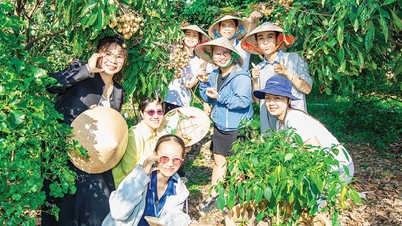
Today, tourists are not only looking for beautiful scenery but also want to experience local values and unique cultural stories. In this trend, the Tra My cinnamon region has many advantages to develop distinctive tourism products such as experiencing cinnamon planting and harvesting, exploring the essential oil processing industry, participating in community cultural activities, enjoying local cuisine, and learning about indigenous knowledge of cinnamon trees. Cinnamon tourism can also connect with ecotourism routes, medicinal herb tourism, health tourism, and agricultural experience tourism. These are types of tourism that are thriving worldwide because they meet the needs for relaxation, health care, and finding balance with nature.
With proper investment, Tra My (including communes in the former Bac Tra My and Nam Tra My districts) could be positioned as a "cinnamon land" of Central Vietnam, where tourists come not only to visit but also to experience and appreciate the unique cultural and ecological values of the mountainous region southwest of Da Nang.
Transform heritage into assets.
One of the major challenges of development is the risk of the erosion of traditional cultural values. As the market economy develops strongly, many traditional crafts, production practices, and indigenous knowledge face the risk of being forgotten.
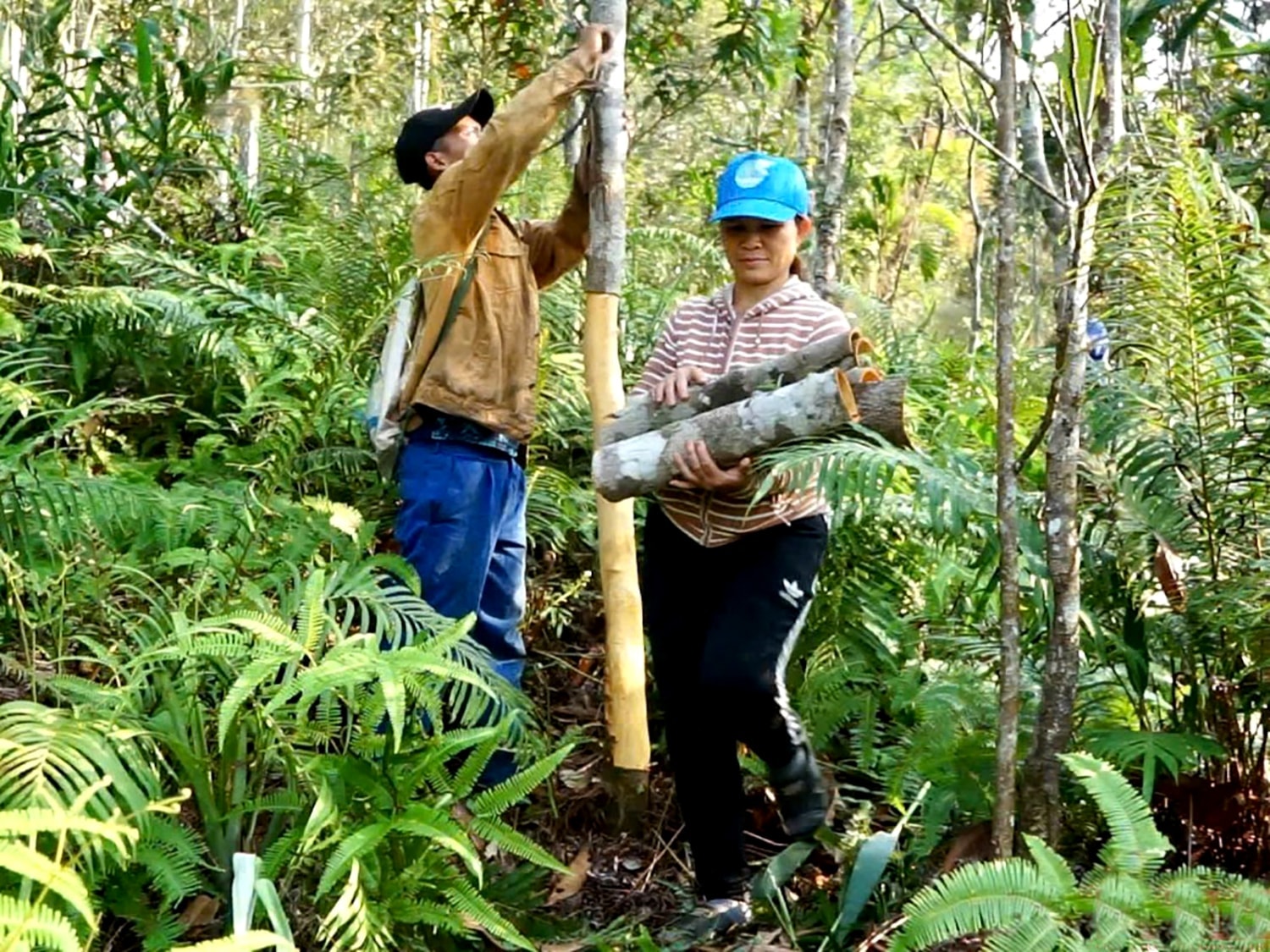
For Tra My, cultural preservation should not be understood as maintaining the status quo, but rather as a process of keeping culture alive in modern life.
Developing community-based tourism is one of the most effective solutions to achieve that goal. When cultural values become a source of income, the community will have the motivation to preserve and pass them on to future generations. Traditional festivals, folk songs, handicrafts, architectural styles, and rituals related to cinnamon trees will no longer exist only in memory but will continue to be present in community life.
Therefore, cultural preservation is not opposed to economic development. On the contrary, culture can become a resource for development if it is exploited appropriately and respects the core values of the local community.
The ultimate goal of all development policies remains improving the quality of life for the people. For the southwestern area of Da Nang, this is even more significant, as it still faces many challenges compared to the lowlands and urban areas. Cinnamon trees could become the center of a new economic ecosystem. Within this ecosystem, people could not only earn income from selling cinnamon but also participate in processing, tourism services, community accommodation, guided tours, cultural preservation, and the provision of local products.
Community participation must be considered a central element in the development process. People should not only be beneficiaries but also active participants in development. When communities directly benefit from forest protection, cinnamon conservation, and cultural preservation, they will have greater motivation to safeguard the inherent values of their locality.



This approach also aligns with current sustainable development trends, where economic growth must go hand in hand with social equity and environmental protection.
In Da Nang's new development strategy, the southwestern area is expected to become a green, ecological, and culturally rich economic space. Tra My cinnamon has all the conditions to become a symbol of that development process. However, to elevate Tra My cinnamon, a new development ecosystem needs to be built based on four pillars: green economy, green tourism, preservation of indigenous culture, and sustainable livelihoods for the community.
When cinnamon forests not only provide raw materials but also create tourism experiences, cultural value, and job opportunities; when people are both forest keepers, breeders, and cultural preservers, and beneficiaries of the development process; and when businesses, scientists, and the government work together in a unified value chain, then Tra My cinnamon will not only be a unique product but will become a driving force for the development of an entire region.
Transforming heritage into assets is not about commercializing heritage at all costs. It is a process of ensuring that cultural, ecological, and indigenous knowledge values continue to be preserved through development. And that is precisely the path that Tra My cinnamon can take to contribute to building a greener, more sustainable future for the southwestern part of Da Nang city.
Source: https://baodanang.vn/gia-tri-moi-duoi-tan-rung-que-tra-my-3340408.html



![[Image] National conference summarizing one year of operation of the overall organizational model of the political system, the three-tiered government model.](https://vphoto.vietnam.vn/thumb/1200x675/vietnam/resource/IMAGE/2026/07/01/1782882811691_ndo_br_1-jpg.webp)