

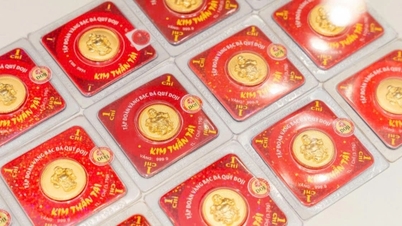
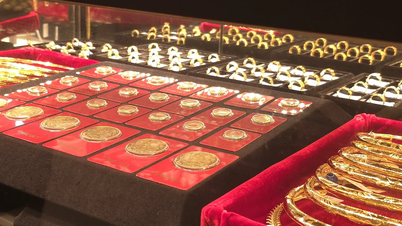
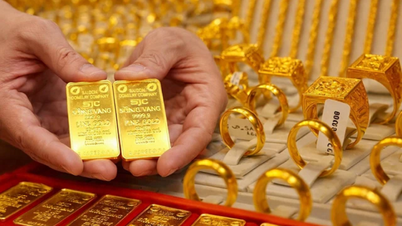
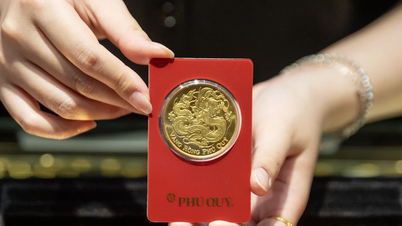
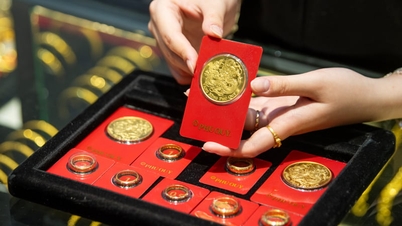
At the opening of the morning session, Saigon Jewelry Company Limited (SJC) listed gold bars at 159.5 - 162.5 million VND/ounce (buying price - selling price), a decrease of 1.5 million VND/ounce in the buying price and a decrease of 1 million VND/ounce in the selling price compared to the closing price on May 19th. This is also the lowest price since the beginning of May. Similarly, major brands in Hanoi such as Bao Tin Minh Chau, DOJI , Phu Quy... also listed SJC gold bars at this level.
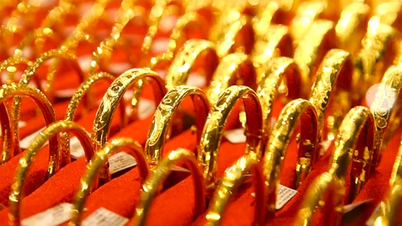
For 9999 pure gold rings, Bao Tin Minh Chau, Phu Quy, and DOJI also listed prices at 159.5 - 162.5 million VND/ounce (buying price - selling price), a decrease of 1 million VND/ounce in both buying and selling prices compared to yesterday's closing price. Domestic gold prices are currently closely following the fluctuations of world prices.
At 8:45 AM on May 20th (Vietnam time), the world gold price was trading around $4,463 per ounce, down about $90 compared to the same time on May 19th. Converted using the Vietcombank exchange rate, each ounce of world gold is currently worth approximately 142.1 million VND. Therefore, the domestic gold price remains about 20.4 million VND per ounce higher than the world gold price.

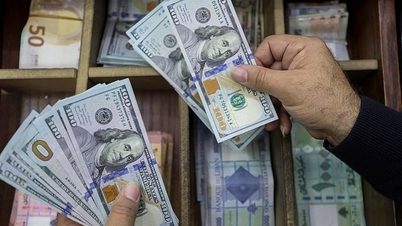
According to analyst Edward Meir at Marex: "We're seeing widespread real interest rate increases in many countries around the world, and that's putting the biggest pressure on gold. The US dollar is also stronger." Both the benchmark 10-year US Treasury yield and the greenback rose as investors monitored the likelihood of the Federal Reserve shifting to a tighter policy to curb inflation fueled by the energy sector.
Sharing the same view, analyst Ricardo Evangelista at ActivTrades told Reuters: "Expectations that the Fed will continue to maintain a hawkish stance on monetary policy, stemming from concerns about inflation due to prolonged tensions in the Persian Gulf, are putting pressure on gold prices. Investors will continue to closely monitor developments in the confrontation between the US and Iran. Any changes could alter expectations about the Fed's monetary policy path, thereby impacting gold prices."
The yield on 10-year US Treasury bonds has been trading sideways around its highest level in over a year, as rising energy prices fueled by conflict in the Middle East, increasing concerns about inflation and reinforcing speculation that the Fed may continue to raise interest rates. While gold is considered a hedge against inflation, a high-interest-rate environment typically puts pressure on the precious metal.
Traders are increasingly betting on the likelihood that the Fed will continue to tighten monetary policy this year. According to CME Group's FedWatch Tool, the market currently assesses a 38% chance that the Fed will raise interest rates in December.
Investors are also awaiting the minutes of the latest Fed policy meeting, scheduled for May 20th, to look for further signals about the direction of monetary policy in the coming period.
According to experts, the Strait of Hormuz remains the most important geopolitical variable influencing energy, interest rate, and precious metal markets. Oil prices have cooled after US President Donald Trump decided to temporarily postpone plans to attack Iran to allow more time for negotiations. However, this strategic sea route is still operating under restrictions, keeping crude oil prices above $100 per barrel.
This development has a two-way impact on gold. On the one hand, geopolitical risks are driving demand for safe-haven assets. On the other hand, the fact that US West Texas Intermediate (WTI) crude oil prices have exceeded $100/barrel, Brent crude above $110, and gasoline inflation are driving up bond yields, simultaneously reducing the attractiveness of non-yielding assets like gold.
Source: https://baotintuc.vn/kinh-te/gia-vang-sang-205-giam-ve-muc-thap-nhat-trong-thang-20260520083230459.htm



![[Photo] General Secretary and President To Lam and the President of the Philippines hold talks.](https://vphoto.vietnam.vn/thumb/1200x675/vietnam/resource/IMAGE/2026/06/01/1780286997787_anh-man-hinh-2026-06-01-luc-11-09-43.png)

![[Photo] Reception to welcome General Secretary and President To Lam and his wife on their State visit to the Philippines](https://vphoto.vietnam.vn/thumb/1200x675/vietnam/resource/IMAGE/2026/06/01/1780295488620_vna-potal-chieu-dai-chao-mung-tong-bi-thu-chu-tich-nuoc-to-lam-va-phu-nhan-tham-cap-nha-nuoc-toi-philippines-8798060-7855-jpg.webp)




































































Comment (0)