

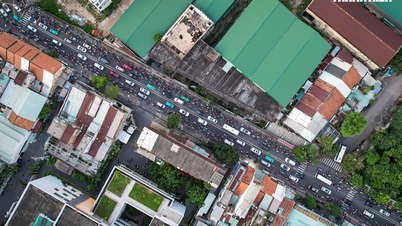
Localized overcrowding in some areas of Hoi An has existed for many years and requires a comprehensive solution to improve the quality of the destination.

Over the past 15 years, excluding the period affected by the COVID-19 pandemic, the number of visitors to Hoi An has consistently grown strongly. This period has also witnessed significant changes in Hoi An's tourism industry. The main source of tourists has shifted from Europe and America to Asia.
New construction projects are springing up rapidly, and the area dedicated to service facilities is expanding. Spontaneous services participating in the Hoi An tourism supply chain are booming, with the involvement of people in the supply chain no longer limited to locals.
Local overcrowding at certain times is an inevitable consequence of the situation. Before 2019, Hoi An had to limit the number of visitors to Cu Lao Cham to 3,000 people per day.
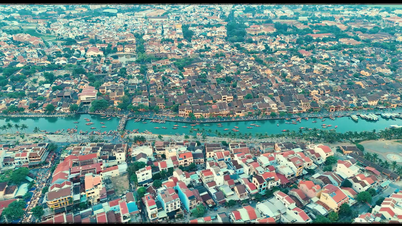
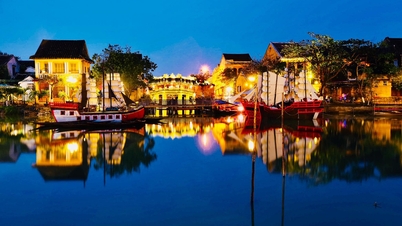
During peak season, Hoi An's Old Town receives an average of over 10,000 tourists daily within its small area, primarily in the late afternoon and evening. This imbalance in resources, damage to heritage, and a diminished visitor experience threaten the image and brand of Hoi An tourism.
Local authorities have taken several steps to mitigate this problem, such as expanding bus stations in the area bordering the Old Quarter; reducing the frequency of events in the Old Quarter; regulating and managing traffic on key routes; and tightening entrance fee policies… but the issue has not been completely resolved.
According to the Hoi An Department of Culture and Tourism, the weaknesses of Hoi An tourism are that it still focuses on maximizing the number of visitors, the development of tourism services is not widespread, the professionalism of customer service is not high, and there is a slow pace of innovation in the development of tourism products and services.
Mr. Le Sy Quyen, an expert from the Swiss Tourism for Sustainable Development Project (ST4SD), suggested that different visiting hours and attractions should be developed to suit different target groups and markets.
It is necessary to guide businesses in the area, as well as those sending tourists to Hoi An, on policies and strategies targeting priority customer segments. In addition, it is necessary to promote shopping centers and local products outside the old town center to attract tourists to the outskirts.
Regional connectivity and the circular economy are another important strategy that experts and tourism businesses recommend Hoi An should promote soon to address local overcrowding and develop sustainable tourism.
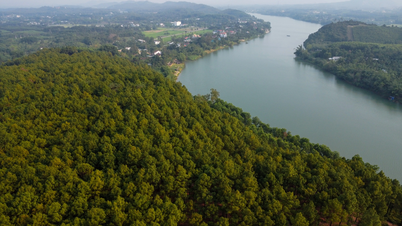
Mr. Le Ngoc Thuan, Chairman of the Hoi An City Innovation and Entrepreneurship Association and founder of the "Floodwood Village" project, believes that in the near future, a destination ecosystem will be formed along the Thu Bon River, with traditional craft villages as its core. Building services and stories that convey the message of sustainable development will certainly attract tourists and comprehensively address many of the current tourism challenges in Hoi An.
Source










































































Comment (0)