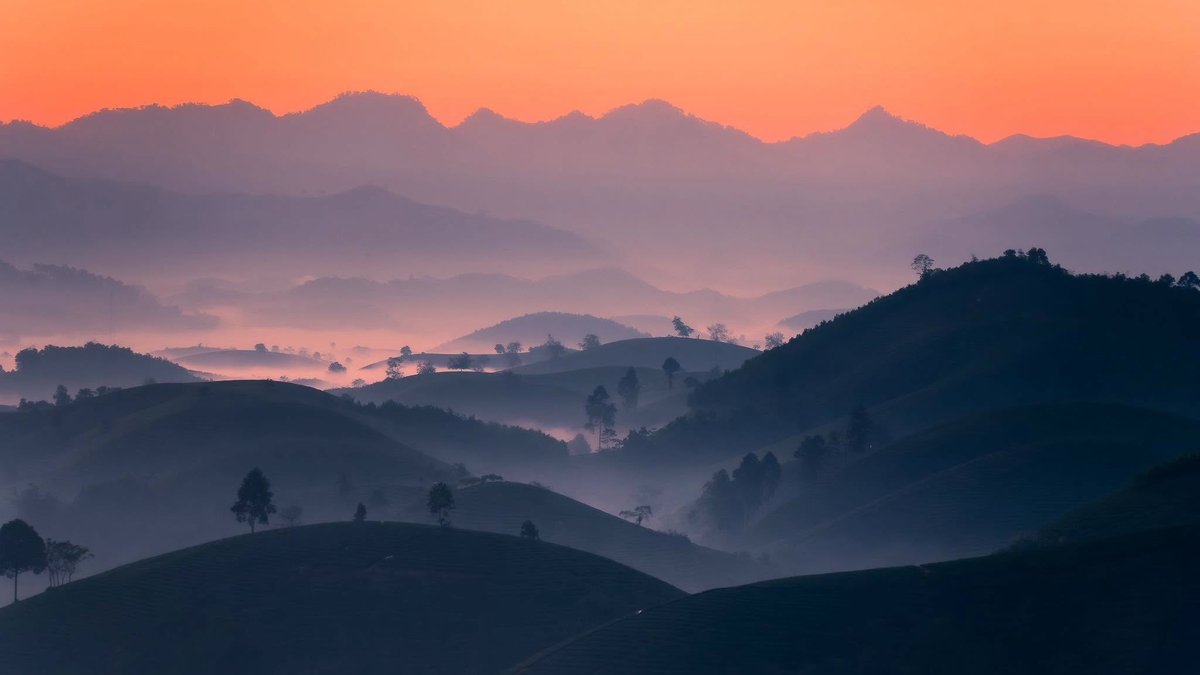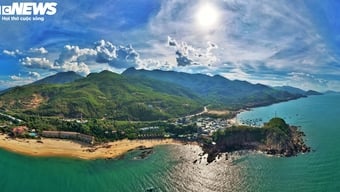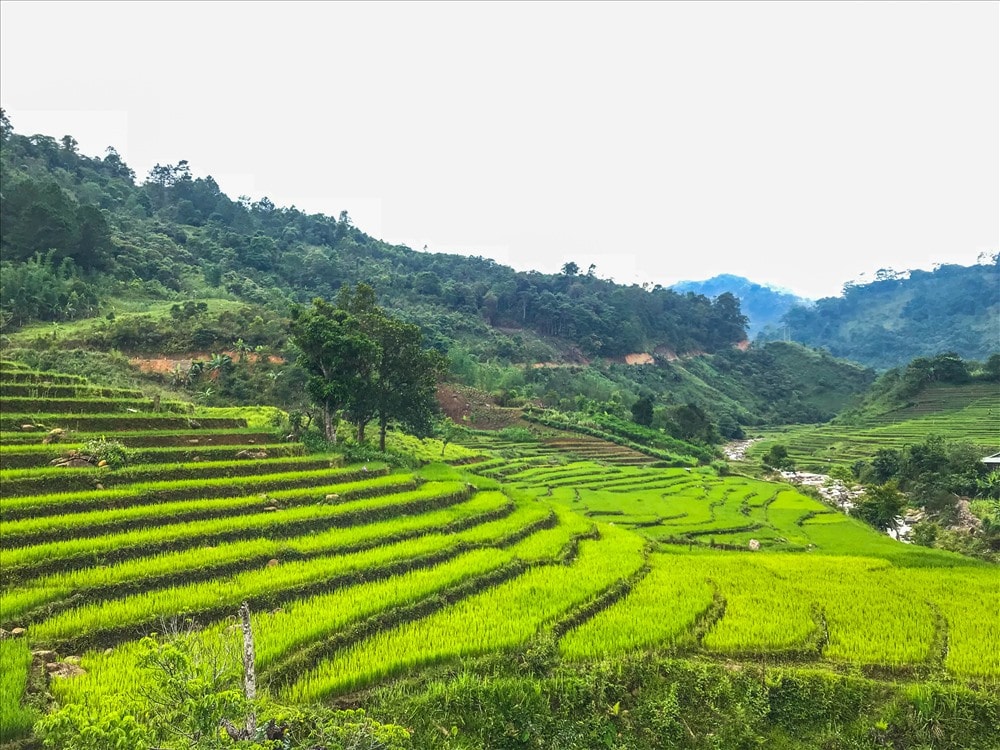
Due to its semi-mountainous terrain, with mountains extending all the way to the sea in Central Vietnam, sloping land is common in the midland and mountainous regions. Farmland is also divided into two types: flat land that is easy to cultivate, and hillside land that requires more human effort.
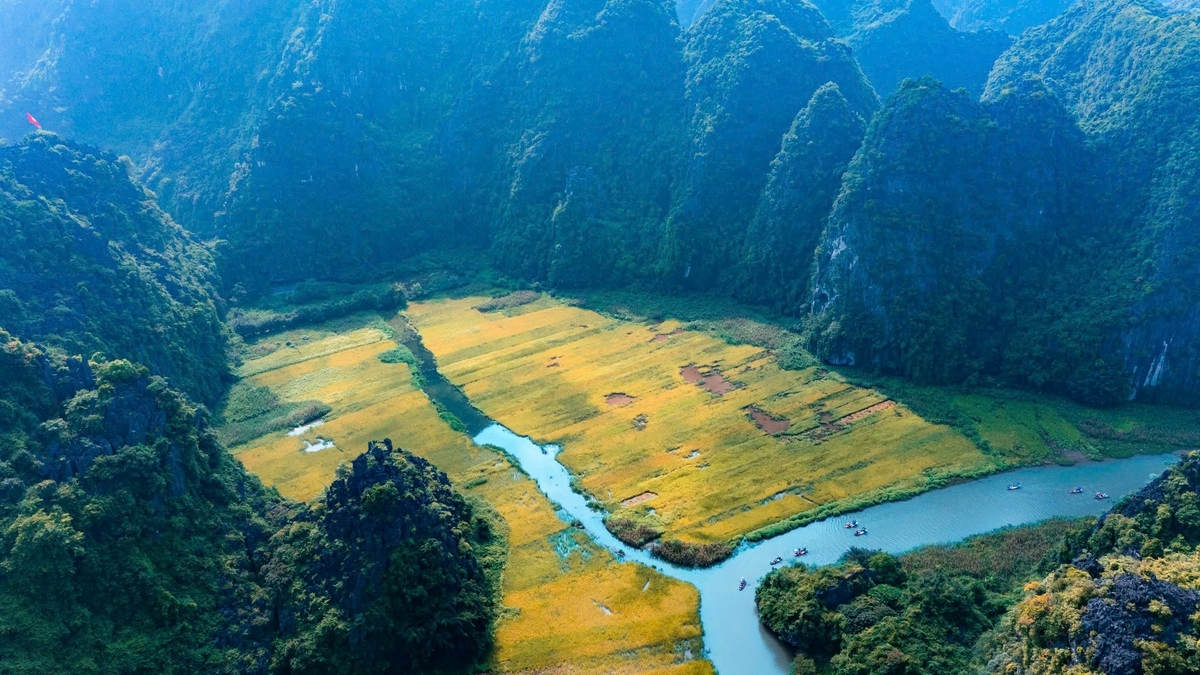
To create these terraced rice fields, laborers meticulously level each undulating plot. They build embankments and stone revetments to prevent erosion. Due to the steep terrain, terraced rice fields are often very narrow, with one plot overlapping another like steps.
Areas of land where water from streams can be utilized are often exploited to the fullest. Water from the streams flows to higher ground for rice paddies. Then, from the higher fields, it is gradually channeled down to lower ground.
Does the saying "water accumulates in the upper fields, dryness drains in the lower fields" reflect this agricultural reality? The economic efficiency of terraced fields is not high because the soil is eroded and becomes barren. Yet, for generations, these barren fields have been the main source of livelihood for farmers.
Why? The agricultural economy, intertwined with feudal society for a thousand years, was also a process of encroachment and struggle for every plot of land. Local magnates and landlords, thanks to their power and money, bought, sold, or occupied deep, flat fields with fertile, humus-rich soil, which were both easy to cultivate and highly productive. Laborers gradually moved to barren, desolate land, diligently seeking a livelihood, thus creating terraced rice fields. And it was precisely this abandoned barren land that became the primary source of livelihood for the poor.
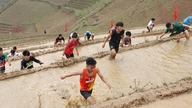

In August, terraced rice fields are planted, a season blessed with abundant rainfall. When the weather is favorable, the fragrant aroma of three-month-old rice, fragrant glutinous rice, and sticky rice fills the air. In March, terraced fields are planted with cassava, corn, and sweet potatoes – drought-resistant food crops.
And then, love for one's homeland is also intertwined with the terraced rice fields. "Looking up at the sweet potato fields / cutting bamboo to weave baskets for my wife to dry the sweet potatoes" represents the happiness of a prosperous family. "The youngest child sucks on the tip of the bone / the rice field at the head of the canal is reserved for the youngest child" expresses loving care and affection. The rice field at the head of the canal is the headwaters, advantageous for water distribution, bringing efficiency to production; it's reserved for the weak and vulnerable youngest child.
Despite the hardships, thanks to the vast land and sparse population, those who were diligent and hardworking could still manage to have plenty of rice, sticky rice, and cassava in their homes. Some peasant families even saved enough to buy a chicken and a pot of sticky rice to take to teachers so their children could learn to read and write.
The land of Central Vietnam is so kind to its people that for hundreds of years, poor people from the North and northern Central Vietnam have migrated here to clear land and establish villages. Therefore, the vast majority of people in Central Vietnam originate from Nghe An, Ha Tinh, Thanh Hoa, Ninh Binh, and other provinces.
If the joy of the lowlands is shrimp and fish, then the joy of the terraced rice fields is birds and field mice. Birds eat the rice, and build nests to lay eggs. Field mice are dry, fragrant, and delicious. In March, when the rice ripens, sparrows fly back to build nests in clumps of bamboo and coconut trees. If birds are too numerous, they build nests right in the rice fields. Children can freely collect eggs and trap birds.
Today, material life is more abundant, but that doesn't mean the terraced rice fields have fallen into disrepair. Farmers still diligently work on their fields. Perhaps the philosophy, "When the harvest is good, don't neglect corn and potatoes; when the crop fails, who will be your companion?" has deeply ingrained itself in the way farmers behave. They still tirelessly "carve stones to elevate their homeland," and the terraced fields still yield fragrant sticky rice, corn, and potatoes, reminding them of precious cultural heritage.



Amidst the comforts of air-conditioned rooms and the internet, I suddenly fell in love with the image of buffaloes leisurely grazing, and children herding them, wandering along the low and high banks searching for bird nests or parting bushes to pick clusters of ripe wild berries. In the distance, plumes of smoke rose from burning fields.
Then I found myself reminiscing about the thatched house, the winding plumes of smoke rising from my mother's kitchen chimney.
Source: https://baodanang.vn/gian-nan-doi-ruong-bac-thang-3339606.html
![[Photo] Opening Ceremony of the 13th National Congress of the Ho Chi Minh Communist Youth Union](https://vphoto.vietnam.vn/thumb/1200x675/vietnam/resource/IMAGE/2026/06/24/1782286753905_ndo_br_1-8510-jpg.webp)
![[Photo] The 13th National Congress of the Youth Union conducts personnel work.](https://vphoto.vietnam.vn/thumb/1200x675/vietnam/resource/IMAGE/2026/06/24/1782299943080_ndo_br_1-6868-jpg.webp)
![[Photo] General Secretary and President To Lam attends the Central Public Security Party Committee Conference](https://vphoto.vietnam.vn/thumb/1200x675/vietnam/resource/IMAGE/2026/06/24/1782302063612_a1-bnd-9302-9166-jpg.webp)