

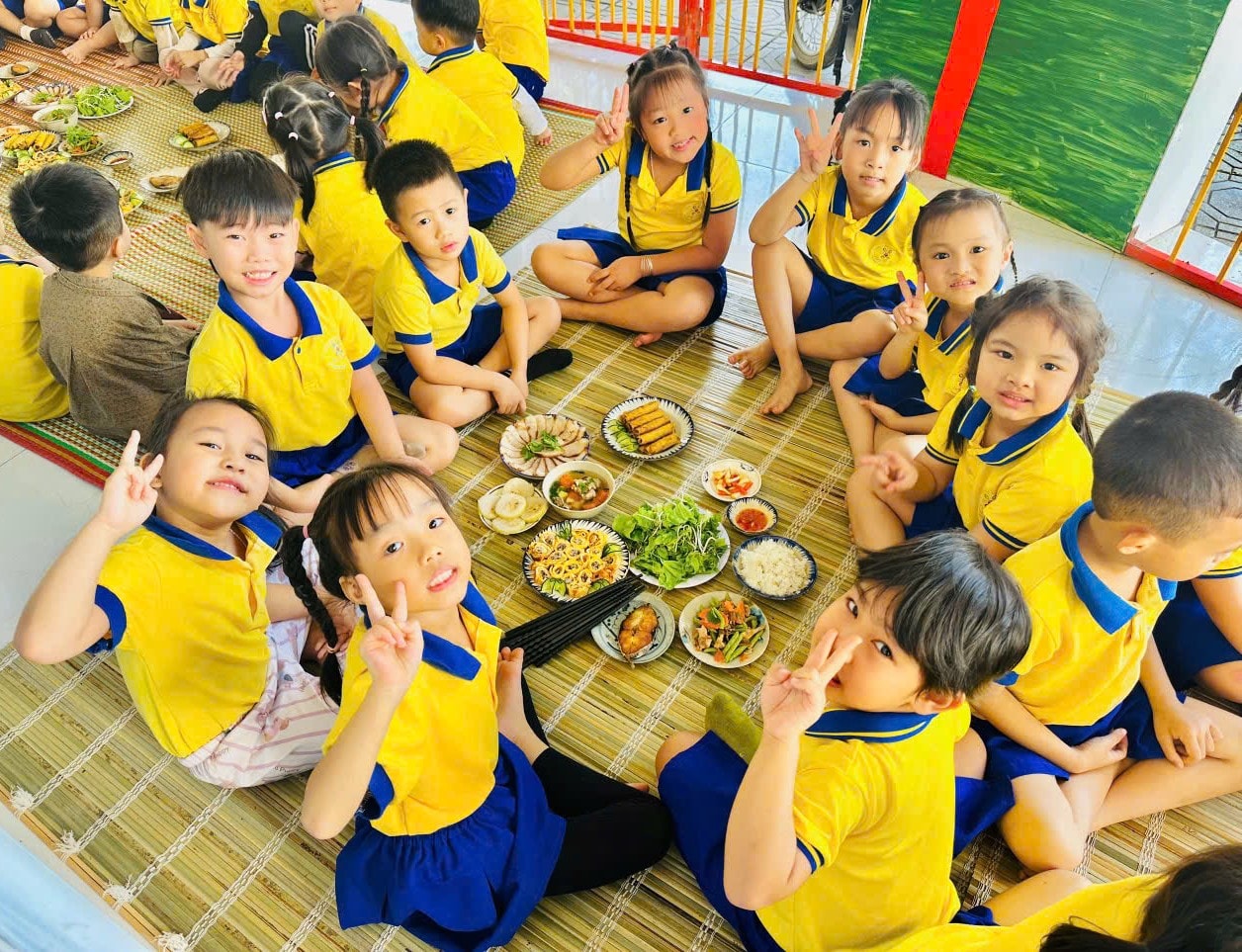
Family and school are the "cradle" in shaping and building healthy nutritional habits for children - the foundation for having "a sound mind in a healthy body".
Every meal is a lesson.
For the past eight years, every day when picking up her daughter from school, Ms. Nguyen Quynh Anh (born in 1982, Thanh Khe ward) has regularly brought a bottle of homemade drinks for her to replenish her energy after a long school day. The drinks vary depending on the weather, sometimes orange juice, lemonade, or warm nut milk in the winter. While her classmates rush to milk tea and soft drink stalls and sidewalk shops, little Carrot (Ms. Quynh Anh's daughter) leisurely enjoys her mother's homemade drink on the way home.
According to Ms. Quynh Anh, in the current context of widespread low-quality food, equipping children with the knowledge and skills to choose food and drinks is essential. Whenever she watches TV or reads newspapers about food safety incidents, Ms. Quynh Anh shares the information with her daughter as a way to "warn" and remind her. "I often tell my daughter, don't treat your mouth like a 'garbage can' and put anything in it. There are plenty of foods to eat, but health is precious. If you have to choose between delicious and clean, choose clean for your health," Ms. Quynh Anh confided.
Sharing the same viewpoint, the family of Mr. Dang Hoai Tien (born in 1990, An Khe ward) also prioritizes home-cooked meals and fresh, seasonal food. Besides minimizing fast food and ultra-processed foods, his family also limits the use of industrial seasonings in cooking to preserve the natural flavors of the dishes, helping to nourish the taste buds of family members, especially young children.
According to MSc. Dr. Hoang Thi Ai Nhi, Deputy Head of the Nutrition - Dietetics - Vaccination Department ( Da Nang Obstetrics and Pediatrics Hospital), clean food plays a fundamental role in nurturing a child's overall health. “Children learn through observation and imitation. Therefore, parents need to maintain healthy eating habits, minimize the storage of unhealthy food at home and within the child's sight. When children are equipped with the right knowledge and habits from a young age and over the long term, they will develop good habits and ‘reflexes’ when choosing food in the future,” Dr. Nhi shared.
“Besides main meals, parents can prepare new and delicious snacks from safe ingredients; carefully read nutritional information when choosing packaged products, prioritizing fresh food with clear origins. In addition, minimize the use of processed foods, those high in sugar, salt, and saturated fats; avoid the habit of frequently snacking, especially before main meals,” - MSc. Dr. Hoang Thi Ai Nhi, Deputy Head of the Nutrition - Dietetics - Vaccination Department (Da Nang Obstetrics and Pediatrics Hospital).
Reinforce and guide children.
While the family is where initial eating habits are formed, the school is where knowledge is reinforced and proper guidance is provided to children about food, especially at the preschool age.
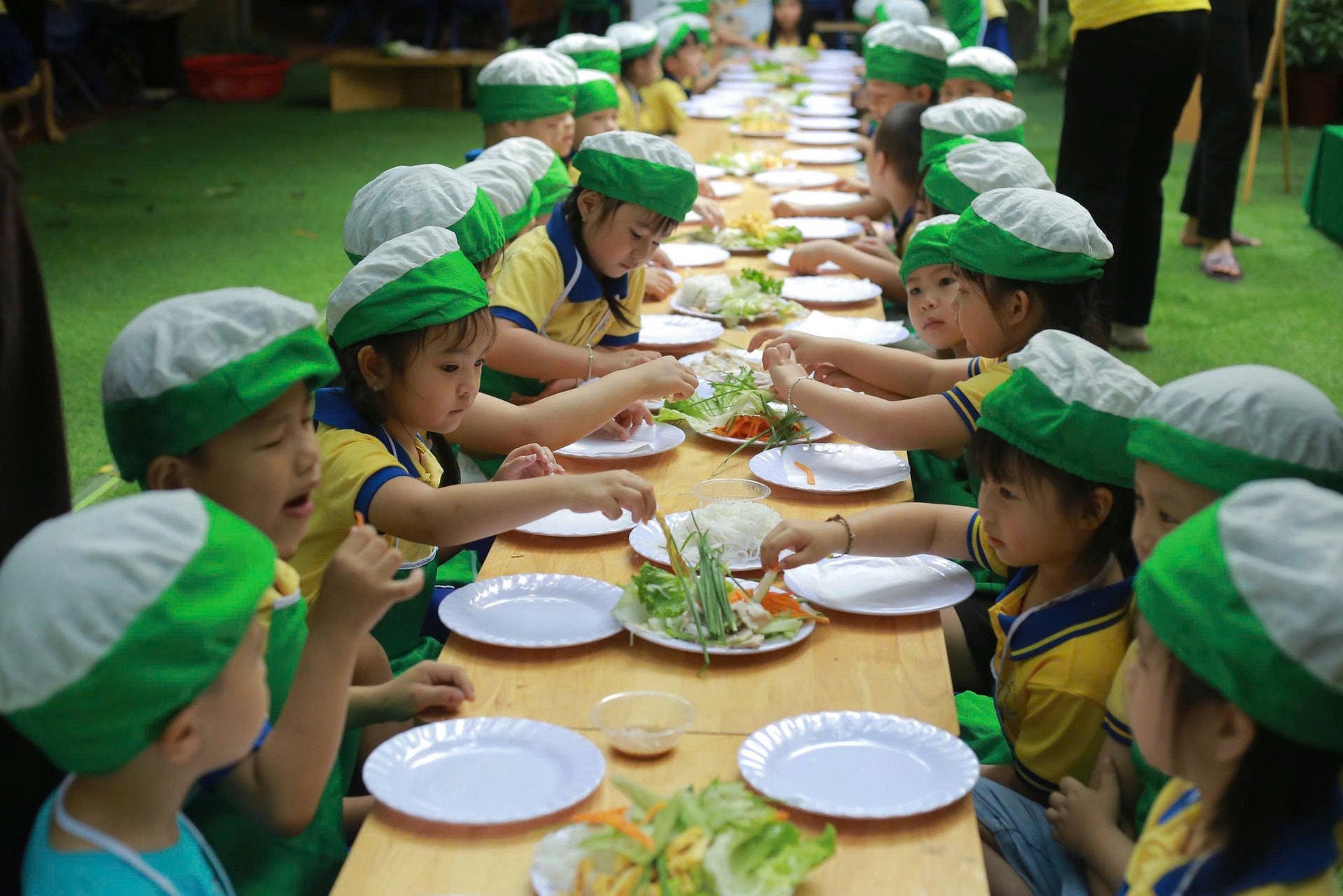
Recently, Truc Dao Kindergarten (Tam Xuan commune) successfully organized the "Vietnamese Countryside Culinary Festival" combined with a thematic activity on "Nutrition Education and Motor Development for Preschool Children".
The highlight of the festival was the food stalls featuring signature dishes from the three regions of Vietnam—North, Central, and South—prepared by students, parents, and teachers alike. No pre-made meals or canned goods were offered; only carefully selected, fresh ingredients were used, with students preparing the dishes themselves under the guidance of their teachers and parents.
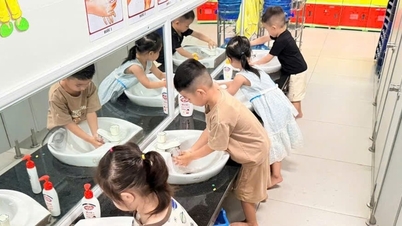
Meanwhile, at Ong Vang Kindergarten (Nam Phuoc commune), using a project-based learning method that focuses on the child, many projects are built around food such as: Quang noodles, Tet holiday meals, spring rolls, home-style flavors, lotus seed candy, etc. Throughout the projects, children directly observe, touch, taste, learn, experience, and draw conclusions, helping them not only understand familiar dishes but also gradually form awareness, habits, and skills in choosing food and drinks in their daily lives.
According to a representative from the Preschool Education Department of the Department of Education and Training, at the preschool age, care, nurturing, and education go hand in hand. Therefore, providing nutritious school meals for preschool children is especially important.
In addition to focusing on balanced and nutritious meals according to age, teachers integrate nutritional education and food values into classroom activities. This reinforces children's knowledge and guides them in making informed food and nutritional choices.
At higher levels of education, more and more schools are focusing on organizing extracurricular activities related to food and nutrition, such as thematic talks, food festivals, and cooking competitions, to help students develop skills in selecting ingredients and preparing healthy dishes.
The current reality shows that the problem of contaminated and counterfeit food, and stimulants disguised as sweets and candies, is rampant, requiring families, schools, and society to cooperate closely to provide early, continuous, and practical nutritional education for children. When each child knows how to "eat right, eat enough, and eat healthily," they are contributing to maintaining and improving the stature of the nation's people, aiming for the sustainable development of the country.
Source: https://baodanang.vn/giao-duc-dinh-duong-3331016.html
































































Comment (0)