

According to Doi Katsuma, Director of the Japan Foundation Center for Cultural Exchange in Vietnam, given the current foundation of frequent and active cultural exchange, the people of Vietnam and Japan need to gain a deeper understanding of this exchange in the new phase.
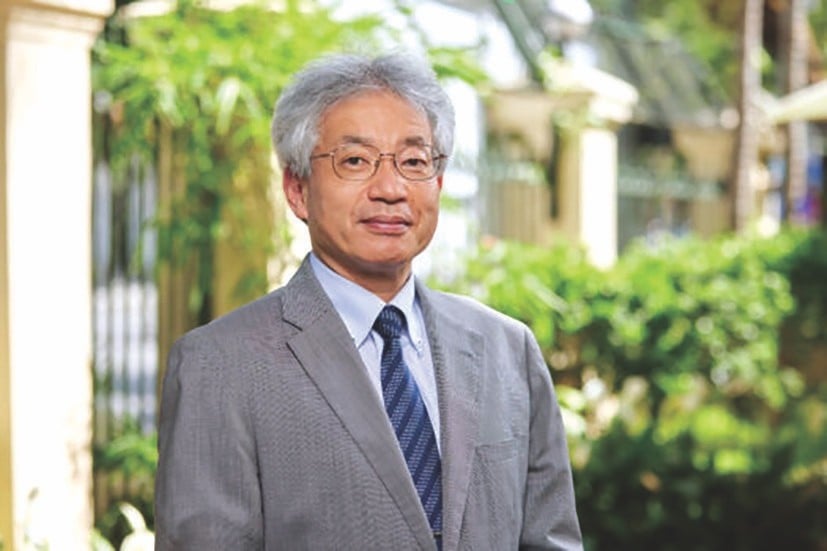 |
| Doi Katsuma, Director of the Japan Foundation Center for Cultural Exchange in Vietnam. |
Based on the works of Goethe of Germany, L'Espace of France, or the British Council of the UK, the Japan Foundation Center for Cultural Exchange in Vietnam has become a trusted cultural destination for the public in Hanoi . What has contributed to this success, sir?
Established in Hanoi in 2008 as an overseas representative office of the Japan Foundation, we operate in three main areas: cultural and artistic exchange, Japanese language education , Japanese studies, and international dialogue.
Over the past 15 years, we have collaborated with numerous organizations and individuals in Vietnam to implement various programs, ranging from exhibitions, concerts, theatrical performances, film screenings, and lectures, to fostering connections between artists and cultural figures from both countries and other nations. In particular, since its establishment, the Center has made significant contributions to supporting Japanese language education, including providing Japanese language instruction in Vietnamese secondary schools.
To meet the growing demand for Japanese language learning, we are strengthening our support at various levels, including: sending Japanese language experts to Vietnam, and inviting Vietnamese teachers, students, and pupils to study in Vietnam.
Japan provides Japanese language teaching materials, organizes workshops or training courses for teachers, offers teaching consulting services, and organizes Japanese language proficiency exams in Vietnam...
In the field of Japanese studies and international dialogue, we support the organization of conferences and workshops for research institutions on Japan. We also invite researchers to Japan to promote a deeper understanding of Japan in Vietnam; and organize intellectual exchange programs such as collaborative research projects and dialogue programs to enhance understanding of common bilateral, regional, and global issues.
With the 50th anniversary of the establishment of diplomatic relations between the two countries, what are the Center's key activities for this year?
Our goal this year is to promote the appeal of Japan to all segments of the Vietnamese population. The main activity will be organizing exhibitions with themes ranging from traditional to modern, lasting from three weeks to one month.
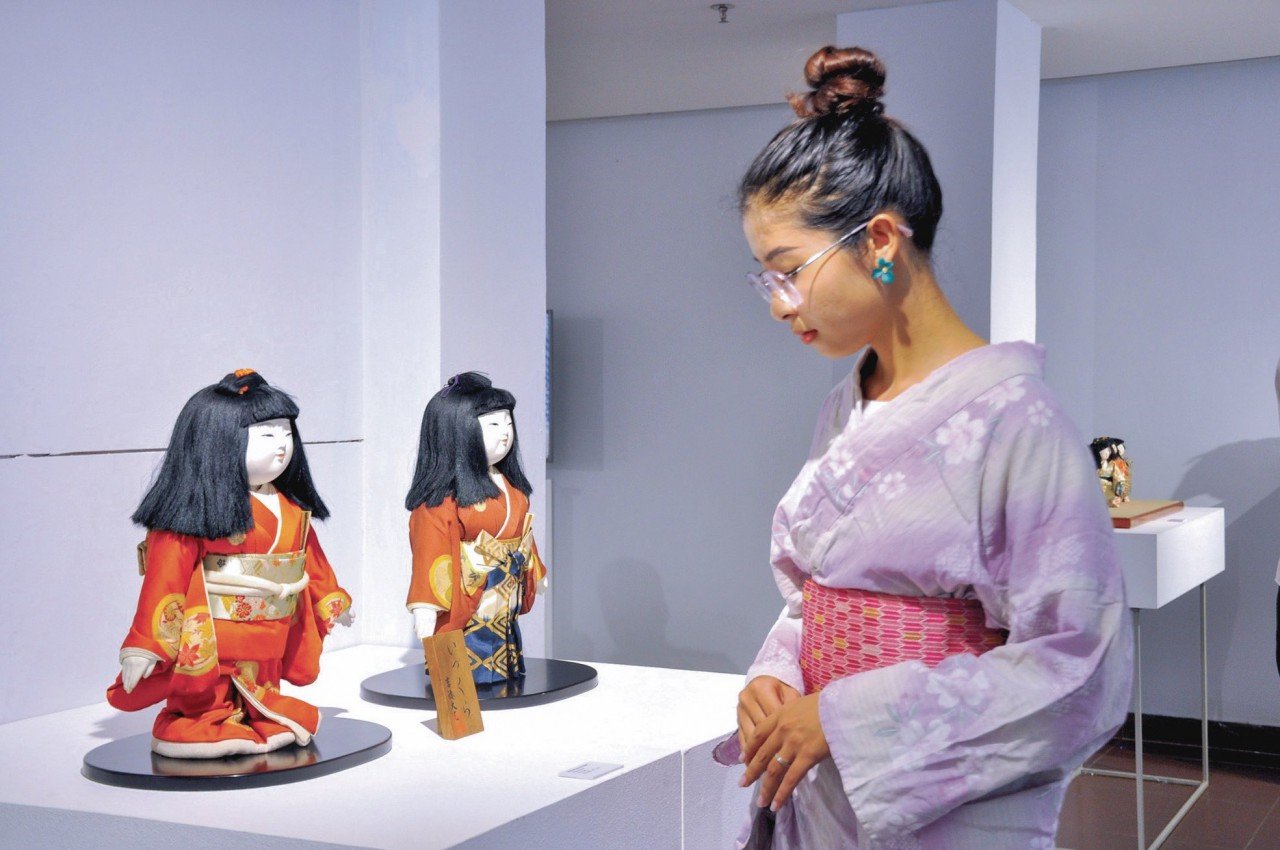 |
| Japanese doll exhibition. |
Since the beginning of the year, we have successfully organized several exhibitions, including Japanese ceramics, Japanese landscape photography by a Vietnamese photographer, and Japanese dolls in Da Nang city and Bac Giang province…
From September onwards, in addition to maintaining the exhibitions, we will organize the Japan Hour Japanese Film Screening Program – a cultural event that is of great interest to the public in Vietnam, and also sponsor the opera "Princess Anio" taking place from September 22-24 – a key activity commemorating the 50th anniversary of diplomatic relations between Vietnam and Japan. In October, we plan to hold a J-Pop and Anime concert at the Youth Theatre and Complex01 with a guest appearance by a famous Japanese singer.
Vietnamese people are increasingly fond of and familiar with Japanese culture. What are your impressions of this cultural exchange?
I myself am increasingly noticing similarities and closeness between the people and cultures of Vietnam and Japan. I am delighted that Vietnamese people always show deep interest in and trust in Japanese products and services. Furthermore, the number of people interested in various fields, from popular culture such as comics, animation, and fashion to art and literature, is growing, especially among the younger generation.
According to him, in the coming period, what direction should the promotion of cultural exchange between the two countries take?
Given the current foundation of frequent and active interaction, we need new directions.
As an organization dedicated to promoting Japanese culture in Vietnam, we have a strategy for cultural exchange based on the following levels.
The first level is through artifacts that embody the thoughts, feelings, and culture of the Japanese people. The second level is the increasingly broad and in-depth interaction between people. The third level is social interaction – an area we haven't done much in yet and hope to further develop in the future.
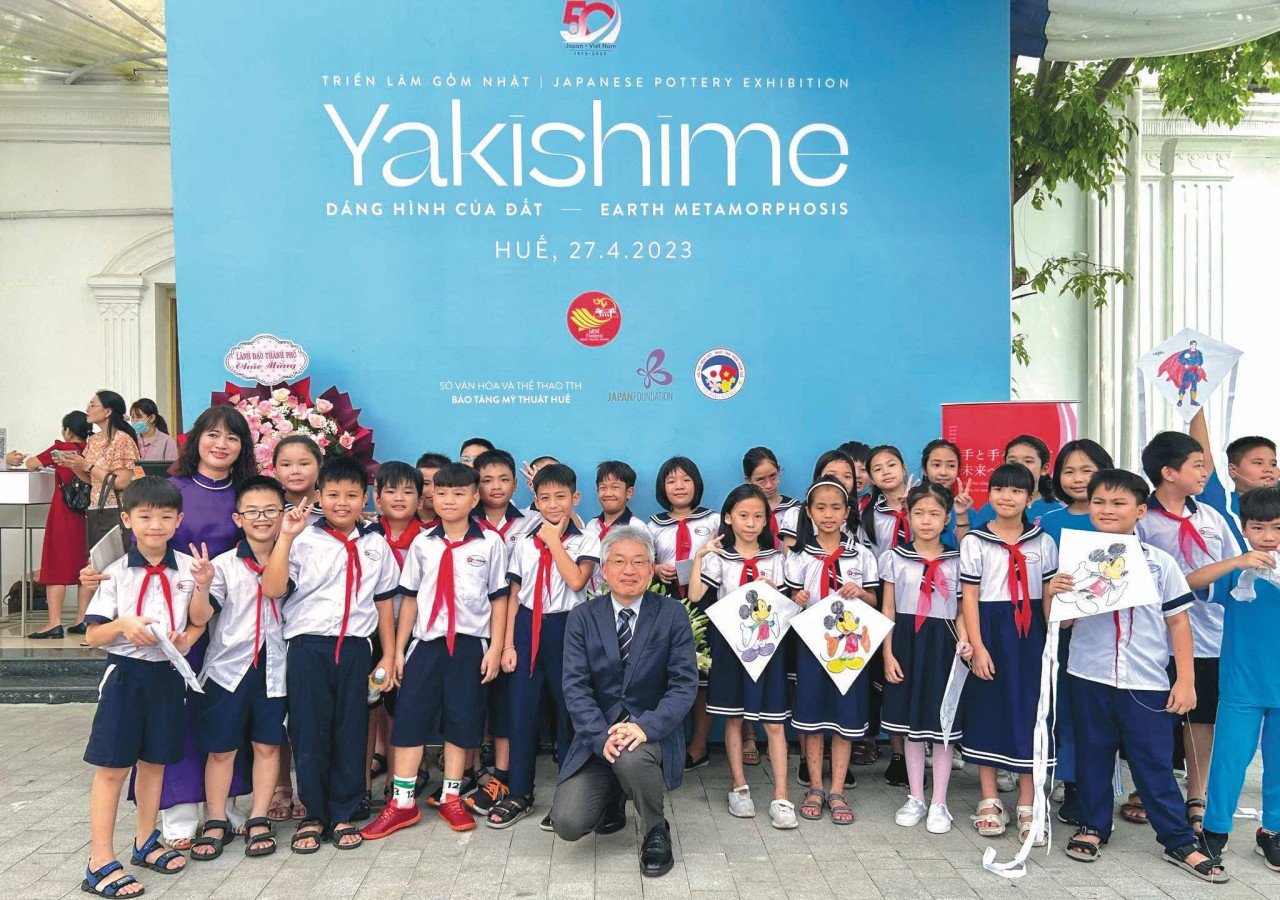 |
| Mr. Doi Katsuma with Vietnamese students at an exhibition on Japanese ceramics. |
Based on the increasingly expanding and developing relationship between Japan and Vietnam, we wish to further strengthen exchanges, information sharing, and cooperation in various fields to create new values.
Looking back at the 50 years of diplomatic relations, the achievements of cultural exchange between the two countries are clearly visible. However, in the next 50 years, we should not simply "observe" but reflect on this exchange. How can we ensure that people...
Vietnam not only loves but also understands the cultural and historical context behind Vietnamese food, which helps to gain a deeper understanding of Japanese culture. Similarly, when Japanese people enjoy Vietnamese food, they not only find it delicious but also understand the history and meaning behind the dish.
Source
![[Photo] National Assembly Chairman Tran Thanh Man working with the Standing Committee of the National Assembly's Ethnic Council](https://vphoto.vietnam.vn/thumb/1200x675/vietnam/resource/IMAGE/2026/05/21/1779337435930_ndo_br_1-jpg.webp)
![[Image] "Journey of Hope" promotes the organ and tissue donation movement in Vietnam.](https://vphoto.vietnam.vn/thumb/1200x675/vietnam/resource/IMAGE/2026/05/20/1779294400833_1-8910-jpg.webp)















































Comment (0)