

According to a representative from the Department of Teachers and Educational Management Staff (Ministry of Education and Training), the training roadmap to upgrade the qualifications of preschool, primary, and secondary school teachers under Decree 71 has been implemented for nearly four years, significantly increasing the percentage of preschool, primary, and secondary school teachers nationwide who meet the required training standards.
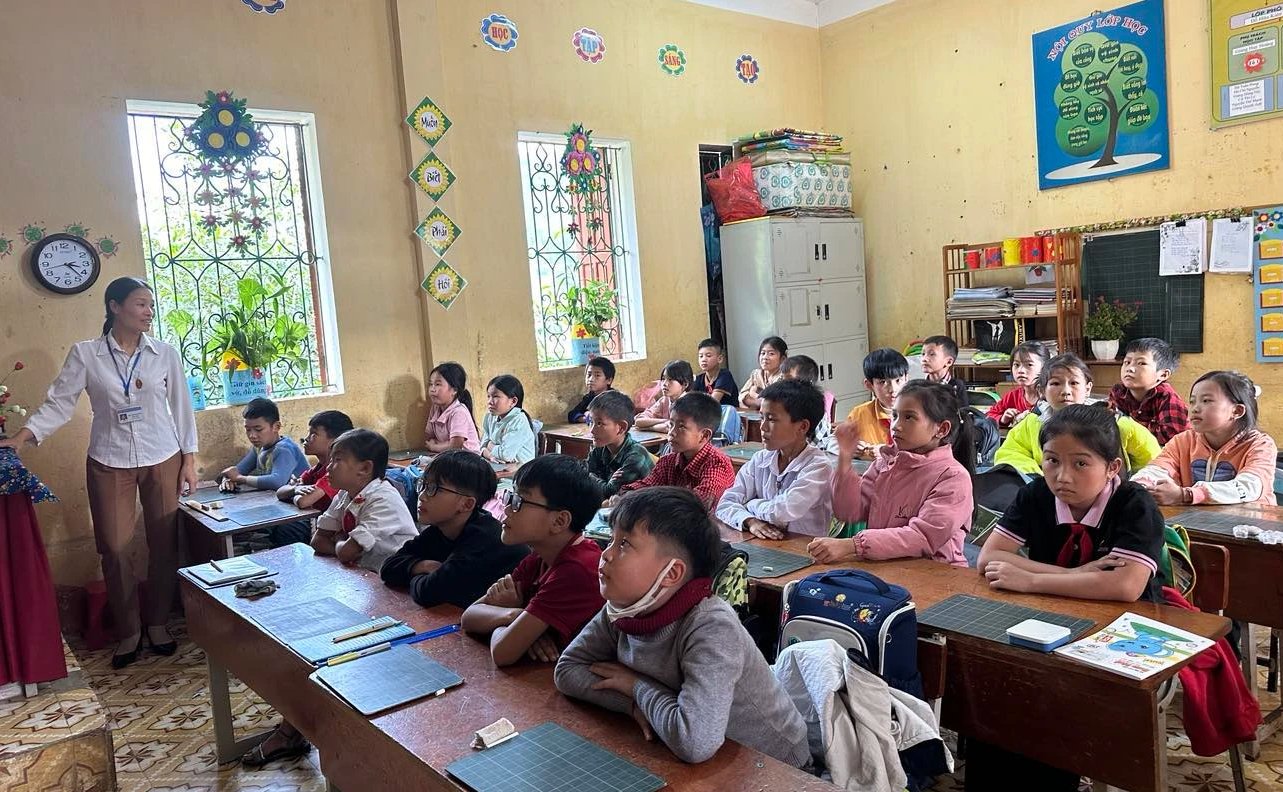
Teachers will be provided with funding to receive training to upgrade their qualifications according to the new regulations.
However, during implementation, some difficulties remain related to training methods, the opening of training classes, and the implementation of support policies for non-public preschool teachers in industrial zones who are eligible for training to upgrade their qualifications.
Therefore, the revised content focuses on three policies aimed at overcoming obstacles in the practical implementation process.
Will teachers who pay for upgrades themselves be entitled to retroactive payment?
One of the key concerns is the funding for implementing the roadmap to raise the required training standards for teachers.
The draft states that the funding for implementing the roadmap to raise the standard of teacher training (public, private, and independent schools) will be ensured by the local budget in accordance with the State Budget Law and other funding sources as prescribed by law; the central budget will support localities when they have not yet balanced their budgets to carry out this task.
The budgeting, allocation, assignment, and payment of funds for the assigned or commissioned training institution shall comply with the provisions of the State Budget Law and other relevant legal documents. The unit price for the assigned or commissioned task shall be determined by the tuition fee charged by the assigned or commissioned training institution.
Teachers sent for advanced training to meet the required standards will be reimbursed for training costs at the tuition fee level as shown on the training institution's invoice after receiving their diploma. The reimbursement of training costs will be carried out in accordance with relevant laws and regulations.
Private and non-governmental educational institutions must ensure funding to cover the costs of training for teachers who are sent to upgrade their qualifications to the required standard.
The Department of Teachers and Educational Management also stated that the draft amendment includes a provision for paying training fees for teachers (eligible for training under Decree No. 71/2020/ND-CP) who have independently pursued further education and received diplomas since July 1, 2020. Therefore, teachers who self-funded their own training to upgrade their qualifications will be entitled to retroactive payment if the above regulation is enacted.
Teachers are selected to attend training institutions to upgrade their qualifications.
The draft also eliminates the bidding method, retaining the method of assigning tasks and placing orders with training institutions according to approved plans. It adds a provision allowing teachers to proactively choose and register for advanced training courses directly with public training institutions when the field or specialization they are applying for does not meet the requirements for the locality to open classes through the assignment or ordering method.
Training to upgrade qualifications must be approved in writing by the principal or director of the educational institution where the teacher is currently working and reported to the institution's direct educational management agency.
The regulations are supplemented to stipulate that during the implementation of the roadmap to raise the standard of training, teachers who have not yet met the standard training level for preschool teachers, working at private or non-governmental preschools in areas with industrial zones, are entitled to the policies as prescribed in Article 10 of Decree No. 105/2020/ND-CP.
In addition, the draft decree also amends and supplements several other related regulations to ensure consistent implementation with the aforementioned amendments.
Why do many teachers need to raise their qualifications?
As of the end of the 2023-2024 school year, the percentage of teachers and administrators meeting the training standards according to the 2019 Education Law for preschools was 89.3%, for primary schools 89.9%, for lower secondary schools 93.8%, and for upper secondary schools 99.9%. Compared to the 2022-2023 school year, the percentage of teachers meeting the standards increased by 1.9% at the preschool level, 5.5% at the primary level, and 2.9% at the lower secondary level.
The 2005 Education Law stipulates that the standard qualifications for preschool and primary school teachers are a diploma from a teacher training college; secondary school teachers must have a diploma from a teacher training college or a college diploma and a certificate of pedagogical training...
However, the 2019 Education Law significantly raised the standard of teacher training with the regulation: "A bachelor's degree or higher in teacher training is required for primary, secondary, and high school teachers. In cases where subjects are lacking, a bachelor's degree in a relevant field and a certificate of pedagogical training are required." Teachers who do not meet this standard will participate in a training program to upgrade their qualifications as prescribed.
Source: https://thanhnien.vn/giao-vien-se-khong-con-phai-tu-tra-kinh-phi-de-nang-chuan-trinh-do-185240806163411062.htm


![[Photo] Prime Minister Pham Minh Chinh presides over a meeting on private sector economic development.](/_next/image?url=https%3A%2F%2Fvphoto.vietnam.vn%2Fthumb%2F1200x675%2Fvietnam%2Fresource%2FIMAGE%2F2025%2F12%2F20%2F1766237501876_thiet-ke-chua-co-ten-40-png.webp&w=3840&q=75)




























































Comment (0)