Every spring, villages across the country hold their own festivals. These activities are deeply rooted in long-standing cultural traditions, fostering community cohesion and solidarity, and providing an opportunity for communities to practice and showcase their unique and distinctive cultural heritage. However, over time, these village festivals have undergone many changes; in some cases, they have become distorted and commercialized.
The allure of village festivals
Each year, the country hosts over 9,000 festivals of varying sizes, equivalent to nearly 30 festivals per day. Some village festivals are renowned far and wide, such as the Co Loa, Le Mat, Phu Dong, and Lim festivals. Among these, village festivals serve as a treasure trove preserving traditional cultural values and long-standing customs. They also provide an opportunity for unique and distinctive cultural heritage, deeply rooted in local traditions, to be practiced and showcased by communities.
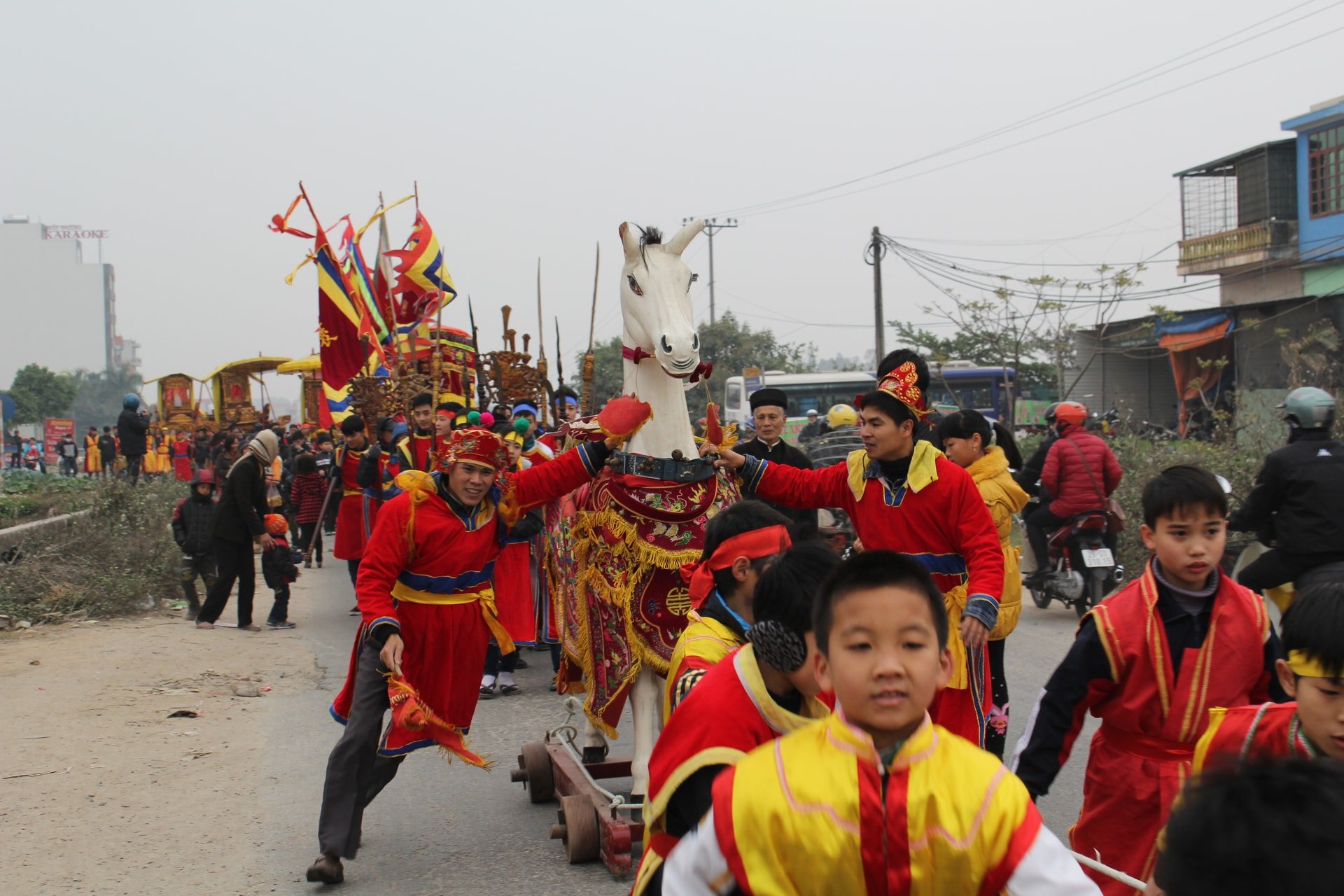
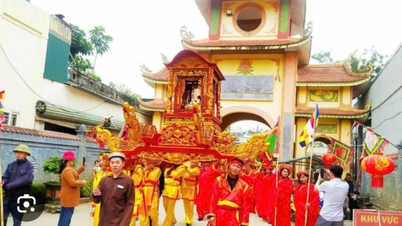
In Hanoi , one of the unique festivals that attracts many locals and visitors is the "Pig Procession" festival in La Phu village (La Phu commune, Hoai Duc district). Every year on the 13th day of the first lunar month, according to tradition, the people of La Phu village hold a procession carrying the "Pig" to the village communal house to offer it to the village's guardian deity. Traditionally, the festival is an occasion for the people of La Phu village to commemorate Tinh Quoc Tam Lang, who, during the reign of Hung Due Vuong VI, contributed to fighting invaders and defending the borders.
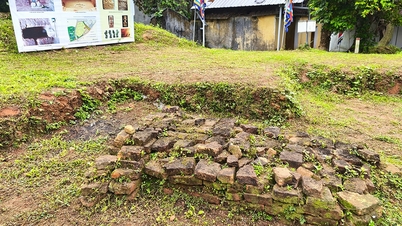
Also in Hanoi, the Sai Temple Festival in Thuy Loi village, Thuy Lam commune, Dong Anh district, is held annually from the 30th day of the 12th lunar month to the 15th day of the 1st lunar month. A highlight is the procession of the mock king on the 11th day of the 1st lunar month. This year, the festival takes place from January 28th to February 12th at the Sai Temple Historical Site.
The Sai Temple Festival, with its unique procession of the king, demonstrates community solidarity; expresses deep gratitude and prays for favorable weather, bountiful harvests, family happiness, and national prosperity.
Every year on the 10th day of the 2nd lunar month, Nhat Tan ward (Tay Ho district, Hanoi) holds a festival to commemorate Uy Linh Lang Dai Vuong. The festival, steeped in traditional culture, expresses the local people's respect and admiration for Uy Linh Lang, who contributed to the nation and its people, repelling foreign invaders and protecting the homeland; it also evokes pride in the village's cultural and historical traditions. Following the ceremonial part, the festival includes many games and traditional cultural performances such as: Cheo singing, Tuong opera, performances of traditional musical instruments, human chess, etc.



In Phu Tho province, there is the Huu Bo village festival in Phung Nguyen commune, Lam Thao district. The festival takes place annually from the 13th to the 16th of January. Notably, a palanquin procession is held every five years, usually in even-numbered years. The festival is not only a beautiful cultural aspect of the village's spiritual life but also an opportunity for villagers to gather under the ancient, solemn communal house, light incense, and remember the contributions of their ancestors from the time of founding and developing the village, making it increasingly prosperous and beautiful.
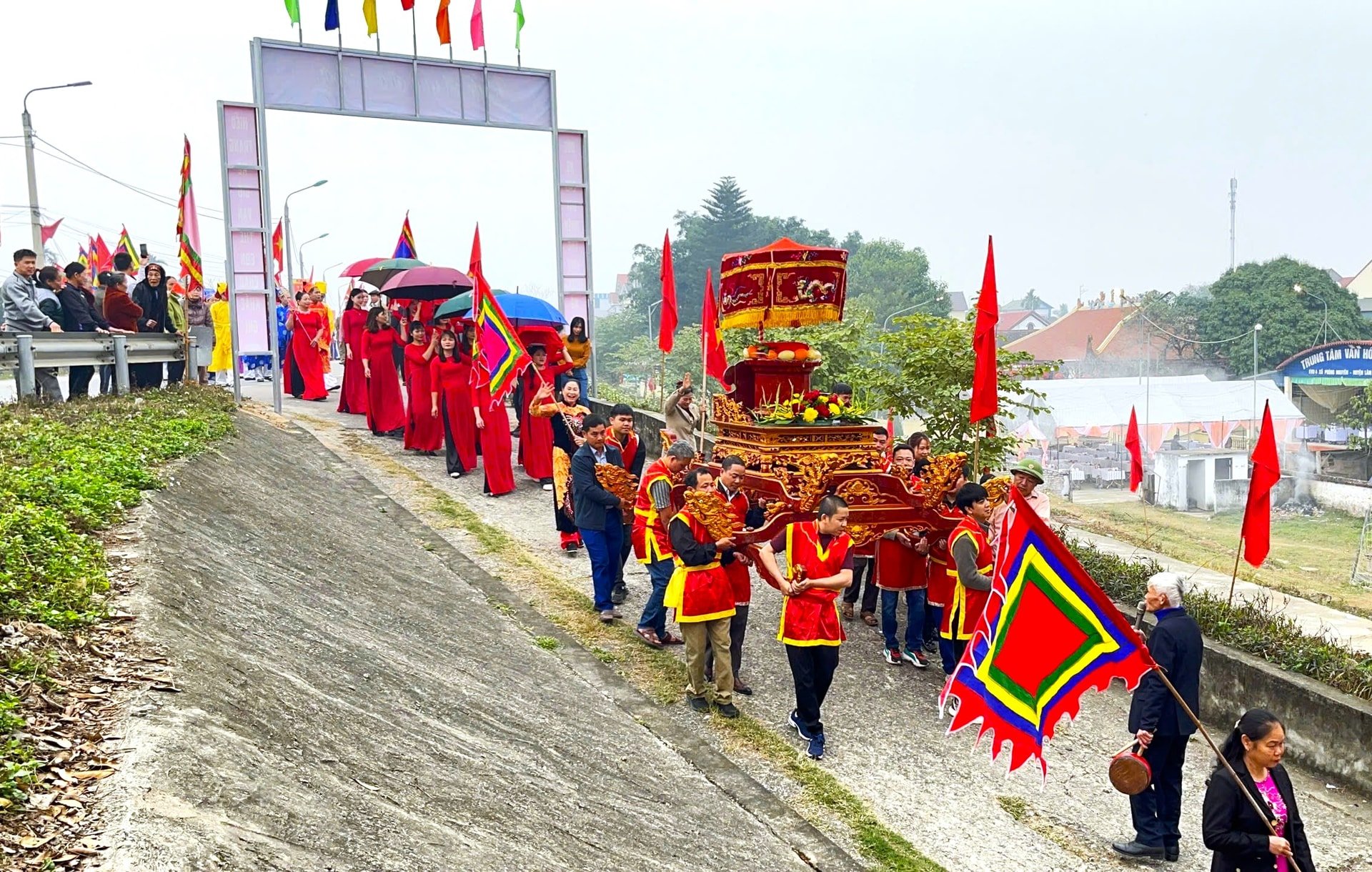
Sharing with reporters, Mr. Phan Duan, Head of the Organizing Committee of Huu Bo Village Festival, said: "Although the village festival today has undergone some changes, it remains a culturally rich activity deeply rooted in the spiritual life of the villagers. It is also an opportunity for descendants, both near and far, to gather under the ancient and solemn roof of the communal house, light incense to commemorate the contributions of their ancestors, and educate the younger generations about the tradition and moral principle of 'drinking water, remembering the source'."
Eliminate offensive behavior.
Speaking about the meaning and beauty of village festivals, Associate Professor Dr. Nguyen Van Huy - former Director of the Vietnam Museum of Ethnology - said that since ancient times, village festivals have played a very important role in the spiritual life of the Vietnamese people; in particular, the great significance of the festival is to unite the community of residents in a village, commune, hamlet, or settlement.
“Village festivals are a cultural heritage of a village; they are often associated with the custom of worshipping the village guardian deity, so during the rituals and recreational activities, people become more spiritually connected; raising awareness among their descendants in protecting, preserving, and promoting the good traditions of their ancestors,” Mr. Huy shared.
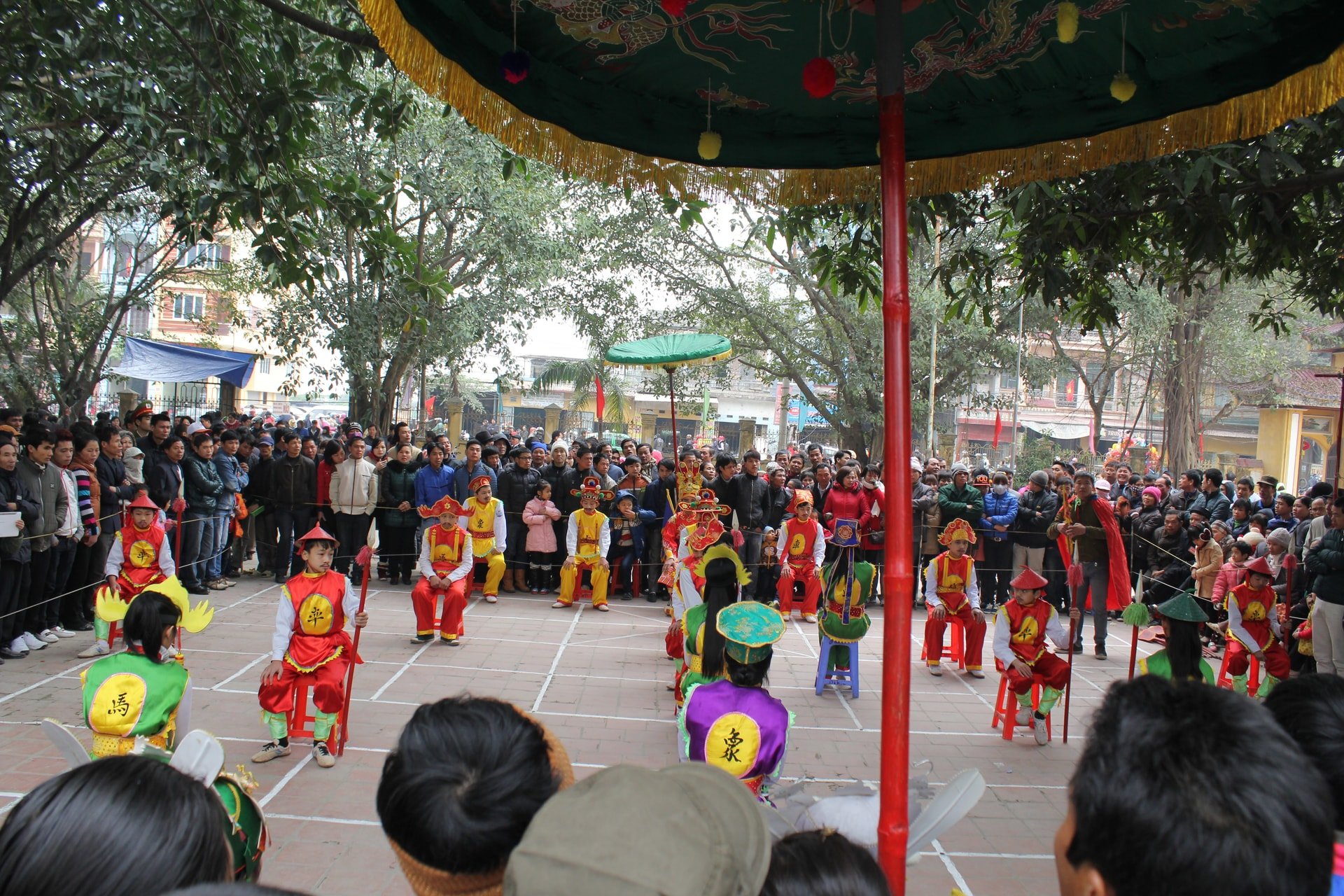
As a traditional folk cultural activity and an indispensable spiritual nourishment for the people, village festivals have undergone many changes over time. In some cases, they have become distorted and commercialized, turning into places where some people seek personal gain, career advancement, or even disguised gambling.
Sharing his thoughts on the changes in festivals in general and village festivals in particular, Dr. Tran Huu Son from the Institute of Applied Folk Culture Research stated that the space for village festivals is developing rapidly. While previously it was just an empty village space, now it includes tourists, thus requiring different management approaches and innovations in activities.

"Some village festivals develop rapidly, giving rise to many unmanageable issues, leading to a situation where 'if you can't manage it, ban it,' thus diminishing the sacredness of the village festival. That is truly regrettable," Mr. Son said.
According to Dr. Tran Huu Son, in order to preserve and promote the value of village festivals while remaining in line with today's development trends, it is necessary to strengthen the role of state management. This includes management through documents and institutions of the Ministry of Culture, Sports and Tourism, along with management through sanctions on festival organization. "We need to strengthen public awareness campaigns to help people recognize offensive behaviors that tarnish the festival, so they do not participate in such actions," Dr. Son emphasized.
Sharing the same viewpoint, Master's degree holder Nguyen Dac Toi - former Head of the Heritage Research Department (Institute for Cultural and Development Studies) - believes that preserving traditional values and developing them harmoniously with modern life requires the synchronization of the entire system of factors, from the roles of the people, the government, scientists to the media.
"The people play a crucial role in preserving and conserving the beauty of local culture. In addition, the government needs to demonstrate its role in appropriate management and regulation, ensuring harmony between tradition and modernity. Alongside the people and the government is the contribution of scientists in researching, preserving, and promoting cultural values. The media also plays a significant role in promoting and raising community awareness about the meaning of village festivals," Mr. Toi said.
Source: https://daidoanket.vn/gin-giu-net-dep-hoi-lang-10300057.html






![[Gallery] UBTech unveils a lineup of "long-legged" robots with stunningly beautiful appearances.](https://vphoto.vietnam.vn/thumb/402x226/vietnam/resource/IMAGE/2026/07/05/1783234567311_img3535-1782964585-2904-1782965454-jpg.webp)