

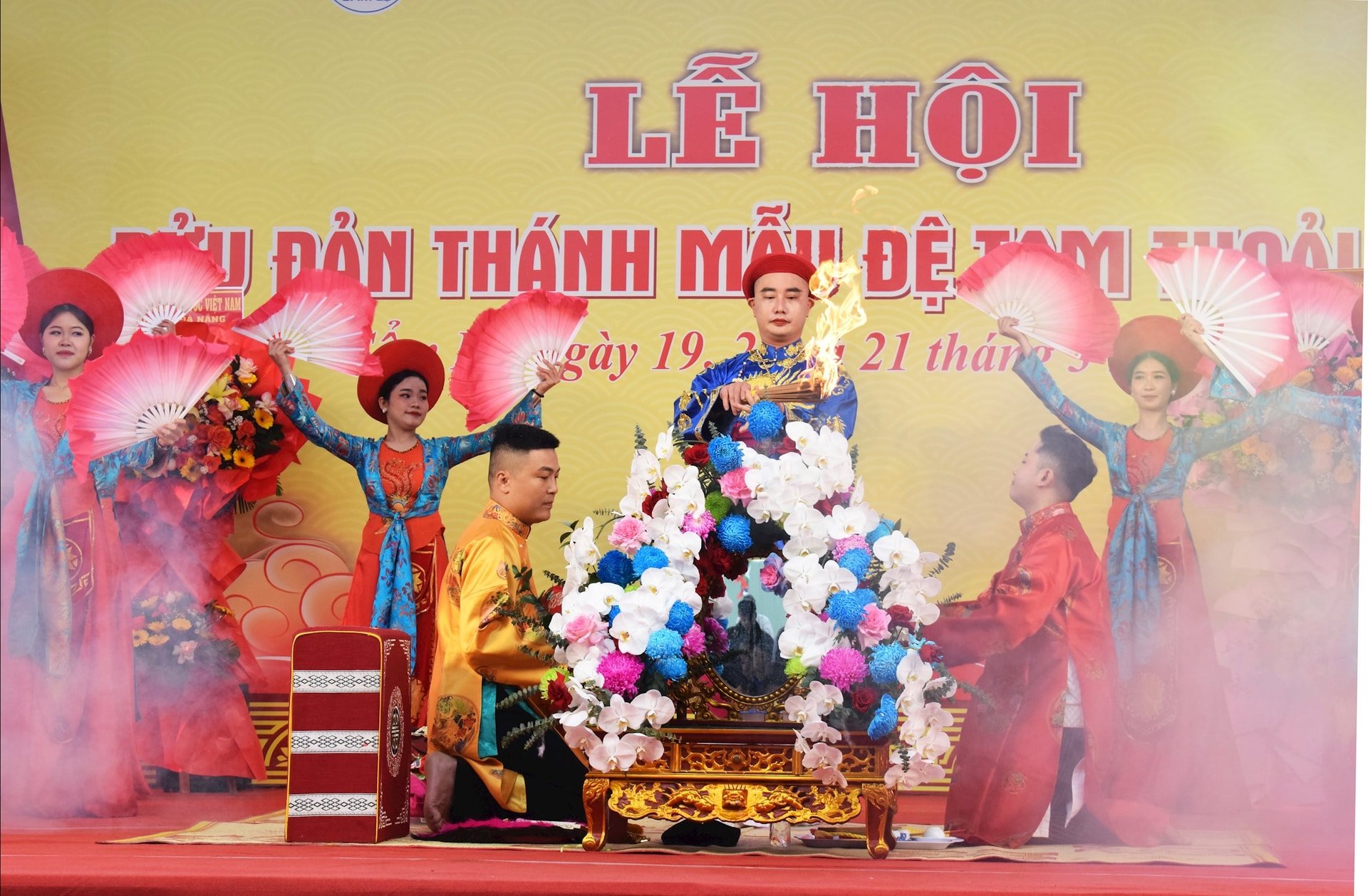
A performance of Chau Van (a traditional Vietnamese folk singing style) at the Buu Dan festival of the Third Holy Mother Thoai Cung in Hoa Xuan ward. Photo: DOAN HAO LUONG
Unique features of the Mother Goddess worship festival.
According to Dr. Dinh Thi Kim Ngan, Institute of Social Sciences of the Central Region (Vietnam Academy of Social Sciences), the worship of Mother Goddess is a folk belief with primitive characteristics and a history spanning thousands of years. In Da Nang city, the worship of Mother Goddess shows the cultural exchange and adaptation of Vietnamese people migrating from the North, combined with the beliefs of the indigenous Cham people and the influence of Chinese and Indian cultures, creating unique characteristics.
Every year in the second lunar month, the people of the former Cam Le district (now Hoa Xuan and Cam Le wards) eagerly participate in the Buu Dan Thanh Mau De Tam Thoai Cung festival at Tam Giang Thanh Dien. This is one of the annual cultural and religious events organized by the locality. Through the festival, the local government hopes to preserve and promote traditional cultural values, educate patriotism and unity in building and protecting the homeland; and at the same time aim to invest in and develop unique local spiritual and religious cultural products and exploit the potential of spiritual and cultural tourism more effectively.
According to researcher Dinh Thi Trang, President of the City's Folk Arts Association, "hat van," also known as "chau van," "hat hau dong," or "hat bong," is a folk performance art form associated with the worship of the Mother Goddess. Currently, this art form is still maintained in Cam Le district and is performed in Mother Goddess festivals for the benefit of the people. Hat van plays an important role in the spiritual life of the people, with the hope of praying for children, good health, and other blessings.
It needs to be preserved and promoted.
According to Dr. Dinh Thi Kim Ngan, the worship of Mother Goddesses in Da Nang encompasses both land deities and sea deities, including Vietnamese and Cham deities such as Thien Y Ana, Dai Can, Dang Que, and Ngu Hanh… Within the city, there are many places dedicated solely to the worship of Saint Mother Thien Y Ana, or combined with the worship of other deities, in historical sites such as Duong Lam communal house, Dai La communal house, Phuoc Thuan communal house, Nam Tho communal house, Trung Nghia communal house, Phuong Chao shrine, Chua Ngoc shrine, and Chua Loi shrine…
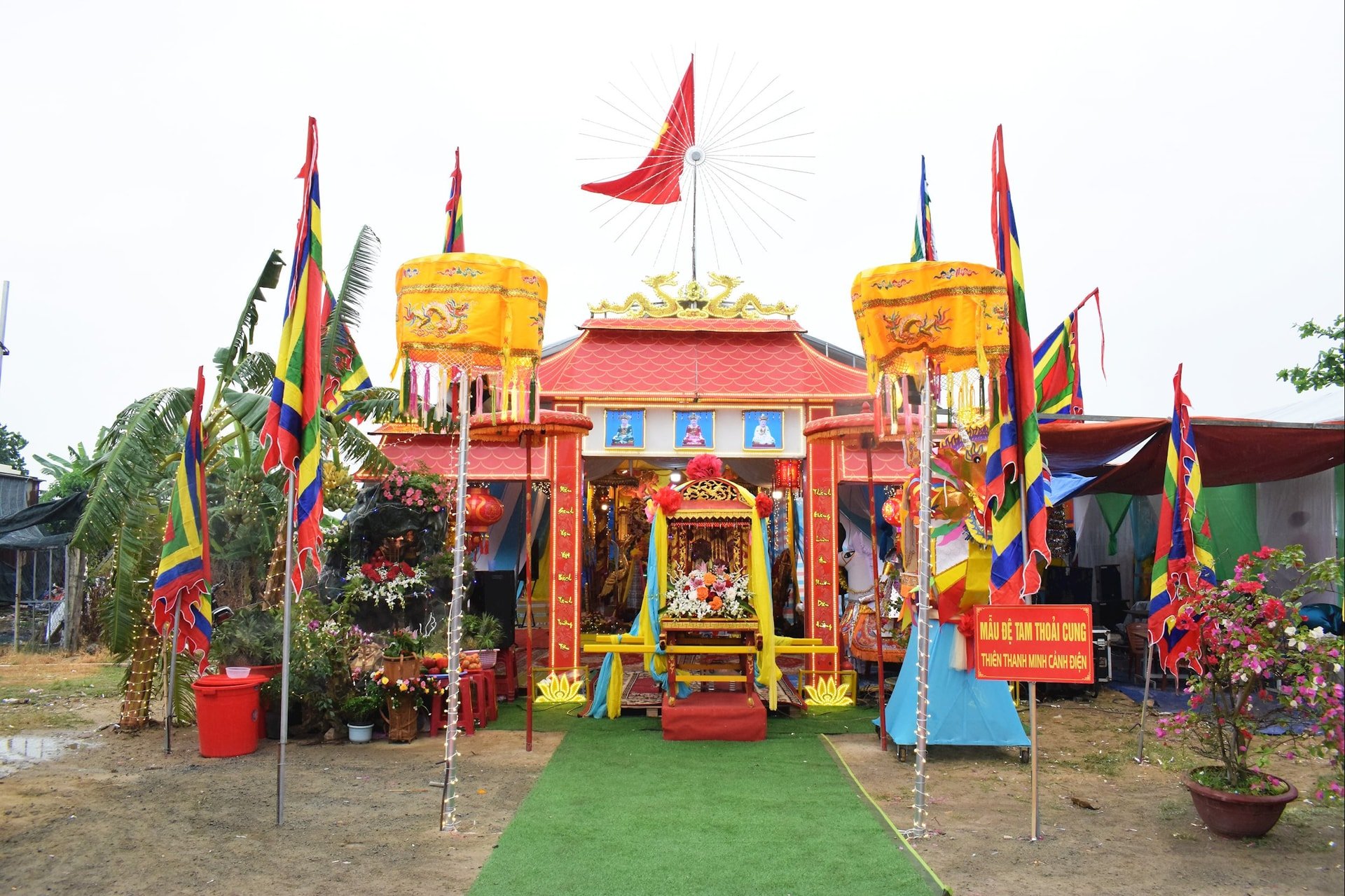
Camping during the festival honoring the Third Holy Mother of the Water Palace. Photo: DOAN HAO LUONG
Folk beliefs in Quang Nam province are often intertwined with unique festivals, such as the Thu Bon Goddess Festival, which is associated with folk festivals along the river, expressing the aspiration for a prosperous, peaceful life and the protection of nature. To date, the Thu Bon Goddess Festival and the Phuong Chao Goddess Festival have been recognized as national intangible cultural heritage.
The Vietnamese practice of worshipping the Mother Goddess of the Three Realms was recognized by UNESCO as a "Representative Intangible Cultural Heritage of Humanity" in December 2016. Although this belief has been associated with the people of Da Nang for hundreds of years, the reality shows that some Mother Goddess worship sites are currently undergoing little significant renovation; some have been relocated or simply rebuilt, while others have been encroached upon by private residences. Meanwhile, rituals have been simplified, and festivals have shrunk in both time and scale.
To preserve and promote the value of the Mother Goddess worship tradition, the city needs to invest in and develop spiritual tourism through Mother Goddess worship sites. Alongside management efforts, attention should be paid to the preservation of historical relics, especially the creation of a comprehensive historical record system for these sites.
Establishing a legal framework with clear regulations and rules for managing areas of historical sites requiring preservation is crucial. Simultaneously, promoting awareness among tourists and local residents about the importance of jointly preserving these Mother Goddess worship sites is essential. Only then can these cultural heritage sites be reintegrated into community cultural life, thereby rekindling love and pride for the nation's traditions in every citizen.
Source: https://baodanang.vn/gin-giu-net-dep-tin-nguong-tho-mau-3303686.html


![[Image] National Assembly discusses the implementation of the socio-economic development plan.](https://vphoto.vietnam.vn/thumb/1200x675/vietnam/resource/IMAGE/2026/04/20/1776696707422_ndo_br_img-20260420-185419-jpg.webp)
![[Photo] General Secretary and President To Lam meets with National Assembly delegates from ethnic minorities.](https://vphoto.vietnam.vn/thumb/1200x675/vietnam/resource/IMAGE/2026/04/20/1776696701056_a1-bnd-8331-3342-jpg.webp)



























































Comment (0)