

 |
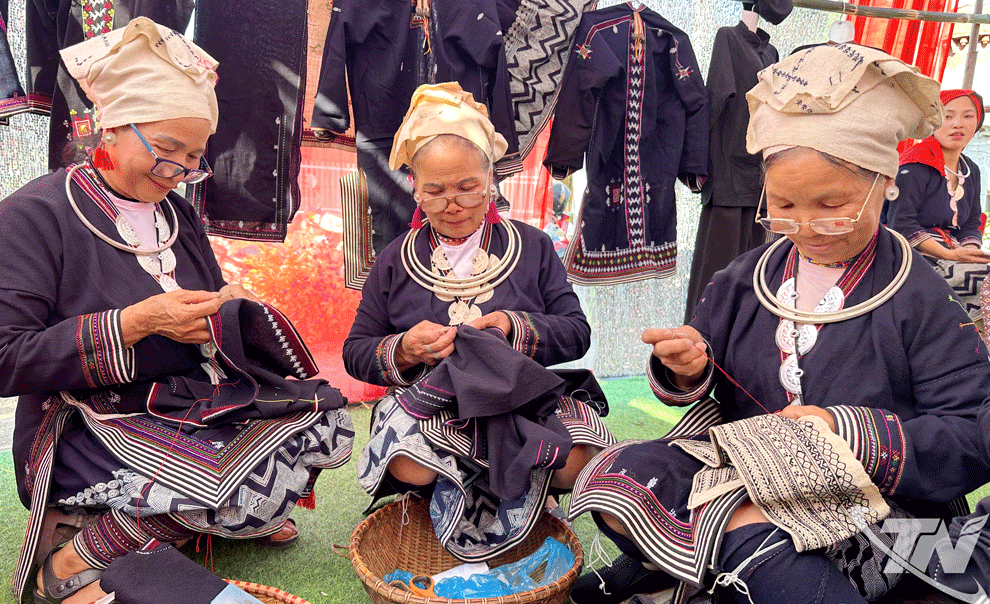
| The women and mothers meticulously work on the embroidery stitches on their traditional costumes. |
Following the winding road along the Cau River, we visited Ban Bung, Phong Quang commune, Thai Nguyen province – home to 88 traditional houses of the Dao Tien ethnic minority. Today, Ban Bung is bursting with new life, featuring spacious houses and sturdy concrete roads. Along with the vibrant colors of the new rural landscape, Ban Bung is also known for its long-standing cultural identity, passed down through generations.
In the ongoing effort to preserve and promote cultural values, traditional clothing is a source of pride for the Dao ethnic people here. Every woman in the village owns a traditional outfit; if a woman comes from another place to marry into the family, her mother-in-law will make one as a gift for her to wear on her wedding day, during festivals and holidays, and even when she returns to her ancestors' home.
Driven by our interest and curiosity about how traditional costumes are made, we visited Mrs. Trieu Thi Huyen, a renowned skilled craftswoman in Ban Bung. Mrs. Huyen, over 60 years old, has spent nearly 50 years working with indigo dye and colored threads. In a gentle voice, she meticulously explained each part and the process of creating the unique traditional attire.
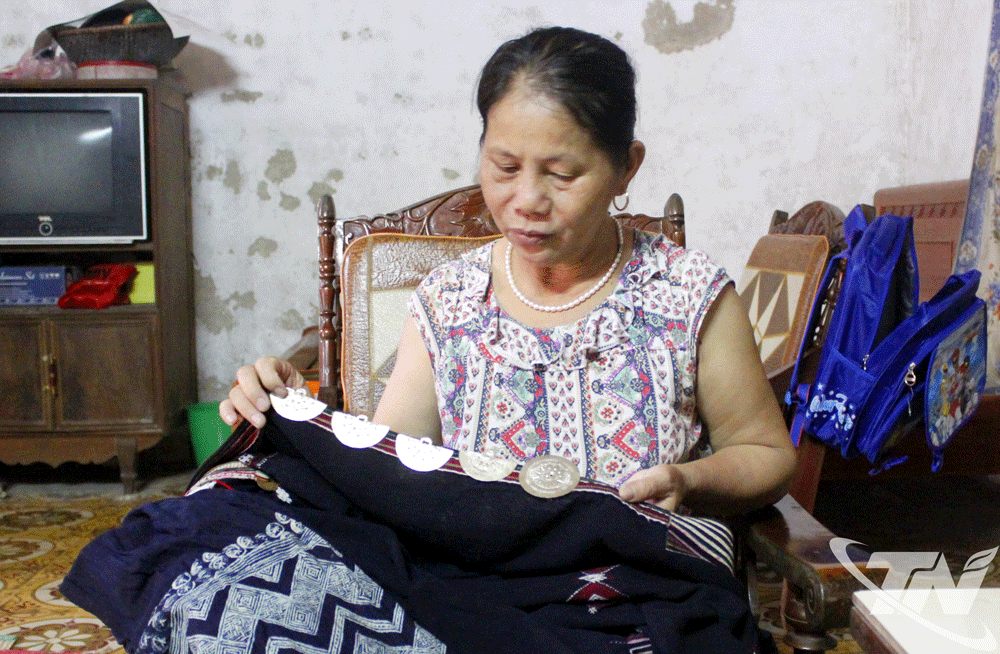 |
| Ms. Trieu Thi Huyen shared about the process of making traditional ethnic costumes. |
The traditional clothing of the Dao Tien people has two main colors: gray and black. The style is collarless, four-panel, with a split chest and side slits of about 30cm, decorated with many silver buttons. The hem is embroidered with striking colored threads. The back of the shirt has four to five lines of white, blue, and pink threads; the innermost layer is a pattern. The two front panels have less embroidery at the hem than the back panel, with one less white thread line. The cuffs are also embroidered with white, blue, and red threads.
To create a complete costume, from headpiece to leggings, requires long-term preparation and continuous work for 1-2 months. First, cotton must be grown for weaving, indigo plants cultivated, and indigo powder processed for dyeing. After the fabric is dyed and dried, the individual parts are measured and sewn. At this stage, the most intricate and time-consuming step—decorating with patterns—begins.
Like the traditional clothing of many other ethnic groups, the Dao Tien women's blouse is also meticulously and attractively decorated. First, decorative patterns are embroidered using red and blue threads, with each embroidery stitch spaced apart by a pair of threads, leaving seven colored threads on the fabric; then, eleven more pieces of fabric are cut and embroidered perpendicularly along the hem of the blouse.
Once the decorative embroidery was complete, the women would attach large silver coins to the collar. In the old days, wealthier families would attach many half-silver buttons from the neckline downwards, ending with a single round silver coin. Families with less means would still try to have silver minted to obtain a single intact button. The headscarves were also prominently decorated with elaborate embroidery.
It can be said that the decorations are a testament to the skill and creativity of Dao Tien women in embroidery. It is also one of the criteria by which Dao Tien men choose their wives.
If you've ever seen Dao Tien girls in their traditional costumes, you might think the decorative borders on their skirts are also embroidered, and only a very discerning eye would notice the difference. This is because those soft, flowing shapes are created in a very creative way.
After cutting and sewing the flared skirt that falls below the knee, the maker will whittle very thin, soft bamboo sticks to bend into triangles, circles, and other decorative shapes. These shaped bamboo sticks are then dipped in hot beeswax and applied to the fabric.
The beeswax adheres to form patterns. When dyed with indigo, the beeswax retains the color, leaving striking ivory-white patterns against the indigo background of the dress. Because the dress only extends past the knees, Dao Tien women also wear leggings wrapped around their calves. This is also a distinctive feature of the outfit, as the leggings are meticulously embroidered in various colors and styles, contrasting sharply with the simple, elegant black and white of the overall attire.
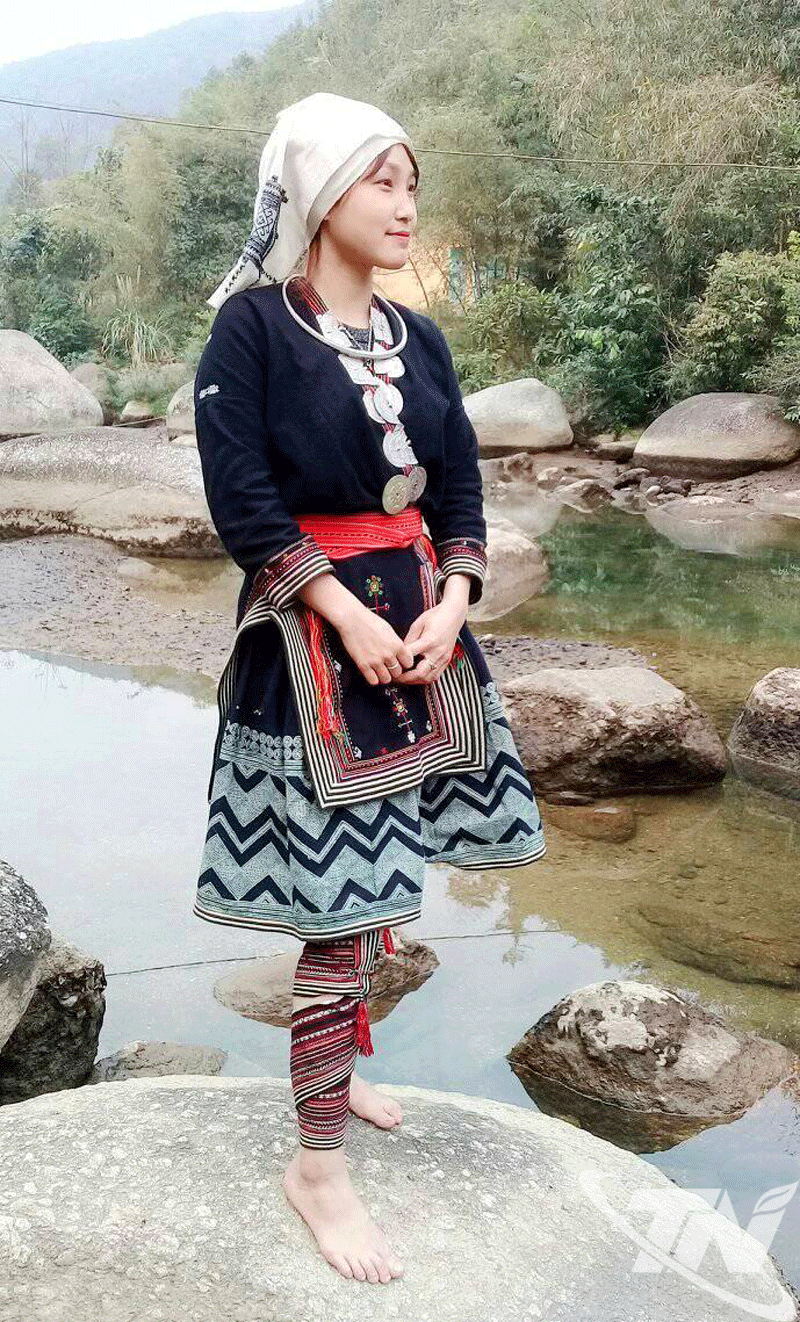 |
| The Dao Tien girl is like a wildflower in the forest, dressed in traditional attire. |
Over time, there were periods when the traditional way of making traditional clothing gradually faded into memory. Mothers and grandmothers would neatly store their dresses and skirts in wooden chests, and those distinctive colors were only seen at weddings and festivals. To prevent this precious heritage from being forgotten, in recent years, the people of Ban Bung village have strived to restore their cultural traditions, including traditional clothing. Elderly women with gray hair and glasses meticulously guide the next generation; young girls with rosy cheeks and leggings proudly post vibrant images on social media.
“Currently, there are more than 20 people in the village who know how to make traditional costumes. The elders teach the younger generation, and in this way, the cultural identity will be preserved for generations to come…,” affirmed Mr. Ban Van Thuong, Head of the Front Committee of Ban Bung village.
Not only in Ban Bung, but also in many localities throughout Thai Nguyen province, the Dao Tien people are still preserving and maintaining their traditional costumes as an inseparable part of their ethnic identity.
Source: https://baothainguyen.vn/van-hoa/202507/gin-giu-trang-phuc-truyen-thong-dan-toc-dao-tien-o-ban-bung-e702919/
![[Image] Shipbuilders exposed to steel and record-breaking heat.](https://vphoto.vietnam.vn/thumb/1200x675/vietnam/resource/IMAGE/2026/06/04/1780545781745_ndo_br_img-5402-4683-jpg.webp)



























![[Video] Sunset at Lap An Lagoon – Where the sun sets over the fishing nets](https://vphoto.vietnam.vn/thumb/1200x675/vietnam/resource/IMAGE/2026/05/31/1780192137701_beach-landscape-sea-water-nature-grass-745871-pxhere-com.jpeg)
























Comment (0)