


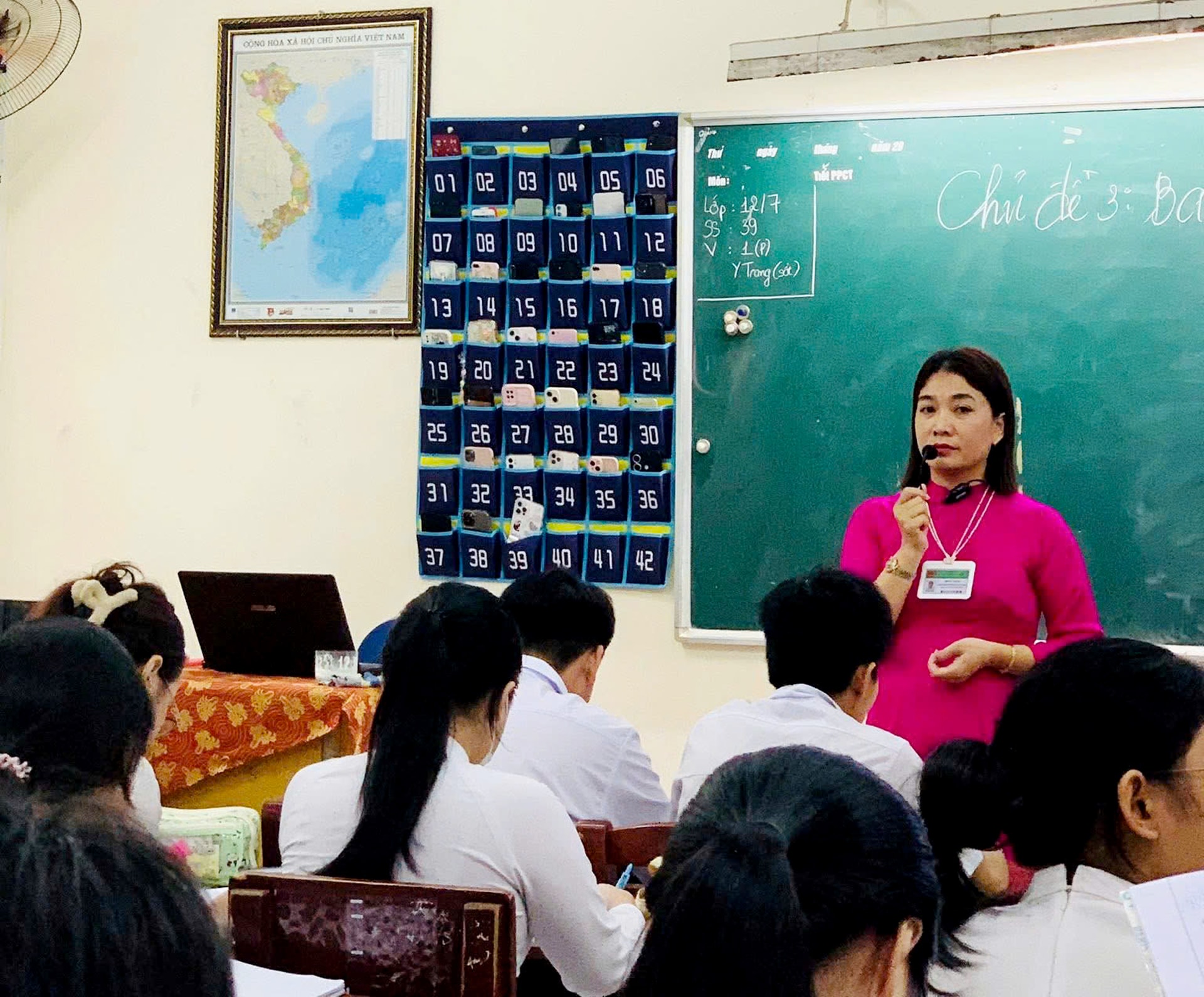
The use of smartphones in schools offers both convenience and potential negative consequences. The "Phone-Free Classroom" program contributes to building an effective and humane learning environment. By prohibiting phone use during class, students can focus better, increase real-world interaction, reduce distractions, and protect their mental health.
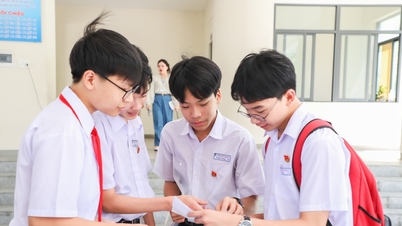
At Le Quy Don Specialized High School, the program has been implemented for many years. Ms. Truong Nguyen Ngoc Vinh, Vice Principal of Le Quy Don Specialized High School, said, "'No Phones in Class' is not only a management measure, but also a solution to help teachers and students regain focus in teaching and learning."
This is a key factor in improving the quality of education and building a humane and sustainable school environment for future generations of students. Only when students are wholeheartedly dedicated to knowledge will their learning be effective. More importantly, this is the foundation for their holistic development, confidence, and readiness to integrate into the future.
The program's effectiveness is clear, helping students focus on lectures and restoring their ability to concentrate deeply. At the same time, stepping away from phone screens improves mental health, enhances face-to-face communication, and strengthens connections with friends.
During recess, Le Quy Don Specialized High School does not mandate a ban on phone use, but the school encourages students to put their phones away completely to foster direct interaction with friends, from chatting to participating in traditional games and sports . These encouragements are not rigid but rather proactive, aiming to create consensus and change students' habits.
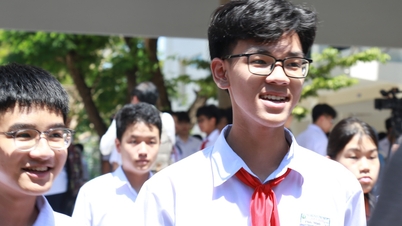
N. D. T., a student in class 10C2 at Le Quy Don Specialized High School, said that when the program was implemented, she was a little surprised and really uncomfortable because she was separated from her "inseparable companion" for so long. But over time, and understanding the meaning of the program, she and her classmates gradually got used to it and felt happier to be free from their dependence on phones. "My parents are also very happy about this. I am no longer distracted by social media or online games; instead, I have more time to interact directly with teachers and friends, and practice concentration skills to proactively absorb knowledge," T. said.
Since the beginning of the 2025-2026 school year, Ton That Tung High School has encouraged students not to use mobile phones at school. During class, students are only allowed to use them when permitted by the teacher, for educational purposes. From just a few classes implementing this, over 50% of the school's classes have adopted the policy after nearly a semester.
To prevent students from forgetting about their phones during recess, the school has created a green library corner and organized recreational activities using traditional games through the "Active Recess" model. The school's student union incorporates these activities into its competition program, evaluation, and grading at the end of each semester and year.
According to Mr. Phan Huu Thinh, Principal of Ton That Tung High School, the implementation of the "Phone-Free Classroom" program, although initially only a campaign to encourage participation, has shown significant positive changes. This is a major aspiration of the school, aiming for a healthy educational environment and the holistic development of students in an era of rapidly advancing information technology. Of course, the school also aims to guide students not to completely abandon their phones, but to utilize the advantages of smartphones and the internet for learning and keeping up with societal advancements in line with global trends.

Mr. Tran Quoc Phong, Deputy Head of the Secondary Education - Student Affairs Department (Department of Education and Training), said that the "No Phones in Class" program is truly meaningful. However, currently, due to the lack of specific regulations from the competent authorities, the department is only encouraging schools to implement it during class time.
Currently, the department's leadership is directing the specialized department to research and review relevant guidelines, regulations, and models in advanced countries as well as some localities in the country that have applied or tested them, in order to develop and determine whether a feasible implementation plan is feasible in the city.
According to Mr. Tran Quoc Phong, to reduce dependence on electronic devices, the department has proactively guided schools to increase extracurricular activities for many years. The former Da Nang city implemented the "School Eye Care" project 10 years ago, with the slogan: "Students should not use electronic devices for more than 45 minutes to better protect their eyes." Along with that, outdoor activities are being increased to help students maintain healthier eyesight.
Source: https://baodanang.vn/gio-hoc-khong-dien-thoai-3316423.html










































































































Comment (0)