

Tien Giang is a province located in the Mekong Delta and is also part of the Southern Key Economic Region. It stretches along the northern bank of the Tien River for over 120 km; its geographical coordinates are 105 ° 49'07" to 106 ° 48'06" East longitude and 10 ° 12'20" to 10 ° 35'26" North latitude. My Tho City, the provincial capital of Tien Giang, is located 70 km southwest of Ho Chi Minh City and 90 km northeast of Can Tho City.
Tien Giang province borders the following provinces:
- To the north and northeast, it borders Long An province and Ho Chi Minh City.
- To the west and southwest, it borders the provinces of Dong Thap and Vinh Long.
- To the south, it borders Ben Tre province.
- To the east, it borders the East Sea.
Tien Giang province has a natural area of 2,510.61 km² , accounting for 0.76% of the country's total area and 6.2% of the Mekong Delta's area.
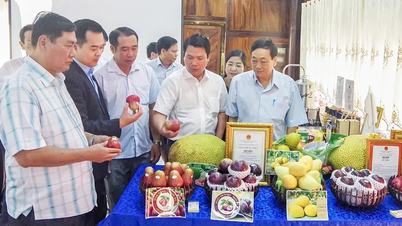
In its development plan, Tien Giang province has specifically divided its economy into three key zones: The eastern districts have enormous potential for marine economic development and the development of shipbuilding, seaports, maritime transport, and seafood processing industries, along with potential for tourism and fisheries logistics services. The western districts have the strongest potential for food production, especially fruit production, being the largest in the province, linked to the development of agricultural processing industries and services along the National Highway 1 economic axis. In addition, the region has significant potential for tourism development, being a convergence point of three ecological zones: saline and freshwater ecosystems associated with riverine ecosystems, fruit tree ecosystems, and the Dong Thap Muoi floodplain ecosystem. And the My Tho - Chau Thanh area is the driving force, the leading engine for socio-economic development, and the proactive integration and economic cooperation with the Southern Key Economic Zone, the Ho Chi Minh City metropolitan area, and the Mekong Delta region.
Furthermore, Tien Giang has many advantages in exploiting and utilizing natural resources to develop commodity production, expand product markets, and enhance cooperation and exchange in economics, culture, and tourism with provinces and cities in the Mekong Delta and Southeast regions, as well as with Southeast Asian countries, especially those countries that share resources along the Mekong River.
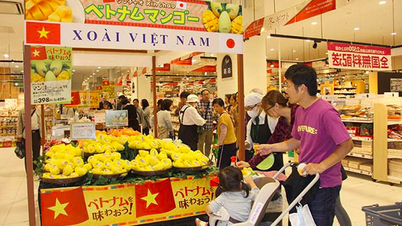
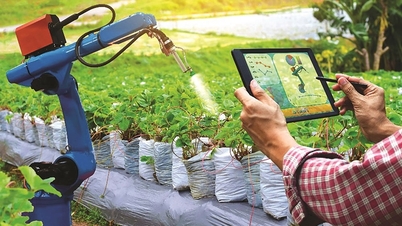
Based on identifying the strengths of each region, Tien Giang has focused on comprehensively developing agriculture and rural areas towards commodity production; intensive and specialized farming, application of biotechnology; reorganizing the agricultural production system towards good and safe agricultural practices (GAP) linked to consumption systems and serving the processing industry... Investing in stabilizing approximately 60,000 hectares of rice cultivation land to ensure food security and export targets; forming specialized farming areas that are the province's strengths such as fruit trees and clean vegetables... Continuing to exploit strengths in livestock development towards industrialization, improving product quality and protecting the environment... Developing aquaculture by planning farming areas, intensive farming to increase productivity, diversifying farmed species, closely integrating farming, preservation, processing and environmental protection management; Focus on developing aquatic products with high domestic consumption and export processing value, such as fish, shrimp, clams, and grouper, in the Tien River and coastal sandbanks and alluvial plains.
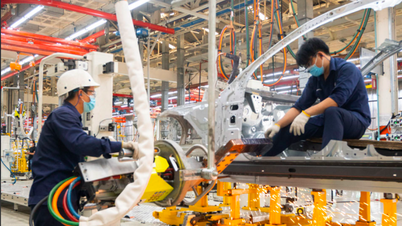
Over the years, the province has attracted investment to develop industries focused on product diversification and high-tech applications, while also prioritizing sectors where the province has advantages, such as processing industries, biotechnology, mechanical engineering, and manufacturing serving agriculture and rural areas, as well as supporting industries for the Southern Key Economic Region and the Mekong Delta. The focus is on attracting investment to rapidly develop approved industrial zones and clusters, while consolidating and improving the efficiency of existing ones. The goal is to have 7-8 concentrated industrial zones and approximately 30 industrial clusters by 2020, with a total area of about 8,700 hectares, mainly concentrated in the Tan Phuoc and Go Cong areas.
Provincial e-Government Portal
![[Photo] Prime Minister Pham Minh Chinh receives the Chinese Ambassador to Vietnam](https://vphoto.vietnam.vn/thumb/1200x675/vietnam/resource/IMAGE/2026/04/05/1775397481797_ndo_br_dsc-5512-jpg.webp)


























































Comment (0)