

Heritage that lives on in contemporary life.
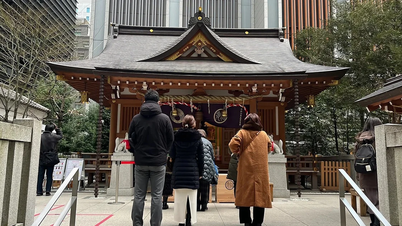
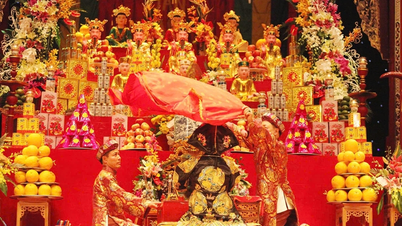
According to the draft Project on Management, Protection and Promotion of Intangible Cultural Heritage in the National List in Ho Chi Minh City for the period 2026-2030, with orientation to 2035 (drafted by the Ho Chi Minh City Department of Culture and Sports), the city possesses diverse heritages in various categories, from traditional festivals and folk performing arts to craft villages, social customs and beliefs...
These include typical heritage sites such as the Lantern Festival, the Chinese lion dance, Vovinam - Vietnamese martial arts, the Tuong Binh Hiep lacquerware craft (Tuong Binh Hiep ward), the Binh Duong pottery craft, the Nghinh Ong Can Gio festival, etc.
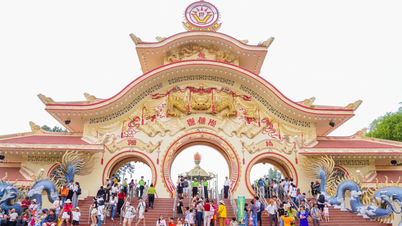
Besides their historical and cultural values, many heritage sites are also gradually contributing to the development of tourism and cultural industries. For many years now, the Lantern Festival of the Chinese community has become an event that attracts a large number of locals and international tourists.
Lion and dragon dances are increasingly attracting young people, appearing frequently in major festivals and cultural events in urban areas. Traditional craft villages such as Tuong Binh Hiep lacquerware and Binh Duong pottery are also striving to combine the preservation of traditional crafts with the development of experiential tourism.
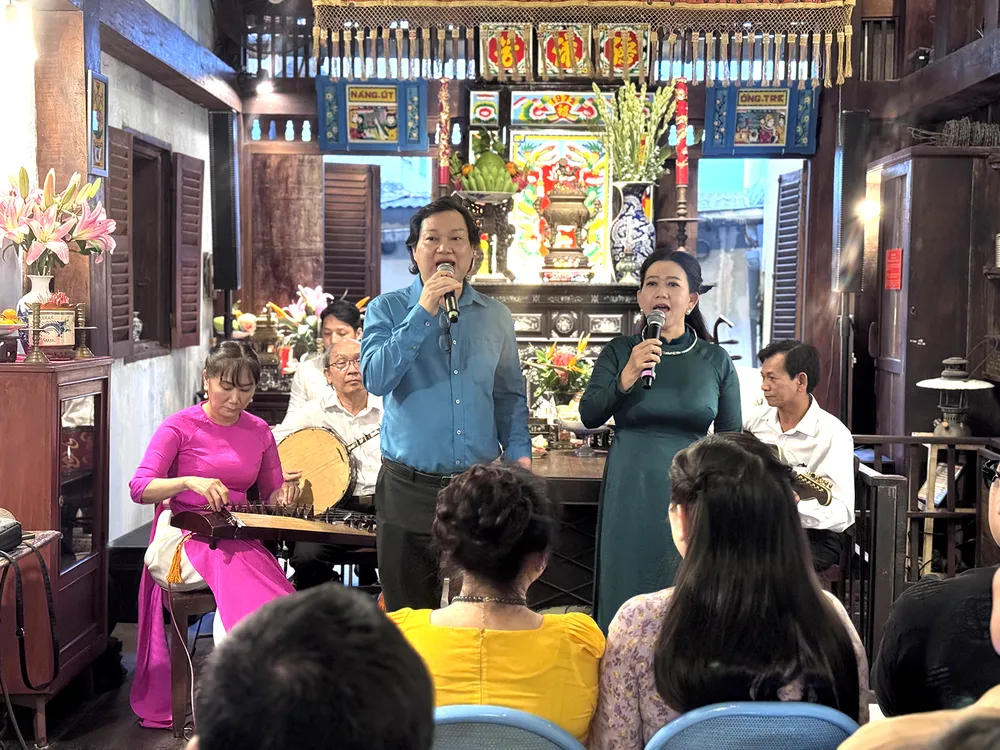
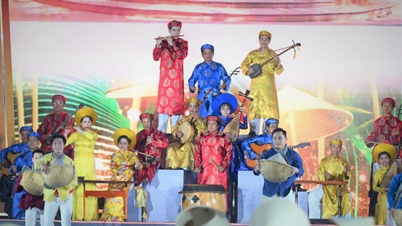
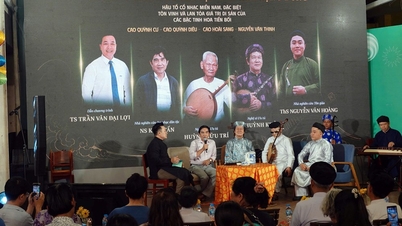
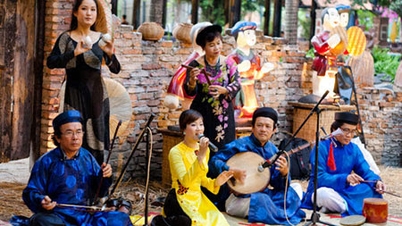
With the Southern Vietnamese folk music and singing art form – a heritage recognized by UNESCO – Ho Chi Minh City is developing a separate plan for the period 2026-2030.
The city currently has 282 traditional Southern Vietnamese folk music clubs with approximately 3,190 participants, including 5 People's Artists and 26 Distinguished Artists. Many preservation activities have been implemented recently, such as the Golden Lotus Award for traditional Southern Vietnamese folk music, the Golden Lotus Award for children's folk music, and bringing traditional folk music into schools, industrial zones, and community cultural centers. Some wards and communes have also established performance venues that combine music with tourism.
Following the administrative merger with Binh Duong and Ba Ria - Vung Tau, Ho Chi Minh City possesses many new cultural resources, creating a larger and more diverse heritage space than before.
This also serves as a basis for the city to develop large-scale heritage conservation projects in the new phase.
The fear of decline and the challenge of succession.
Despite achieving many positive results, the preservation of intangible cultural heritage still faces numerous challenges.
According to Ms. Le Tu Cam, President of the Ho Chi Minh City Cultural Heritage Association, compared to tangible heritage, the field of intangible cultural heritage still lags behind in both investment resources and social attention. This reality is most evident with traditional Southern Vietnamese folk music (Don ca tai tu), where the biggest risk comes from the "aging" of the participants in activities at the ward and commune levels.
The practitioners are mostly middle-aged, while younger generations are less involved with this traditional art form. Artists playing traditional instruments such as the fiddle (đờn cò), zither (đờn kìm), lute (đờn tranh), and gourd lute (đờn bầu) are becoming increasingly scarce. The trend of "vọng cổ-ization" (a form of classical Vietnamese folk singing) in Đờn ca tài tử is also a cause for concern, as many clubs in wards and communes are leaning towards vọng cổ and cải lương (reformed opera) styles, paying less attention to the original musical structure and style of Đờn ca tài tử. This puts the subtle essence of Đờn ca tài tử at risk of disappearing.
Many other forms of heritage, such as the Tuong Binh Hiep lacquerware craft, the Dinh Co festival (Long Hai commune), and the commemoration ceremony of Lady Phi Yen (Con Dao special zone), are lacking young people to continue practicing these traditions. Meanwhile, rapid urbanization is shrinking the space for practicing heritage, and modern life is changing the cultural reception habits of young people.
Given this reality, experts believe that preserving intangible cultural heritage cannot be limited to organizing festivals, competitions, or compiling heritage dossiers. More importantly, it requires creating conditions for heritage to continue "living" within the community. Building heritage practice spaces in traditional wards and communes, supporting artisans in teaching, integrating cultural heritage into schools, and connecting it with tourism and digital platforms are considered necessary directions for the coming period.
In the context of Ho Chi Minh City's focus on building a cultural industry and developing a creative urban environment, preserving and promoting the value of intangible cultural heritage, in addition to safeguarding the cultural memory of the community, also contributes to creating a unique identity for the largest city in the country.
Source: https://www.sggp.org.vn/giu-ky-uc-van-hoa-trong-long-do-thi-sang-tao-post855236.html



![[Image] A brilliant symphony and explosive power in the skies of Da Nang.](https://vphoto.vietnam.vn/thumb/1200x675/vietnam/resource/IMAGE/2026/05/31/1780196945787_anh-man-hinh-2026-05-31-luc-10-08-51.png)
















![[Video] Sunset at Lap An Lagoon – Where the sun sets over the fishing nets](https://vphoto.vietnam.vn/thumb/340x192/vietnam/resource/IMAGE/2026/05/31/1780192137701_beach-landscape-sea-water-nature-grass-745871-pxhere-com.jpeg)


































































Comment (0)