

Built in the 9th century, Fukutoku Shrine is dedicated to Inari, the god believed to bring bountiful harvests and prosperity. In 1590, the famous samurai Tokugawa Ieyasu visited the shrine and was so fond of it that he became its patron, and with that patronage came many privileges.
"He had a special connection to the temple, so he granted it certain privileges, including the right to hold a lottery," said Beth Carter, associate professor of Japanese studies at Case Western Reserve University. "This made the place extremely popular."
The lottery draws help raise funds for the temple's renovations, while the winners get to keep a portion of the prize money. Over time, Fukutoku's reputation as a place to seek good fortune has grown. Inari, traditionally considered the god of prosperity, is now also visited by people praying for lottery wins.
Idol culture
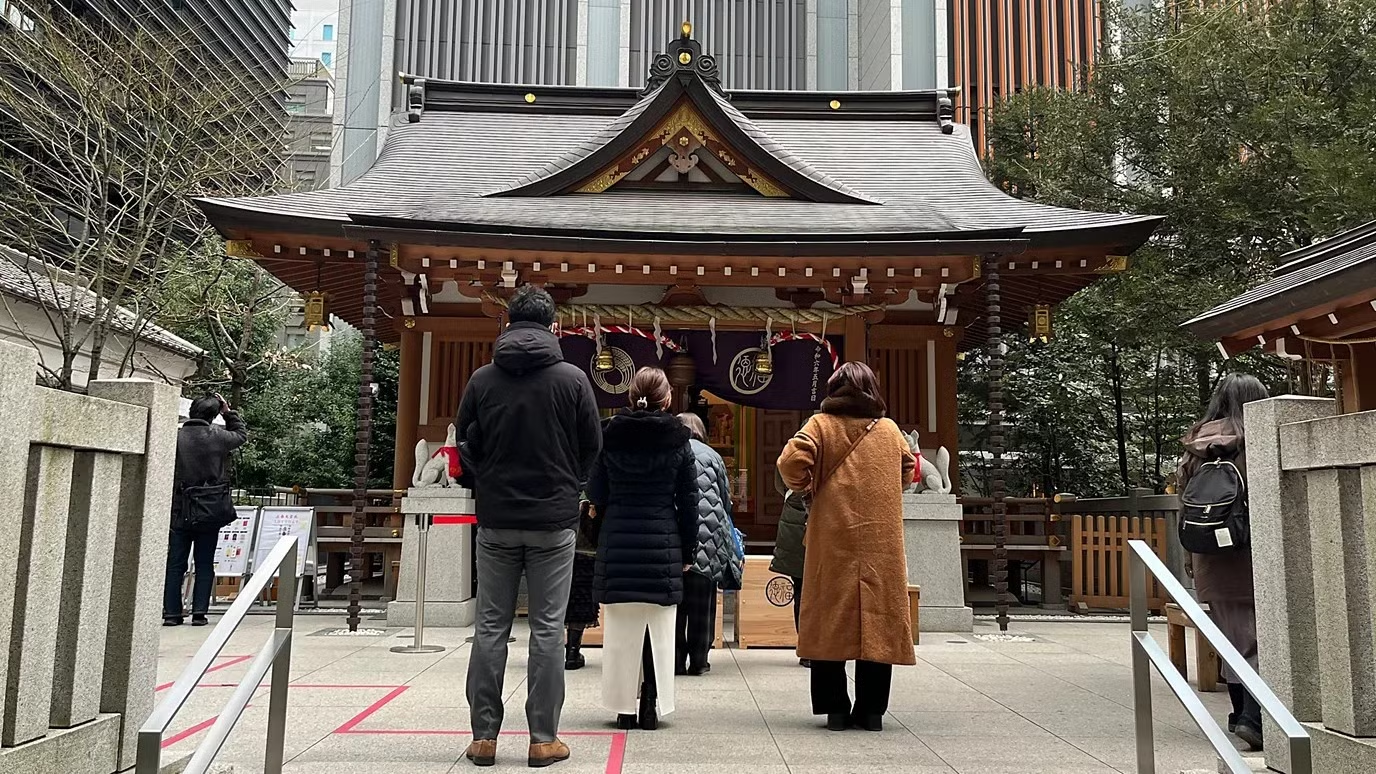
For the next 400 years, Fukutoku remained a sacred place for those seeking good fortune. Then, in the 1990s, a new wave of music further enhanced the shrine's mystique. With the explosion of J-Pop, groups like Glay, Speed, and Morning Musume sold out tickets across Japan, creating a new fan base.
"The idol culture in Japan is incredibly huge," says Krista Rogers, a reporter for SoraNews24 in Tokyo. "There's a term called 'oshi.' An oshi is a member of a group that you particularly support and idolize."
Devoted fans buy all sorts of merchandise to support their oshi, from t-shirts to decorative bags and badges, but the one thing they might not be able to buy is a ticket to see their idol perform. That's because many large concerts in Japan use a multi-round online lottery system. Fans register for a chance to buy tickets and are only allowed to purchase a limited number if selected.
This system aims to ensure fairness, but some fans still want a little "divine intervention" to increase their chances of winning tickets. If praying at Fukutoku is said to be effective with scratch-off lottery tickets, then people hope it can also bring them luck with concert tickets.
“We have a saying: Do everything you can, then leave it to fate,” says Cyber Bunny, a tour guide and content creator based in Tokyo. “Japanese people will do almost anything to increase their chances, even by just 1%. They think that going to Fukutoku is better than doing nothing.”
During the COVID-19 pandemic, concerts were suspended, but the devotion to their favorite idols (oshi) burned brightly. Ulli Nambo, a guide at Arigato Travel, recalls that when restrictions were lifted and artists began touring again, fans crowded Fukutoku, eager to see their idols once more.
"You couldn't even see the prayer area because it was so crowded," she recounted. "The street had to be blocked off because of the overwhelming crowds."
Every day, Fukutoku is filled with devotees bowing in silent prayer. First, they purify their hands and mouths at the water basin. After cleansing themselves, they bow deeply twice before the main shrine, clap their hands twice to invoke the deities, pray, and then bow once more to express their gratitude.
Then, some people approached the ema stalls – small wooden plaques costing around 500-1,000 Yen (83,000-166,000 VND). They wrote specific prayers on the ema and hung them on large wooden racks. A quick glance revealed dozens of prayers from hopeful fans wishing to meet their favorite Japanese and Korean idol groups. All were hoping to win the lottery within the next two to three weeks and receive the ultimate "jackpot": the chance to meet their favorite idol in real life.
Material exchange or religious ritual?
Japan's indigenous religion, Shintoism, doesn't have strict dogmas and doesn't place too much emphasis on absolute truths. Miracles in everyday moments are considered sacred. But would asking for something as ephemeral as a concert ticket be acceptable?
"Many Japanese scholars argue that we shouldn't view these kinds of interactions as a material exchange, but rather as a religious ritual and a process of spiritual preparation," Carter said.
"When you get what you want, you experience happiness, inner peace, and that prepares you for a spiritual experience that you may not have been ready for before."
Taishi Kato, the 22nd priest of Hattori Tenjingu Shrine in Osaka, agrees. He believes that as long as people show proper respect to the deities, they can pray for anything they wish—whether at his shrine, Fukutoku, or anywhere else.
It's easy to feel overwhelmed in Tokyo's bustling Nihonbashi district. Office workers in suits constantly come and go from lunch restaurants, shoppers crowd into huge shopping malls, and skyscrapers almost completely block out the sunlight.
However, upon passing through the vibrant red gate, visitors enter a small, peaceful oasis called Fukutoku. While Tokyo boasts hundreds of similar Shinto shrines, this one attracts devotees for a very special reason. Instead of praying to the gods for health or good fortune, people come here to pray for only one thing: concert tickets.
"We are open to everyone," he emphasized. "People can come to the temple they want, and if they pray sincerely, then asking for something that brings them joy is perfectly acceptable."
Listening to live music has long been considered a religious experience. In Tokyo, it's even something worth praying for, as Ms. Rogers once experienced. On one occasion, when her favorite singer, Ayumi Hamasaki, performed, Ms. Rogers entered a lottery ticket but lost.
When Hamasaki announced her next tour, she wasn't leaving things to chance anymore—she went straight to Fukutoku. "I prayed, and somehow I got a ticket," she said, laughing as she recounted the story.
Source: https://tienphong.vn/ngoi-den-cau-xin-ve-concert-post1845513.tpo
![[Photo] Opening Ceremony of the National People's Council Conference on the Implementation of Directions and Tasks for the 2026-2031 Term](https://vphoto.vietnam.vn/thumb/1200x675/vietnam/resource/IMAGE/2026/05/28/1779939257690_ndo_br_bnd-1991-jpg.webp)


![[Image] Checking the security conditions at the exam site, ready for the 10th grade exam.](https://vphoto.vietnam.vn/thumb/1200x675/vietnam/resource/IMAGE/2026/05/28/1779943458889_z7872507660648-d764421a26e8cd7b61d70d142a48a685-jpg.webp)







































































Comment (0)