

The alternating periods of intense cold and frost, interspersed with unusually warm sunshine, make it more difficult to "monitor" the buds and ensure the flowers bloom in time for Tet (Lunar New Year). This is a time that demands a lot of experience and meticulousness, because even a slight delay in blooming directly affects the economic value of the entire peach crop. Therefore, peach growers almost have to "stay in the orchard," monitoring the trees day by day.
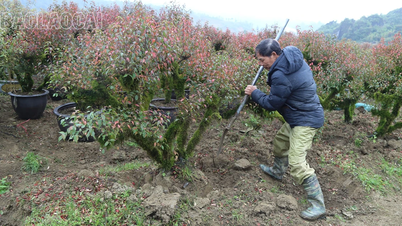
In Hamlet 1, Ham Rong Ward, Sa Pa Commune, Ms. Le Thi Kim Dung, a long-time peach tree grower, said that the work of caring for peach trees in the days leading up to Tet is completely different from other times of the year. Growers have to proactively transplant trees with small buds to sever the roots, limit growth, and force the trees to shed their leaves, in order to stimulate flowering at the right time.
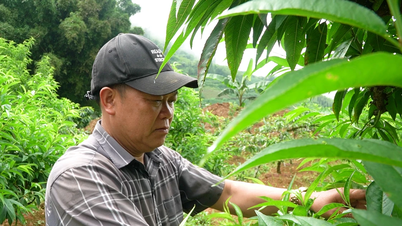
According to Ms. Dung, this year is one of the most difficult: Due to it being a leap year and the unpredictable weather, many peach trees tend to bloom early. After several days of sunny and windy weather followed by heavy rain, the peach trees, having enough water, burst into bloom very quickly, making it very difficult to control. Meanwhile, the growers' ability to regulate the blooming process is limited, as the weather determines about 80% of whether the peach blossoms bloom on time.
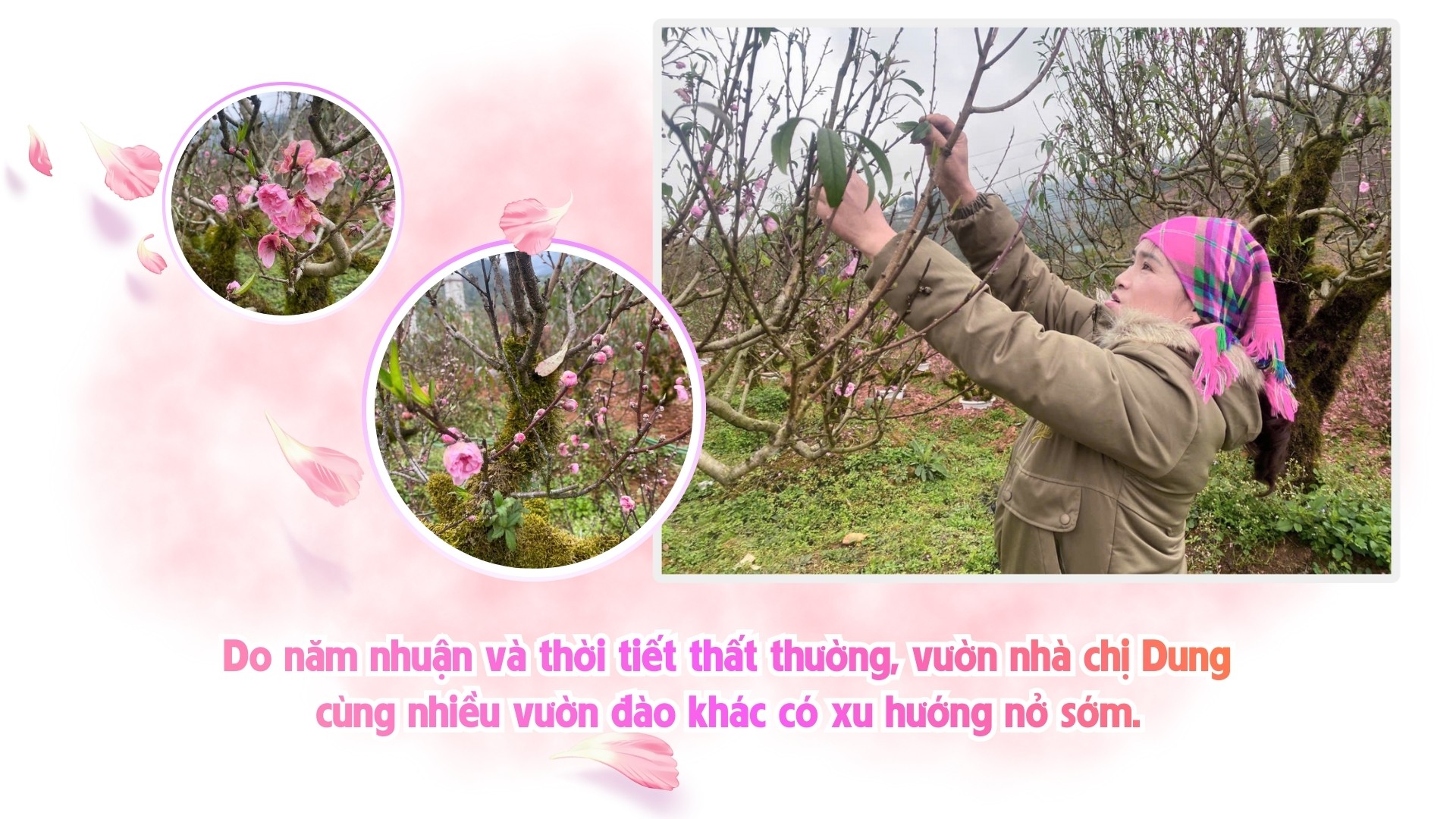
When the flower buds are small, growers can still intervene with technical measures. However, if the buds are large, delaying flowering is almost impossible. "There is no chemical that can make buds smaller. If you try to stop a bud from developing, it's very easy for the bud to shrivel and the flower to be lost," Ms. Dung shared.
Whether peach blossoms bloom early or late directly affects the income of growers, because the cost of seedlings and labor for care has already been invested since the beginning of the year.
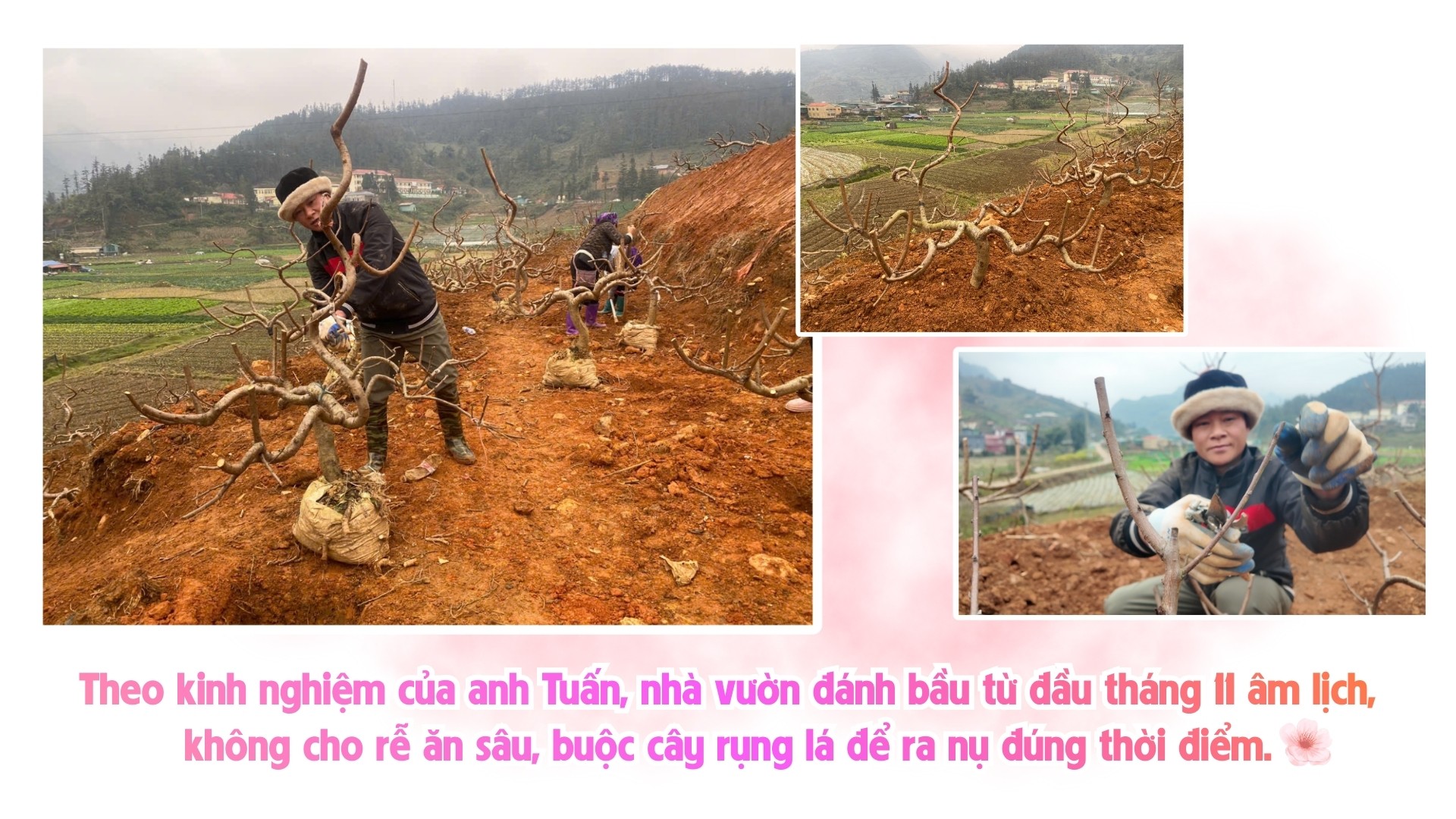
Besides affecting ornamental peach orchards, the leap year also creates difficulties in the process of preparing the bonsai trees. Le Van Tuan, a specialist in preparing bonsai trees in Hamlet 1, Ham Rong, said that the process of cutting down the tree, nurturing the roots, and shaping it requires many steps and costs. “The most difficult part is cutting down the tree for planting the bonsai; we need to ensure that the tree develops roots and sprouts before we can be confident. This year, the hot weather and the leap month have caused many peach trees to bloom early, posing a significant risk,” Tuan explained.
According to Mr. Tuan's experience, to regulate the flowering time, gardeners must dig up the seedlings from the beginning of November in the lunar calendar, preventing the roots from growing too deep into the soil, and forcing the tree to shed its leaves to encourage bud formation. However, the effectiveness still largely depends on weather conditions. "Even with experience, I can't guarantee 100%, because if the hot weather persists, the peach blossoms can still bloom early," Mr. Tuan added.
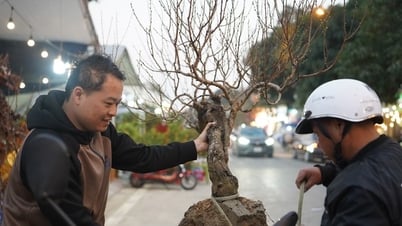
Ms. Nguyen Thi Ha, a small trader who buys and sells peach blossoms for Tet in Sa Pa, said: "This year, the peach blossom market is clearly affected by the leap year. Some orchards have almost finished blooming before Tet, and the supply of beautiful peach blossoms is not as abundant as in previous years."
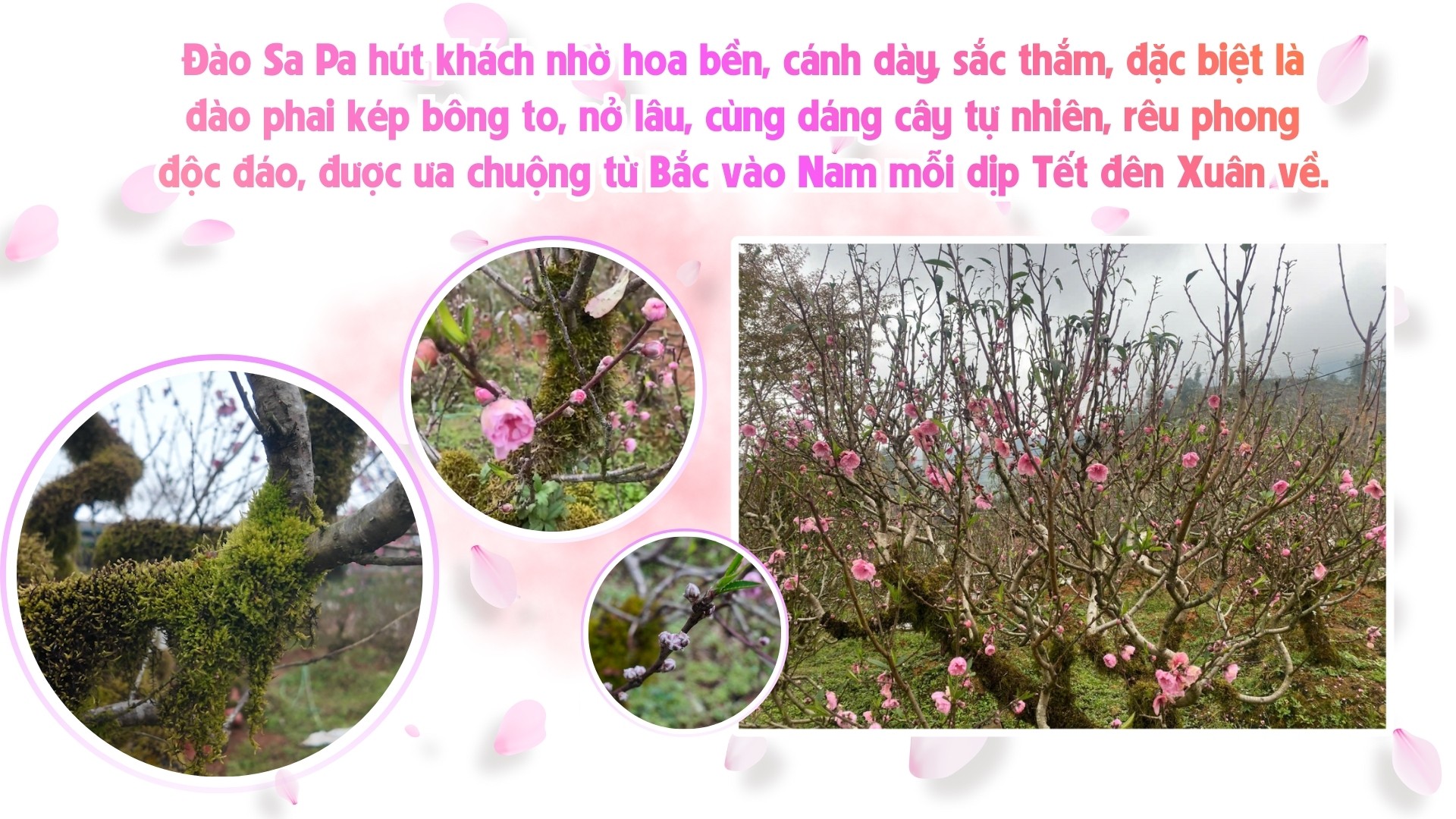
Nevertheless, Sa Pa peach blossoms retain their unique appeal thanks to their long-lasting flowers, thick petals, vibrant colors, and natural tree shape, especially the double-flowered variety with its large, long-lasting blooms. These characteristics have made Sa Pa peach blossoms popular with customers in many provinces and cities across the country, from North to South, every Tet holiday.
According to vendors, customers choose Sa Pa peach blossoms based on the tree's shape, mossy appearance, flower longevity, and natural simplicity. This year's peach blossom prices are generally stable, commonly starting from over 1 million VND per tree for common varieties; shaped or ancient peach trees are more expensive depending on their shape and beauty.
In Sa Pa, people cultivate approximately 56 hectares of peach trees, including about 1 hectare of ornamental peach trees and bonsai peach trees, and about 55 hectares of fruit-bearing peach trees. The area supplying flowers for the Lunar New Year market is mainly concentrated in the residential areas of O Quy Ho 1, 2; Sa Pa 2, 3, 4; Ham Rong 1, 2, 3 and some neighboring areas within the ward. However, in recent years, climate change and extreme weather, especially leap years, have significantly impacted peach-growing regions.
Phenomena such as severe cold spells, unseasonal rains, frost, and localized ice have directly affected the growth, flower bud differentiation, and flowering timing of peach trees. In reality, many peach orchards are at risk of blooming too early or too late compared to the Tet holiday – the main consumption period – reducing commercial value and economic efficiency. Prolonged cold spells, frost, and ice can also cause leaf burn, branch drying, and flower bud dieback, affecting the quality of the peach trees.
In response to this situation, local authorities have intensified technical guidance, provided support with seeds and supplies, organized training courses, and promoted product sales and consumption, gradually building the "Sa Pa Peach" brand, linking peach cultivation with tourism development and the preservation of the highland cultural identity.
Despite numerous challenges caused by climate change, especially in leap years where many peach orchards risk blooming prematurely, peach growers in Sa Pa persevere, diligently tending to each bud with the hope of ensuring the peaches bloom at the right time. They preserve the essence of spring on each branch, so that every Tet holiday, Sa Pa remains filled with the fragrance and colors of spring – a characteristic beauty of the Northwest highlands.
Source: https://baolaocai.vn/giu-mua-xuan-บน-tung-canh-dao-sa-pa-post891347.html


![[Photo] General Secretary and President To Lam and the President of the Philippines hold talks.](https://vphoto.vietnam.vn/thumb/1200x675/vietnam/resource/IMAGE/2026/06/01/1780286997787_anh-man-hinh-2026-06-01-luc-11-09-43.png)
![[Photo] Reception to welcome General Secretary and President To Lam and his wife on their State visit to the Philippines](https://vphoto.vietnam.vn/thumb/1200x675/vietnam/resource/IMAGE/2026/06/01/1780295488620_vna-potal-chieu-dai-chao-mung-tong-bi-thu-chu-tich-nuoc-to-lam-va-phu-nhan-tham-cap-nha-nuoc-toi-philippines-8798060-7855-jpg.webp)

























































Comment (0)