

Culinary artist
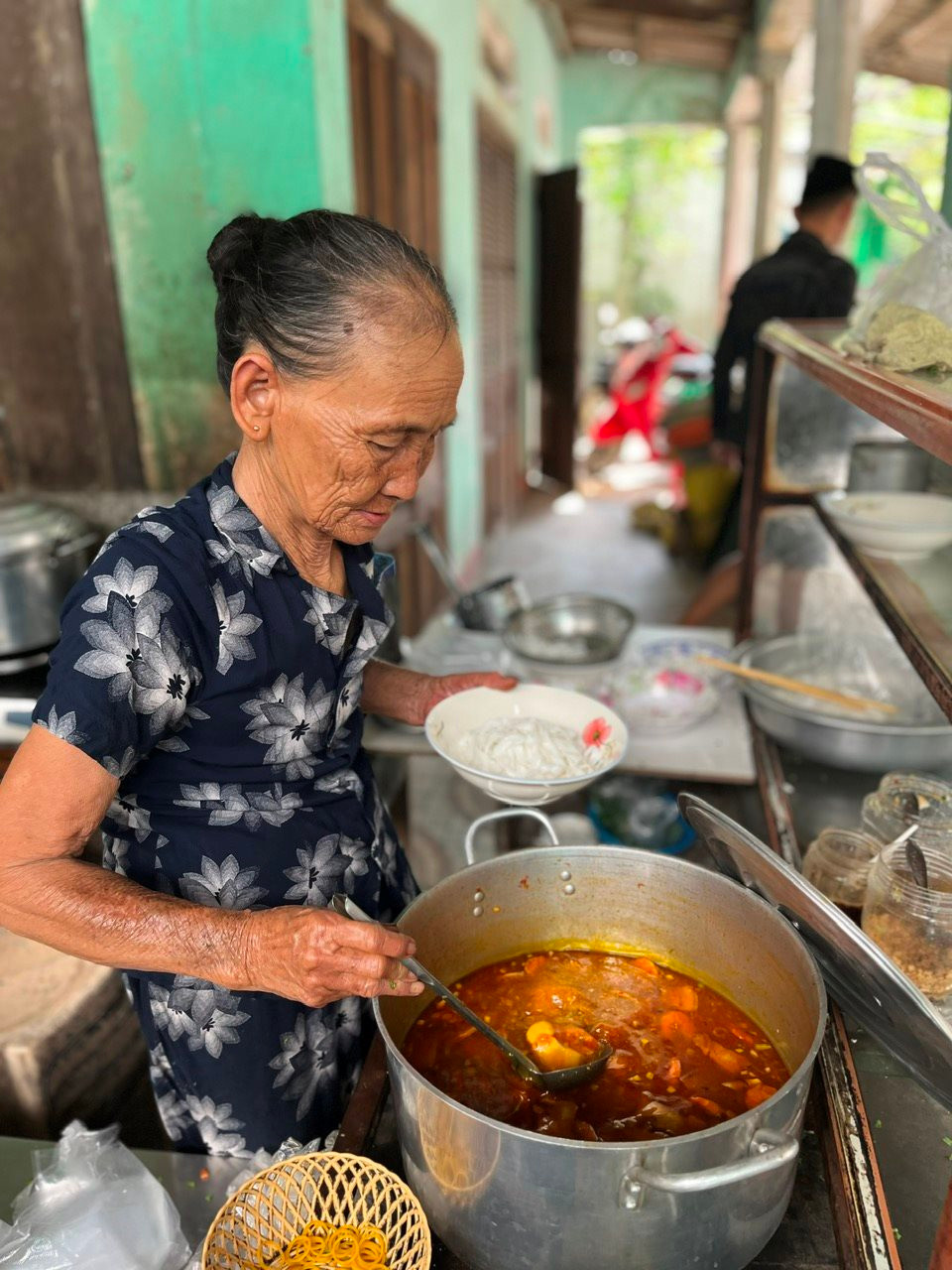
Mrs. Luong Thi Thi, known locally as Mrs. Tam Thi, has probably been associated with the Phu Chiem noodle stall for over 50 years. At food festivals, whether from her village or further afield in other regions, where there's a Quang Nam food booth, Mrs. Tam Thi has occasionally made an appearance.
Despite being over 70 years old, she still performs all the steps to make the famous Phu Chiem noodles with nimble hands. From making the noodles, slicing them, braising the toppings... every step under her hands is like creating a work of art.
In Triem Nam village – a village known as Phu Chiem noodle village – it seems that all the women in the village are involved in jobs related to making noodles.
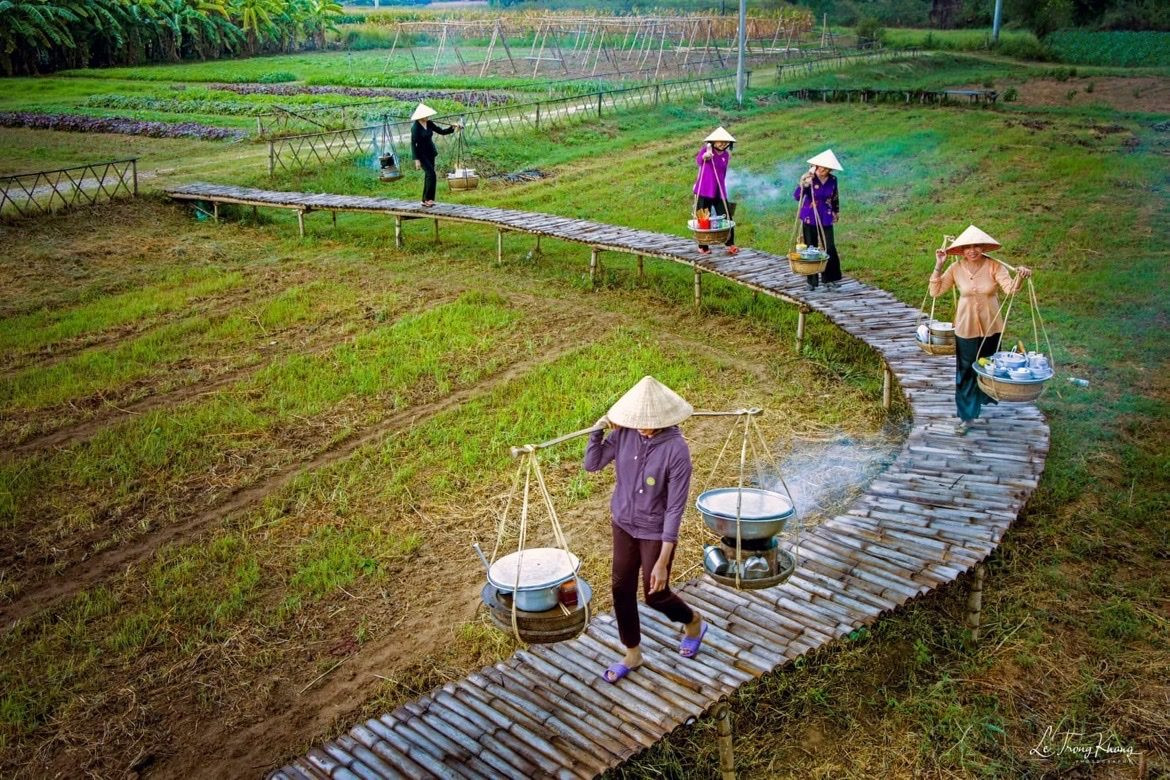
We still vividly remember the first ever Quang Noodle Festival held right here in this village last year. The steaming noodle carts, passing through the village streets. Although we knew the organizers were only recreating the journey of Quang noodles from this region, the emotion was palpable to everyone.
At this noodle-making contest, Mrs. Tran Thi Thoi was honored as the best noodle maker. One might have expected the other mothers and sisters to feel envious, but surprisingly, they all unanimously admitted that Mrs. Thoi's noodles were truly delicious.
Delicious because of the taste of the elderly, the taste of noodles from their homeland, from the time when these women were children. They acknowledge it with pride, as if it were the very flavor passed down from their mothers.
Ms. Thoi is the daughter of the famous noodle seller from the old Phu Chiem. This "legacy of the noodle seller" is not just visible. Its fragrance lingers through generations, through the changing landscapes of each era, transforming into a delicious dish that emerges from the subconscious into a part of life.
I've always been certain that in the footsteps of the women of Phu Chiem village, carrying their noodles across vast regions, there was perhaps a deep sense of pride in their local delicacy.
Mr. Nguyen Quoc Ky, Chairman of the Vietnam Culinary Culture Association, stated that in 2024, the "Digital Map of Vietnamese Culinary Culture" project promises many exciting experiences with key features: direct introduction and nomination of delicious dishes on the "Digital Map of Vietnamese Culinary Culture" based on a large-scale database of nominated artisans and chefs; culinary dishes; ingredients, preparation methods, and nutritional value.
The association also held an awards ceremony and presented honorary plaques to 8 artisans and 7 researchers, and awarded certificates of merit to 7 local culinary associations and 3 research projects that contributed to the development of Vietnamese cuisine.
Delicious dishes that stand the test of time.
Culinary artist Phan Ton Tinh Hai, a woman from Hue , shared her gentle and profound story about Quang Nam cuisine. She said that Central Vietnamese cuisine favors strong flavors, while Quang Nam cuisine has its own unique character.
The cooking process isn't overly complicated, but the flavors are exquisite. This excellence comes from the people in charge of the kitchen. They must infuse their work with care and dedication to achieve it.
A friend of mine said that Quang Nam cuisine is simple, flavorful, and the people of Quang Nam are honest and loyal.
"They cherish and protect the essence of flavors that endure over time. Because they love the cuisine of this region so much, and are so grateful for the spiciness, the saltiness, the satiety, and the lasting quality, they don't want to change, interfere with, or even touch it. The beauty of Central Vietnamese cuisine lies in its flavors, and it is precisely these flavors that create the dilemma in the migration of cuisine," my friend said.
The online map of Vietnamese cuisine – a platform providing information about Vietnamese food and specialties to tourists – has officially launched. Quang Nam province is featured with dishes like Quang noodles, cao lau, and banh trang dap mam nem (rice paper rolls with fermented fish sauce). These delicious dishes have largely been identified by the down-to-earth women of Quang Nam.
From the kitchen of Quang Nam province, to the wider Vietnamese kitchen, there is always warmth from the hands of the person who keeps the fire burning.
Source
![[Photo] Da Nang: Mountainous commune adorned with flags and flowers, ready for election day.](https://vphoto.vietnam.vn/thumb/1200x675/vietnam/resource/IMAGE/2026/03/10/1773113803384_ndo_br_9-jpg.webp)

![[Photo] Meeting of the Standing Committee of the National Assembly Party Committee with the Standing Committee of the Government Party Committee on the First Session of the 16th National Assembly](https://vphoto.vietnam.vn/thumb/1200x675/vietnam/resource/IMAGE/2026/03/10/1773107502031_ndo_br_thu-tuong-pham-minh-chinh-va-chu-tich-qh-tran-thanh-man-dong-chu-tri-hoi-nghijpg-jpg.webp)














![[Image] 20 islands in the Spratly Islands special administrative region hold early elections.](https://vphoto.vietnam.vn/thumb/1200x675/vietnam/resource/IMAGE/2026/03/08/1772949669607_img-20260308-112026-90-jpg.webp)








































Comment (0)