


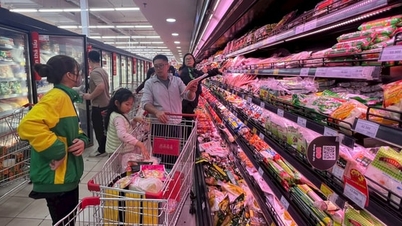
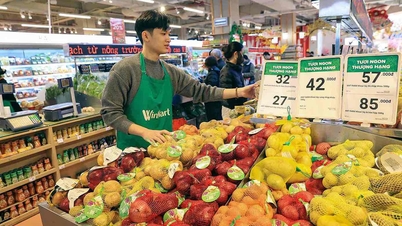
As Tet approaches, purchasing power increases rapidly, goods circulate more, and sales channels become more vibrant, especially e-commerce and social media. This creates advantages for buyers, but also makes quality control more difficult.
Food products are always a noteworthy category due to high demand, short shelf life, and the ease with which their origin can be misrepresented. Many products are attractively packaged and labeled as "specialty," "homemade," or "authentic," but the information is unclear and difficult to verify. In the rush of shopping, consumers find it even harder to distinguish between genuine and counterfeit products.
Furthermore, some violations have become more sophisticated: replacing labels, counterfeiting barcodes, using borrowed trademarks, overstating product benefits in advertising, and selling through multiple intermediaries to avoid inspection. These practices not only harm buyers but also create unfair competition and erode market confidence.
In fact, before, during, and after Tet (Lunar New Year), authorities have been conducting intensive market inspections and controls. Many cases involving smuggled goods, counterfeit products, and food safety violations have been detected and handled, contributing to warnings and deterrence. However, to maintain a "clean" market in the long term, we cannot rely solely on these campaigns. More importantly, we must proactively prevent violations: early detection, timely handling, and transparent information disclosure.
Accordingly, inspection work needs to be focused, prioritizing essential goods, high-risk groups, and "hot spots"—areas where violations frequently occur.
Coordination among forces is crucial. Market management, police, health, agriculture , customs, and local authorities need to cooperate closely, because violations often occur in a chain: from sourcing, transportation, warehousing to distribution. Otherwise, "gaps" will appear, allowing substandard goods to slip through.
Maintaining a "clean" market also means protecting legitimate businesses. Many companies invest in quality, traceability, anti-counterfeiting labels, safety certifications, etc., but they can still face unfair competition if counterfeit goods are rampant and sold cheaply. Therefore, handling violations should not only involve fines, but also clear information for consumers and clarification of responsibilities at each stage. Transparency is also a way to ensure a fairer market.
From the consumer's perspective, a healthy market cannot rely solely on regulatory agencies. Choosing reputable vendors, prioritizing products with clear origins, checking labels and expiration dates, being wary of excessive advertising, and keeping receipts when needed are small but helpful actions. The more careful buyers are, the harder it is for counterfeit goods to be sold.
To facilitate public feedback, authorities also need to maintain effective information reception channels such as hotlines, quick processing mechanisms, and clear responses. If citizens feel their feedback is acknowledged and seriously addressed, the market will have an additional widespread "monitoring channel" originating from the community.
Ultimately, maintaining a "clean" market during Tet (Lunar New Year) is about preserving trust: the trust of consumers in shopping, the trust of businesses in legitimate practices, and the trust of society in the management's capabilities. When trust is strengthened, people can shop with peace of mind, and Tet will truly be a season of peace and fulfillment.
Source: https://daibieunhandan.vn/giu-sach-thi-truong-dip-tet-10403890.html



















![[Video] General Secretary To Lam attends the Opening Session of the Peace Council on Gaza](https://vphoto.vietnam.vn/thumb/402x226/vietnam/resource/IMAGE/2026/02/20/1771589780003_dung00-23-50-10still008-png.webp)





























































Comment (0)