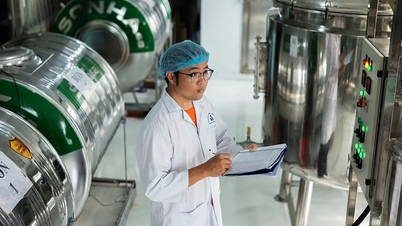
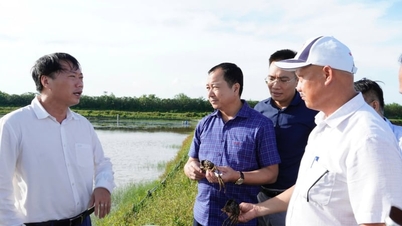
Currently, there are 183 pangasius processing facilities nationwide that meet the requirements for export. Photo: TRAN KIM LUAN
In this context, traditional export advantages are no longer sufficient to guarantee long-term growth. The challenge for Vietnamese pangasius today is not just about how much to sell, but also about maintaining market share through quality and effective supply chain management.
Export advantages and bottlenecks
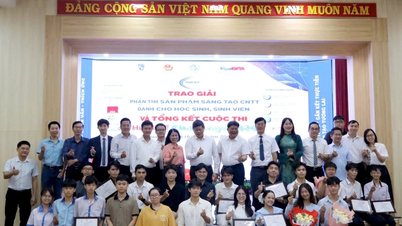
At the recent conference summarizing the pangasius industry's performance in 2025 and outlining tasks for 2026, held in Can Tho City, amidst a volatile global economy , Vietnamese pangasius has maintained its growth momentum and continues to play a pivotal role in freshwater seafood exports.
According to industry reports, by 2025, the whole country will have approximately 300 concentrated pangasius farming areas, with a total area of 5,500 - 5,700 hectares; production will reach about 1.65 - 1.74 million tons, meeting the needs of processing and export. Export turnover is estimated to increase by about 9% compared to 2024. In An Giang province, in 2025, businesses and fishermen harvested 640,402 tons of pangasius, with export turnover exceeding 350 million USD. Deputy Minister of Agriculture and Environment Phung Duc Tien affirmed: "The figures for 2025 show that the Vietnamese pangasius industry still possesses great advantages and potential. Key markets such as China, the United States, and the EU maintain stable demand, creating important room for development in the future."
However, according to Mr. Tien, that advantage can only be maintained if the pangasius industry shifts strongly from extensive growth to improving quality, added value, and the ability to sustainably retain market share. In reality, behind the positive picture lie structural bottlenecks. Currently, fresh and frozen pangasius fillet products still account for 97-98% of total export turnover, while deeply processed products only account for about 2-3%. This structure shows an excessive dependence on semi-processed products (low added value) and a competitive advantage primarily based on scale and price.

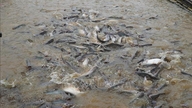
Mr. Tran Manh Hung, a fisherman from Chau Phu commune, stated: “Among the current bottlenecks, the quality of fish fry is considered a fundamental issue in the entire chain. Low survival rates, volatile prices leading to high losses, and increased production costs are significant. Fish fry (30 fish/kg) currently cost 70,000-80,000 VND/kg. If we cannot control the input, all efforts to improve quality in subsequent stages will become futile.”
Besides the cost of fingerlings, the cost of farming is also rising. According to the Vietnam Pangasius Association, the cost of farmed pangasius is currently at 1.2 - 1.3 USD/kg, much higher than many whitefish products on the world market. The costs of feed, fingerlings, electricity, water, and environmental treatment are increasing rapidly, while the price of raw fish fluctuates, narrowing the profit margin for farmers and reducing the motivation for long-term investment.
Maintain market share through supply chain management.
From a market perspective, technical barriers and trade protection measures continue to increase. The United States maintains strict anti-dumping measures and controls under its catfish program; the EU tightens standards on sustainability, emissions, and social responsibility. The Chinese market, while large, still poses risks from technical controls and media influences.
Analyzing this trend, Ms. To Thi Tuong Lan, Deputy Secretary General of the Vietnam Association of Seafood Processing and Export (VASEP), commented: “The global market for whitefish still has room for growth, but competition will become increasingly fierce. For Vietnamese pangasius, opportunities will only become advantages when businesses and production chains meet the new standards for sustainability, traceability, and transparency.”
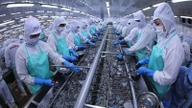
Currently, there are 183 pangasius processing facilities nationwide that meet export requirements, with a total capacity of approximately 1.7 million tons of raw materials per year. This indicates that processing capacity is no longer the bottleneck. The key issues lie in the quality of raw materials, the level of supply chain integration, and the ability to meet increasingly stringent market standards.
In the new context, maintaining market share is more important than expanding it. This requires the State not only to strengthen quality management but also to play a strategic regulatory role in standardizing breeding stock, reorganizing production, protecting national brands, and leading the pangasius supply chain to adapt to international standards. At the same time, businesses and farmers must proactively improve compliance with market regulations and make long-term investments in quality and transparency.
Only when these foundations are firmly established can Vietnamese pangasius fish shift from an export advantage to the ability to hold long-term market share, thereby making a sustainable contribution to the economic development of the Mekong Delta region.


| "If we don't improve quality, tightly control the production chain, and proactively adapt to new standards, our existing advantages will quickly erode. Conversely, doing well in these areas will open up space for sustainable and long-term development of Vietnamese pangasius," said Deputy Minister of Agriculture and Environment Phung Duc Tien. |
Source: https://baoangiang.com.vn/giu-thi-truong-cho-ca-tra-a473775.html