


According to observations in many communes across the province, farmers have finished planting and are now focusing on caring for their spring crops. This is one of the most important production seasons of the year. Currently, due to erratic weather patterns, with alternating sunshine and rain, conditions are favorable for the emergence and spread of many pests and diseases.

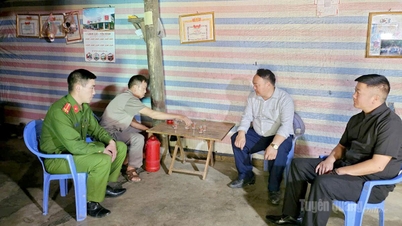
In Yen Phuc commune, according to the assessment of the commune's Public Service Center, some pests and diseases have appeared on spring crops at low densities, such as: golden apple snails, small leaf-rolling caterpillars, various types of rice planthoppers; cutworms and fall armyworms on corn; armyworms, aphids, root rot, and bacterial wilt on chili plants... Immediately after detecting pests and diseases, the specialized unit conducted inspections, notified and guided people on control measures.
Ms. Nong Thi Na, from Ban Nooc village, Yen Phuc commune, said: "In the spring of 2026, my family planted 3 sao (approximately 0.3 hectares) of rice and 2 sao (approximately 0.2 hectares) of corn. After planting, I regularly visited the fields, monitoring for pests and diseases to handle them promptly. When I discovered golden apple snails and fall armyworms, I received guidance from commune officials on how to control them, so the crops are now developing steadily."
In the spring of 2026, the entire province planted over 40,000 hectares, an increase of 9.7% compared to the previous year. According to the pest survey results from specialized agencies, several major pests and diseases are currently affecting spring crops, including: golden apple snails damaging rice, with an average infected area of 13.7 hectares and a severely infected area of 0.5 hectares; fall armyworms on corn, with an average infected area of 6.9 hectares; and pests and diseases such as thrips, anthracnose, and leaf curl on chili plants, with an average infected area of 2.7 hectares. In addition, other crops (tobacco, black jellyfish) are affected by pests and diseases such as mosaic disease, root rot, leaf blight, and stem rot, with smaller infected areas.
In response to this situation, the agricultural sector has strengthened its technical staff assigned to specific areas, closely monitoring the fields and guiding farmers in timely response to prevent widespread outbreaks. Simultaneously, the application of information technology in disseminating information and providing technical guidance is proving highly effective. Through Zalo groups and fanpages of the communes, information on pest and disease outbreaks and control measures is updated quickly, allowing farmers to easily access and address problems promptly from the outset.
Ms. Nguyen Thi Hue , Deputy Head of the Planning and Technical Department of the Provincial Agricultural Extension Center, said: Forecasts indicate that in the coming period, weather phenomena such as localized heatwaves, high temperatures, and rain will create favorable conditions for the emergence and strong development of some plant pests. The unit advises people to continue monitoring weather developments, regularly inspect fields to detect and control pests promptly, apply integrated pest management measures, and limit the overuse of chemical pesticides.
At the same time, the Agricultural Extension Center also requested the People's Committees of communes and wards to assign technical staff to closely monitor the fields, investigate, detect, estimate, and accurately predict the timing of pest outbreaks; strengthen propaganda and guidance for people to implement technical measures to protect spring crops; and strengthen coordination with specialized agencies and units in the field of crop cultivation and plant protection when problems arise in the area to promptly propose and implement effective solutions.
Thanks to the active involvement of specialized agencies, communes and wards, and the proactive efforts of the people, spring crops in the province are growing and developing steadily, contributing to ensuring productivity, quality, and production efficiency.
Source: https://baolangson.vn/giu-xanh-dong-ruong-vu-xuan-5089861.html




















































































Comment (0)