

The unification of vocational education management under the Ministry of Education and Training, as directed by the Party and Government, is a strategic solution that not only streamlines the administrative apparatus but also enhances the effectiveness of developing and implementing educational policies.

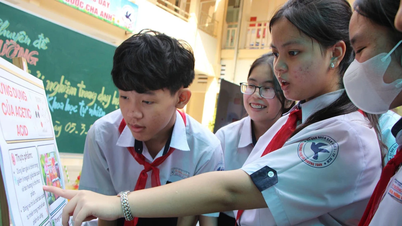
Students and parents receive advice at the 2024 University and College Admissions Counseling Fair - Photo: DUYEN PHAN
Public opinion overwhelmingly supports this policy, hoping it will help remove one of the institutional bottlenecks in education and training, create a closer link between different levels of education, from primary to university and vocational education, and facilitate more effective streaming and articulation through unified leadership from the Ministry of Education and Training.
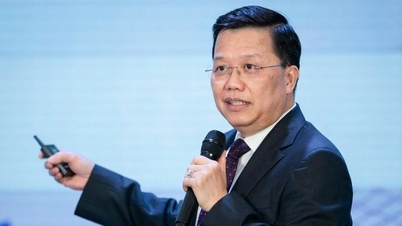
Dr. Hoang Ngoc Vinh
Consequences of bottlenecks
The separation of administrative responsibilities between the Ministry of Education and Training and the Ministry of Labour, Invalids and Social Affairs (MOLISA) is one of the major obstacles to developing high-quality human resources in Vietnam.
While the Ministry of Education and Training is responsible for general and higher education, the Ministry of Labour, Invalids and Social Affairs manages vocational education. This division leads to a lack of coordination in the management system, making it difficult to coordinate the implementation of training policies, especially in the process of student placement after lower secondary school.
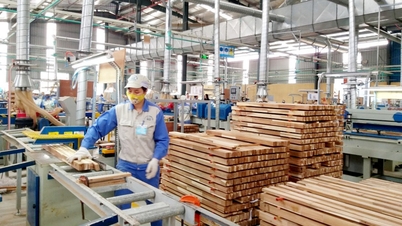
Secondary schools often lack teachers and facilities for vocational training, while vocational schools, although well-equipped, fail to attract students due to a lack of close coordination with secondary schools.
Furthermore, the parallel existence of vocational college programs and "non-vocational" college programs – which were previously under the management of the Ministry of Education and Training – has created many difficulties for businesses and training organizations, despite the existence of a unified national qualifications framework.
Besides overlapping management responsibilities, there is also duplication of functions and tasks between units, complicating the organizational structure. Within the Ministry of Labour, Invalids and Social Affairs, the General Department of Vocational Education has units with functions similar to those of the Ministry of Education and Training.
At the provincial and district levels, the establishment of vocational education departments and vocational training centers has made the system cumbersome and inefficient.
At the same time, the lack of comprehensive planning for human resource training leads to imbalances in the national human resource structure, affecting the ability to meet the needs of the labor market.
Although there are some high-quality vocational schools and training centers, the lack of links with general education and university programs makes it difficult for students to clearly define their academic and career paths.
Expectations and challenges
The unified state management of education and training, along with the improved vocational education system, provides students with more choices for vocational training paths, and gives workers opportunities for lifelong learning and skill enhancement, thereby improving their employment prospects.
Vocational education institutions are expected to have more favorable conditions for development; smoother linkages between general education, vocational education, and higher education; and a synchronized legal system and unified management information to increase the effectiveness and efficiency of education and training.
Society expects a high-quality and effective vocational education system, which is one of the pillars of training high-quality human resources, enhancing national competitiveness, and reducing waste of facilities and human resources.
However, the reality shows that the higher the expectations, the greater the challenges. There is still much work to be done because time is short and the workload is enormous, from the central government to departments and local authorities.
From reorganizing the structure by transferring some former units of the General Department of Vocational Education to the Ministry of Education and Training to reviewing mechanisms, policies, strategies, arranging the handover of resources, and integrating management information systems to avoid disrupting the entire system's operations.
Personnel management requires special attention during restructuring. Therefore, in addition to reviewing and evaluating the functions and responsibilities of the units within the ministry, designing objective, reliable, public, and transparent evaluation standards for the competence and qualities of the workforce is the first crucial task to ensure peace of mind for both those leaving and those remaining.
A strong, professional, and dedicated workforce committed to serving the people always plays a core role in organizing a streamlined, strong, effective, efficient, and effective restructuring.
To avoid confusion and duplication, it is essential to develop a detailed roadmap and plan for merging and streamlining the organizational structure. Strengthening communication and responding quickly to the opinions of stakeholders, especially the opinions of educational institutions involved in the change process, is also crucial.
Besides ensuring the necessary financial, human, and physical resources for the transition process, an inter-ministerial and inter-departmental coordination mechanism is needed in the initial phase of the transition to minimize disruptions to operations.
Of particular concern is that the 63 localities need to proactively develop plans to streamline the organizational structure of their Departments of Education and Training, without waiting for the Ministry of Education and Training. This should be done immediately and in parallel with the Ministry's restructuring process, in accordance with the policy of administrative decentralization.
From thinking to action
The correct thinking has been put forward by the Party and Government leaders; the issue is translating it into practical action, which requires a shared understanding in society and the revolutionary will of the entire system to work together to remove institutional bottlenecks in human resource training. How to create a strong, efficient, effective, and effective apparatus is the first question that needs to be asked in the process of restructuring the apparatus.
 Removing institutional barriers paves the way for university autonomy.
Source: https://tuoitre.vn/go-diem-nghen-the-che-ve-giao-duc-va-dao-tao-2024121123283554.htm













































































Comment (0)