

Streamlining the organizational structure and building a two-tiered local government has been implemented synchronously from the central to the grassroots level, with the overarching requirement being efficiency, effectiveness, and better service to the people.
From the Party's guidance and the Government 's decisive leadership to institutional and practical adjustments at the grassroots level, the new model is gradually coming into operation, laying the foundation for rapid and sustainable development.
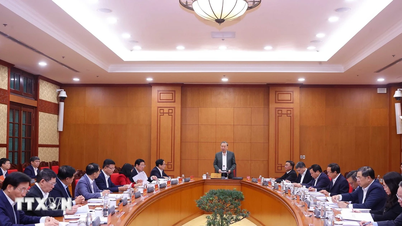
Recently, Standing Committee member of the Party Central Committee Tran Cam Tu signed and issued Conclusion No. 226-KL/TW of the Party Central Committee on rectifying working methods and improving the effectiveness of the political system.
The conclusion states that the restructuring and streamlining of the political system's organizational apparatus has achieved many important results; the organizational structure has been arranged in a way that is synchronized, streamlined, effective, efficient, close to the people, and better serves the people.
However, there is still a problem of excessive document issuance and meetings; coordination between different levels and sectors is not yet truly smooth; the reporting system is not synchronized or unified; and the application of information technology and digital transformation remains limited.
The Secretariat of the Central Committee requests that Party committees, organizations, agencies, localities, and units focus on rectifying and overcoming the aforementioned shortcomings. Regarding the issuance of documents, focus on innovation and improving quality by simplifying and shortening them; only issue documents when absolutely necessary; and avoid issuing documents that merely copy the content of documents from higher levels.
Each year, the number of administrative documents should be reduced by at least 15% compared to the previous year.
Regarding conference organization, annual plans should be developed to suit practical needs; the number of in-person conferences should not exceed 40%, and online conferences should not be less than 60%; conferences should not be held unless absolutely necessary; the number of conferences should be reduced by 10% annually; and thorough measures should be taken to save money and combat waste.
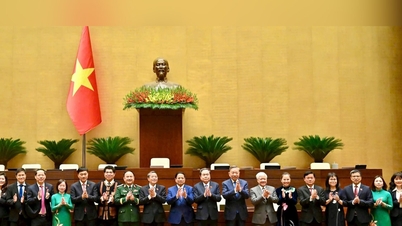
At the National Conference summarizing Party building and organizational work in 2025 and outlining tasks for 2026, organized by the Central Organization Department, Standing Committee member Tran Cam Tu also requested a focus on perfecting and effectively implementing the new organizational model; urgently reviewing, supplementing, and perfecting the institutions, functions, and tasks of agencies and units within the political system, ensuring smooth and synchronized operation.
The central government's directive focuses on effectively implementing the decentralization and delegation of power mechanisms between the central and local governments, while simultaneously enhancing the autonomy, self-determination, and accountability of local authorities.
Central agencies are responsible for guiding and supporting localities in effectively implementing the tasks that have been decentralized and delegated, especially in improving their organizational capacity for implementation.
This also includes promoting administrative reforms, ensuring compliance with the two-tiered local government model, strengthening inspection and supervision, and promptly resolving emerging difficulties.
The Standing Committee of the Party Central Committee requested continued efforts to advise on the reorganization of the apparatus, focusing on streamlining internal organizations within agencies and units of the political system. The overarching goal is to ensure that the apparatus operates efficiently, effectively, and efficiently, serving the people and society in the best possible way, and meeting the requirements of national development in the new period.
Personnel management is placed in a key position, with the requirement to encourage and protect dynamic, creative officials who dare to think, dare to act, and dare to take responsibility for the common good.
The Central Committee has requested that cadres be strengthened in difficult areas and key sectors, while promptly replacing, dismissing, or removing from office those cadres who lack responsibility, have low credibility, or are incompetent, without waiting until the end of their term.
Following the central government's guidance, the government has directly supervised the implementation of a two-tiered local government model, linked to the requirements of rapid and sustainable development in localities.
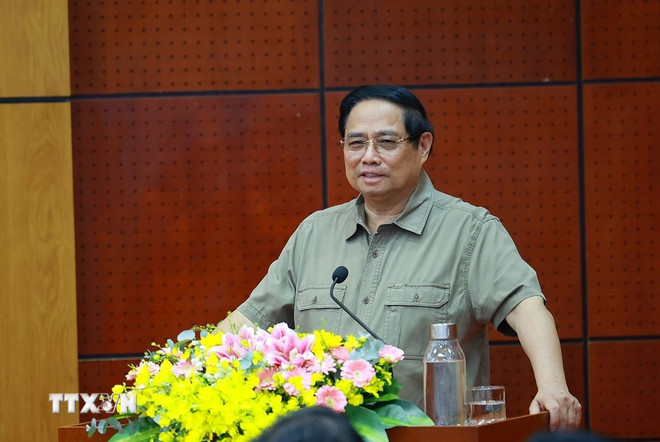
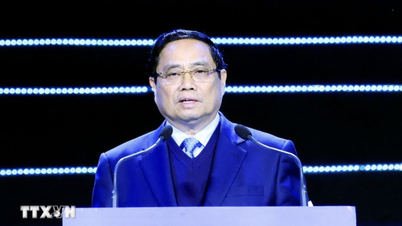
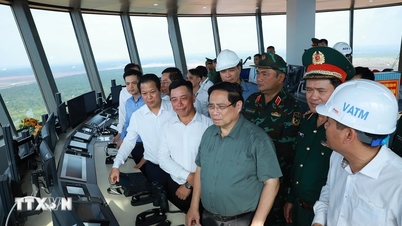
Working with the Standing Committee of the Tay Ninh Provincial Party Committee, Prime Minister Pham Minh Chinh assessed that Tay Ninh possesses many unique potentials, outstanding opportunities, and competitive advantages, serving as an important gateway connecting Southeast Asia and a transit point between regions.
Tay Ninh needs to decisively implement solutions to achieve a GRDP growth rate of 10-10.5% in 2026, in conjunction with the effective implementation of the provincial plan and the Moc Bai Border Gate Economic Zone plan.
The province must significantly improve its investment and business environment, considering state resources as the driving force for the development of science and technology, innovation, and digital transformation.
In particular, Tay Ninh must continue to effectively implement the two-tiered local government model, reorganize its staff, improve capacity, and enhance public services in the digital environment.
Alongside the management and direction, the legal and institutional systems are also being reviewed to align with the new model. The Ministry of Education and Training has issued a draft Circular on the Regulations for General Schools to solicit broad feedback from relevant agencies, organizations, and individuals, aiming to unify regulations that are still fragmented and cumbersome.
With the shift to a two-tiered local government model and the policy of streamlining the administrative apparatus and procedures, and promoting digital transformation, some of these aspects are no longer relevant.
The shift in educational management functions from the former district level to the People's Committee at the commune level and the Department of Culture and Social Affairs is considered consistent with the policy of streamlining the administrative apparatus and decentralizing power. The recent national scientific conference "Implementing the 2013 Constitution (amended) in the context of building a two-tiered local government in Vietnam" held in Ho Chi Minh City also contributed to clarifying the need to improve the legal framework.
Some argue that the re-establishment of decentralization mechanisms should be based on the principle of "assigning tasks to the level that performs them best."
The role of the People's Council in the new model is emphasized, requiring the improvement of legal frameworks, enhancement of representatives' expertise, and the application of digital technology.
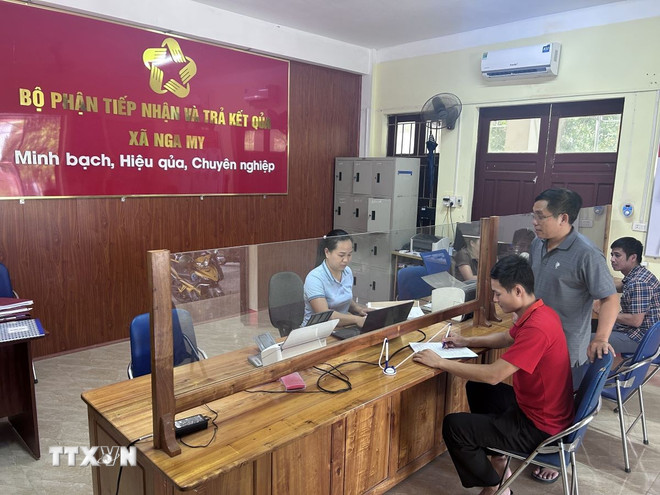
Practical experience at the grassroots level shows that many localities have proactively addressed difficulties to ensure the smooth operation of the new model. For example, in Hung Yen, the surplus and shortage of commune-level officials have been reviewed and resolved through reassignment, reinforcement, recruitment, and retraining.
Provincial leaders have emphasized a focus on grassroots initiatives, ensuring sufficient numbers and appropriate staffing levels, while also strengthening resources to ensure stable operation of commune-level governments.
It is evident that, from the central to the local level, the two-tiered local government model is being implemented with strong political will and increasingly practical approaches.
Experience confirms that with clear strategic direction and synchronously implemented solutions, local governments can become important drivers for rapid and sustainable development in the new era.
Source: https://www.vietnamplus.vn/tinh-gon-to-chuc-bo-may-dat-nen-tang-cho-phat-trien-nhanh-va-ben-vung-post1082983.vnp











































































Comment (0)