


Central delegates attending the conference included Comrade Nguyen Khac Dinh, Member of the Central Committee of the Party and Vice Chairman of the National Assembly ; and representatives from the leadership of several ministries, departments, and central agencies.
The delegation from Hanoi included Comrade Tran Duc Thang, Member of the Political Bureau, Secretary of the City Party Committee, and Head of the National Assembly Delegation of Hanoi City; along with members of the Standing Committee of the City Party Committee; the Standing Committee of the City People's Council and People's Committee; and representatives of leaders from departments, agencies, communes, and wards of the city.
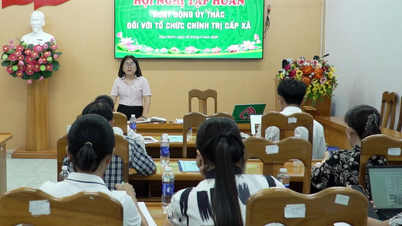
The conference was held in person at the Hanoi City Party Committee headquarters and connected online to departments, agencies, and 126 communes and wards in the area, with more than 8,000 delegates in attendance.
Previously, on April 23, 2026, at the first session of the 16th National Assembly, the Law on the Capital City was passed by the National Assembly. This is an important milestone, not only granting Hanoi special mechanisms but also marking a shift in the thinking of governing the capital city in the new era.
Expanding the development space and mechanisms for Hanoi.

Disseminating and explaining some basic contents of the Law on the Capital City No. 02/2026/QH16, Deputy Minister of Justice Nguyen Thanh Tu emphasized that the 2026 Law on the Capital City is a groundbreaking legal framework, contributing to the construction and development of the Capital City in the new era.
Accordingly, the 2026 Capital City Law creates three major breakthroughs: institutional breakthroughs; breakthroughs in development thinking; and breakthroughs in development space. Regarding institutions, the 2026 Capital City Law empowers Hanoi to develop mechanisms and policies suitable to the capital's development needs; it also grants the city greater autonomy in implementing and managing its development.
In terms of development thinking, the 2026 Capital City Law focuses on building a new development model for the capital city, linked to new economic models. Regarding development space, the law expands the mechanism of linkage between Hanoi and localities within and outside the region; creates a mechanism for developing underground space, low-level space, and provides direction for high-level space in the future.
The law also grants Hanoi more power in organizing its administrative apparatus and civil service system; planning and managing the capital's space; developing urban areas according to the TOD model; urban renovation; environmental protection; resource management; ensuring urban order and safety; managing historical sites, tourism, education, health, and science and technology; and a controlled experimentation mechanism.

Regarding the mechanism for mobilizing resources for the development of the Capital City, the 2026 Law on the Capital City stipulates that Hanoi is entitled to 100% of the bonus from increased budget revenue; issue Capital City bonds, project bonds, and green bonds; and decide on investment policies for large and important projects under the authority of the National Assembly and the Prime Minister.
Regarding infrastructure exploitation, the law expands the methods of exploiting infrastructure, allowing for leasing and concession of certain facilities to create additional resources for the development of the capital city.
Regarding human resource development, the law stipulates mechanisms for attracting and utilizing high-quality human resources through policies on salaries, housing, benefits, and investment in infrastructure for training institutions. Hanoi is also allowed to apply housing policies for city officials, civil servants, and central government officials working in Hanoi; and is entitled to hire experts to handle development issues of the capital city.
Urgent action needed to implement the Law on the Capital City.

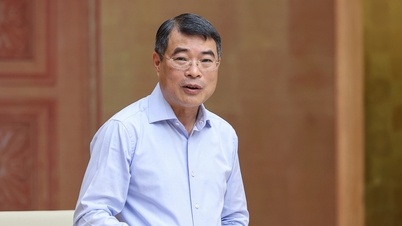
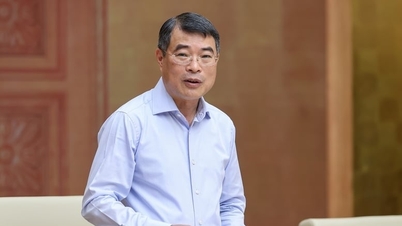
At the conference, Chairman of the Hanoi People's Committee Vu Dai Thang briefed and implemented the main contents of the Directive of the Standing Committee of the City Party Committee and the Plan of the Hanoi People's Committee on organizing the implementation of the Capital City Law in 2026.
The Chairman of the Hanoi People's Committee emphasized that the implementation of the 2026 Law on the Capital City must be identified as a key and continuous political task for the entire political system; ensuring that the law quickly comes into effect, creating new impetus for the rapid and sustainable development of Hanoi in the coming time.
Immediately after the Law on the Capital City of Hanoi in 2026 was passed, the city of Hanoi promptly issued guiding and operational documents to ensure that the law's implementation was systematic, unified, and effective. The Standing Committee of the Hanoi Party Committee identified the implementation of the Law on the Capital City as a "key, overarching political task, crucial for the successful implementation of Resolution No. 02-NQ/TW dated March 17, 2026, of the Politburo on building and developing Hanoi in the new era."
Notably, the implementation of the 2026 Capital City Law is required to be placed within a closely integrated framework with three major documents: the Capital City Planning with a 100-year vision; Resolution No. 02-NQ/TW; and the 2026 Capital City Law. According to the Chairman of the Hanoi People's Committee, these three documents are interactive and need to be implemented synchronously and uniformly to create a long-term development foundation for the Capital City.
Simultaneously, the city has identified digital transformation and the application of science and technology as a continuous requirement in the process of carrying out the tasks of the Party Committee as well as implementing socio-economic development goals and ensuring national defense and security in the area.
Another area of particular interest to the city is strengthening coordination between Hanoi and localities in the Capital Region to synchronously implement regional linkage-related contents as stipulated by law.
To ensure the law is effectively implemented, city leaders have requested that all levels and sectors focus on several key tasks. First and foremost is the thorough understanding of the spirit of the Standing Committee of the City Party Committee's Directive; identifying the implementation of the 2026 Capital City Law as a central and continuous political task for each agency and unit. All levels and sectors must achieve a high level of consensus in understanding and action throughout the entire political system, from the city level to the grassroots; emphasizing the role and responsibility of the head of each organization in directly leading, directing, and being fully accountable for the implementation results.
According to Hanoi City People's Committee Chairman Vu Dai Thang, the implementation process must adhere to the principle of "clear responsibilities, clear tasks, clear timelines, clear accountability, clear outcomes, and clear authority"; while also strengthening inspection and supervision, promptly correcting and strictly handling cases of delays, evasion, and shirking of responsibility.
Along with directing the implementation, the City People's Committee is deploying a high-intensity plan for disseminating, publicizing, training, and educating on the 2026 Law on the Capital City. The city requires that the dissemination efforts be proactive, creating high consensus throughout society. According to the plan, 100% of the documents implementing the 2026 Law on the Capital City must be covered in training and education for those responsible for its implementation. Communication activities will be carried out regularly and continuously, combining print media, online media, radio, television, digital platforms, infographics, video clips, podcasts, and other appropriate forms.
Source: https://baotintuc.vn/thoi-su/ha-noi-trien-khai-thi-hanh-luat-thu-do-nam-2026-20260507115009202.htm
![[Image] Hanoi's urban life under the challenge of a "scorching hot" environment](https://vphoto.vietnam.vn/thumb/1200x675/vietnam/resource/IMAGE/2026/05/25/1779706979265_nang-nong-t5-2026-minh-duy-7-4636-jpg.webp)
![[Image] Close-up view of the interchange connecting the two expressways and Long Thanh Airport.](https://vphoto.vietnam.vn/thumb/1200x675/vietnam/resource/IMAGE/2026/05/25/1779703378210_ndo_br_z7863716673926-224453a31600126cce10622af6290afd-4549-jpg.webp)







![[Image] Hanoi's urban life under the challenge of a "scorching hot" environment](https://vphoto.vietnam.vn/thumb/402x226/vietnam/resource/IMAGE/2026/05/25/1779706979265_nang-nong-t5-2026-minh-duy-7-4636-jpg.webp)








































































Comment (0)