

Foreign goods, especially cheap Chinese goods, are increasingly flooding the Vietnamese market, overwhelming Vietnamese goods due to their "dirt cheap" prices, diverse designs, and fast delivery... The number of small traders choosing to sell Chinese goods has also increased sharply.
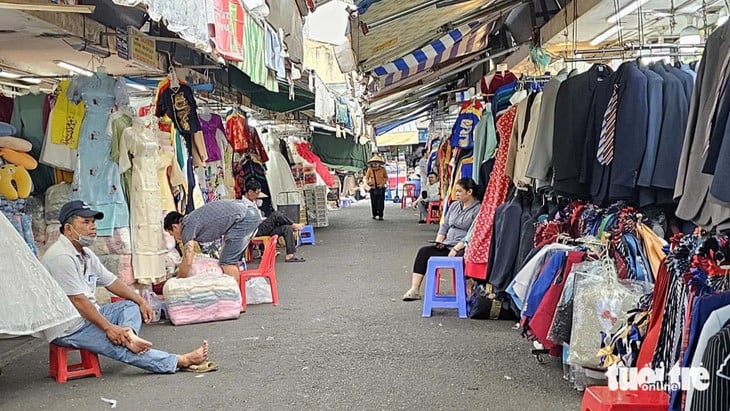
To protect Vietnamese goods and domestic production, in addition to the efforts of businesses themselves, many experts believe that authorities need to quickly implement solutions such as building tariff barriers against cheap imported goods and providing support policies regarding capital, infrastructure, and logistics systems. Otherwise, Vietnamese goods will be "suffocated" in their own market, and domestic production will continue to shrink.
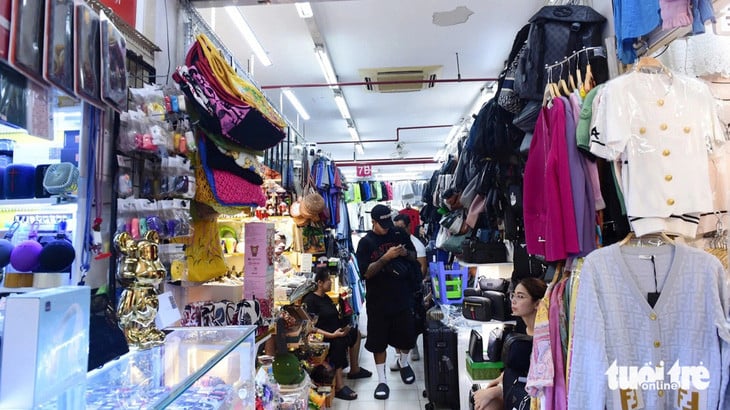
Chinese goods are flooding everything from warehouses to online marketplaces.
On the page "Nai...", which specializes in livestreaming the sale of fashion and personal items and has nearly 5,000 followers, we observed that the majority of these items are imported, including... Mostly from China.
The seller advertised a clearance sale with prices like 99,000 VND for 6 pillowcases, a 3-piece imported knife set for only 99,000 VND, a hot pot set originally priced at nearly 900,000 VND but now reduced to 199,000 VND... and a range of other household items such as pots and kettles. In just over an hour of livestreaming, the channel attracted hundreds of customers who placed orders.
Similarly, on a Facebook fan page called "Specializing in Guangzhou Fashion..." with over 105,000 members, we observed dozens of posts daily selling large quantities of clothing and footwear from Guangzhou (China) at prices ranging from just tens of thousands to hundreds of thousands of Vietnamese dong, attracting considerable interest from buyers.
Acting as potential buyers, we contacted a seller who confirmed that goods are imported from Guangzhou every week. They also assured us that wholesale buyers would receive a 20-30% discount compared to retail prices, with typical prices ranging from 50,000 to 150,000 VND per clothing item.
"Chinese goods" "The designs are diverse and the prices are cheap, with 50-60% of the goods coming from Guangzhou. New stock arrives continuously, so customers can buy whatever they want," the seller asserted.
Speaking to Tuổi Trẻ newspaper on November 17th, Ms. Ngô Thị Hoa, the owner of a livestream fashion sales channel, said that she used to sell a mix of Vietnamese and Chinese goods. However, for more than a year now, she has switched to selling Chinese goods because importing them is so easy and the designs are so diverse.
"A pair of inexpensive Chinese shoes costs only about 100,000 - 150,000 VND, while Vietnamese shoes in the same price range cost 150,000 - 200,000 VND. Not to mention that China has up to 30-40 different shoe designs, with new models almost every month, making them much easier to sell," Ms. Hoa said.
According to some vendors, small traders can obtain goods from domestic warehouses and factories without going through China, but about 70-80% of their goods are imported from China. Besides fashion items, Chinese household goods such as basins, pots, pans, mops, etc., are available in abundant quantities and at very low prices, sometimes even half the price of Vietnamese goods.
Similarly, major discount programs from many e-commerce platforms are also flooded with Chinese goods. On a large e-commerce platform, simply typing the phrase "Chinese goods" into the search box immediately displays a series of results with a wide variety of goods ranging from household items, stationery, cosmetics, fashion, food, and even plant seedlings...
Upon checking an account specializing in selling Chinese clothing on this platform, we noted that the platform was offering 50% discounts, free shipping, and even extra money if delivery was delayed beyond the promised timeframe... These policies help attract a large number of buyers.
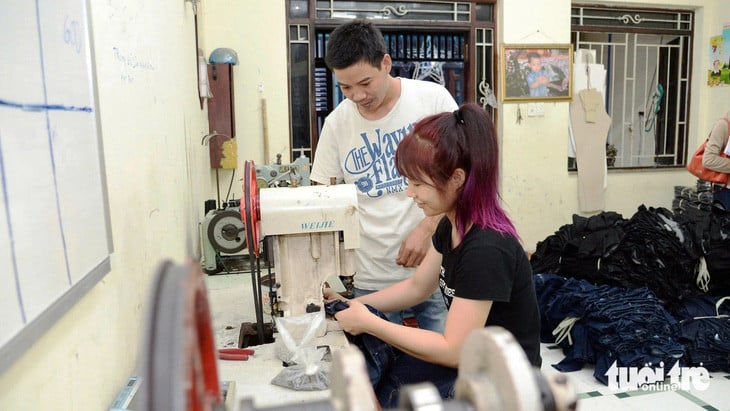
Vietnamese goods are losing ground in their own market.
Ms. Ngo Thi Bao (Thu Duc City, Ho Chi Minh City) said that e-commerce websites have been continuously offering deep discounts recently. However, finding Vietnamese clothing and footwear included in the discounted categories on these platforms is not easy because Vietnamese goods have smaller discounts than foreign goods, and there are also fewer designs to choose from.
Speaking to Tuổi Trẻ newspaper, Mr. Nguyen Dang Hien, vice chairman of the Ho Chi Minh City Industrial Park Business Association (HBA), said that Chinese goods follow a policy of low prices and diverse designs, targeting the consumer psychology of developing countries like Vietnam, especially rural areas.
Therefore, according to Mr. Hien, it's easy to understand why Chinese goods are increasingly dominating Vietnamese goods, appearing in almost every product category and everywhere you go. But it's not just in the footwear, garment, and household goods sectors that China is dominating; the Chinese food manufacturing industry is also rapidly encroaching on Vietnam's market.
"Domestic beverage companies only offer discounts of 12-15% to first-tier distributors, but Chinese products can offer much higher discounts. This easily tempts distributors to choose to stick with Chinese products at all costs, ignoring other options," Mr. Hien said.
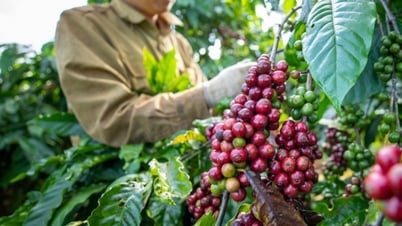
Meanwhile, Mr. Nguyen Ngoc Luan, director of Global Trade Link Company Limited (Ho Chi Minh City), said that even with coffee, which is a strength of Vietnam, his company faces difficulties competing with Chinese goods, let alone penetrating that market.
Selling on e-commerce platforms and through livestreaming is not easy due to numerous policies and high taxes and fees. Meanwhile, besides being cheap, Chinese goods often receive significant support from Chinese e-commerce platforms like TikTok and Temu, making it even more difficult for Vietnamese goods to compete.
"China selects influential online figures in various countries to train and sponsor, thereby creating 'livestreaming powerhouses' committed to selling Chinese goods. With the added support of Chinese businesses and e-commerce platforms, these individuals attract a large number of sellers, changing consumer trends. This policy contributes to the proliferation of Chinese goods in many countries, not just Vietnam," Mr. Luan said.
Domestic production is shrinking.
Speaking to Tuoi Tre newspaper, Mr. Nguyen Van Khanh, vice chairman and general secretary of the Ho Chi Minh City Leather and Footwear Association, said that before the COVID-19 pandemic, the domestic market consumed about 50-60% of leather and footwear products manufactured by local businesses, but this percentage is now declining sharply.
According to Mr. Khanh, besides the difficult economic situation, the influx of cheap Chinese goods is the main reason why Vietnamese businesses are struggling to survive. For example, a pair of Chinese sneakers sold in Vietnam costs only 60,000-70,000 VND, but if a Vietnamese business were to produce them, the cost would be at least 100,000 VND per pair.
"China is self-sufficient in raw materials and technology, while Vietnam almost entirely imports raw materials and components from China, and its designs are always behind. Therefore, in terms of cost and design, China has a clear advantage. Not to mention, China has built large trade centers near the border and allows businesses to display and introduce their goods almost free of charge," Mr. Khanh said.
According to Mr. Nguyen Dang Hien, Chinese goods wanting to penetrate a particular market are often "escorted" by e-commerce platforms, large transportation and warehousing systems along the border, not to mention receiving many advantages in terms of capital and technology during the production process, which helps reduce costs.
An expert in the e-commerce field stated that it's not just China; Thailand is also gradually adopting and doing quite well with this strategy, especially in building warehousing facilities along the border. In contrast, Vietnamese businesses are almost entirely left to fend for themselves.
"Our warehouses and trade centers along the border and border gates are almost non-existent, which greatly impacts logistics when entering foreign markets," he said.
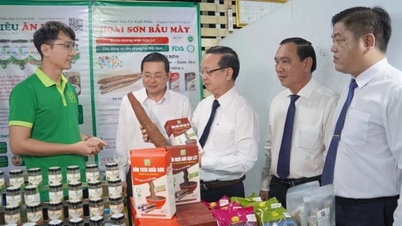
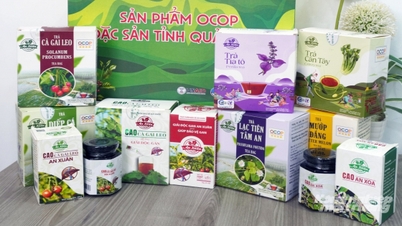
Mr. Nguyen Ngoc Luan believes that solutions are needed to ensure that Vietnamese goods fill the shelves in supermarkets and airports. For example, there should be more OCOP (One Commune One Product) stalls with dedicated display spaces.
"In addition to building tariff barriers against cheap imports, we need policies to support Vietnamese goods, such as support for promotion and reduction of taxes and fees for raw materials...", Mr. Luan said.
Source






























































Comment (0)