

"The lifeblood of the community"
Originating from the major policy of the Party and State in 2000, the "National Unity for Building a Culturally Rich Life" movement has been concretized through the actions of each Party committee, government, and individual citizen. Over the past 25 years, numerous difficulties have arisen, from ideological barriers and old habits to limited resources. However, through coordinated efforts, persistent propaganda, and the consensus of the people, the movement has gradually spread widely, becoming a sustainable force in social life.
Thousands of weddings and funerals are being held in a civilized and economical manner. In 2024, the rate of adopting the new lifestyle reached over 98%. The movement has changed lifestyles and created a strong impetus for the development of grassroots cultural and sports institutions.
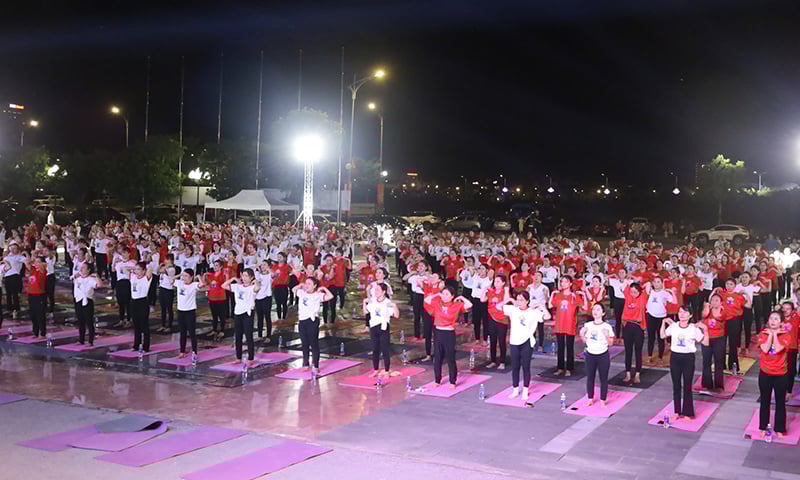
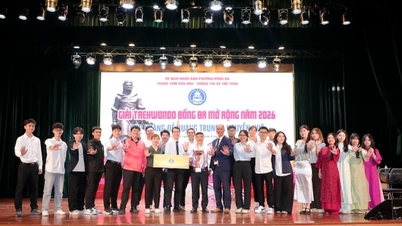
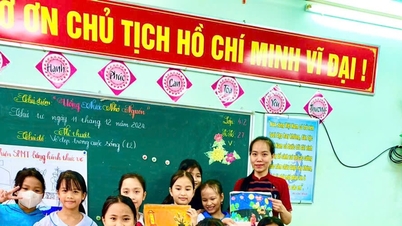
By the end of 2024, Quang Binh province had 1,111 out of 1,123 villages, hamlets, and residential areas with cultural centers and sports facilities, with over 70% meeting the standards. These spaces have become "living cells" nurturing community cohesion, from free classes for children, health clubs for the elderly, sports playgrounds for youth, to cultural and artistic performances for the people. With the movement "All people practice physical training following the example of the great President Ho Chi Minh," the province has nearly 3,100 training points. The percentage of people regularly participating in sports reached 37.6%, and the percentage of families participating in sports reached nearly 30%.
 |
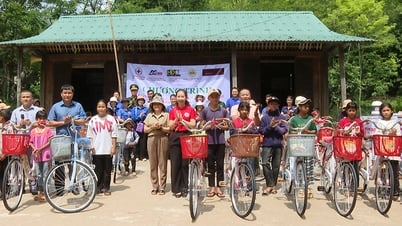
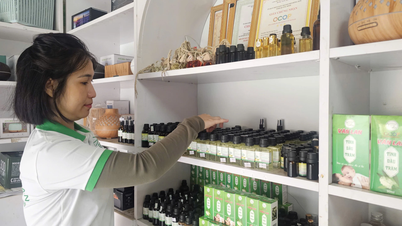
Over the past 25 years, the spirit of solidarity and mutual support in economic development has spread into concrete actions in every community. No longer just a slogan, "helping each other escape poverty and rise to legitimate wealth," it has become a widespread movement with hundreds of effective economic models formed by the hands and minds of the people. From beekeeping for honey production and economic forestry to cooperatives for mushroom cultivation, chicken farming, and OCOP product development, all bear the clear imprint of this movement. Associations and organizations have played a "bridge" role between policies and the people, skillfully integrating propaganda, technology transfer, loan management, and creating local livelihoods.
Many models have helped significantly reduce the poverty rate, creating a new face for rural areas. As a typical beekeeping household in Xuan Hoa commune (Minh Hoa district), Mr. Dinh Xuan Khach shared that beekeeping households in the area regularly exchange and learn effective beekeeping techniques. Through this mutual support, many families have escaped poverty and achieved a more stable life.
Preserving identity
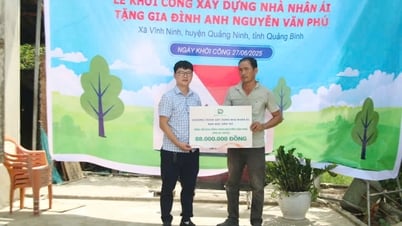
The campaign "All people unite to build a cultured life in residential areas," now known as "Building new rural areas and civilized urban areas," launched and organized by the Central Committee of the Vietnam Fatherland Front, has contributed to changing the face of villages and hamlets. To date, Quang Binh has 97 communes that have met the standards for new rural areas, including 6 communes that have achieved model standards. Thousands of households have donated land, contributed money, and provided labor. The process of mobilizing people to contribute to building cultural institutions has also been carried out systematically and transparently.
Nguyen Van Huyen, Secretary of the Party Branch of Cuong Trung village (Tien Hoa commune, Tuyen Hoa district), shared his experience: “We went to each house, listened to the opinions of the people, and clearly explained the common benefits. It was this transparency and open-mindedness that helped create high consensus in building cultural institutions in the locality. The locality has mobilized more than 15 billion VND to build cultural institutions, transportation infrastructure, etc. All thanks to the people's efforts.”
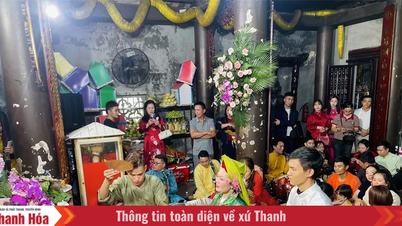
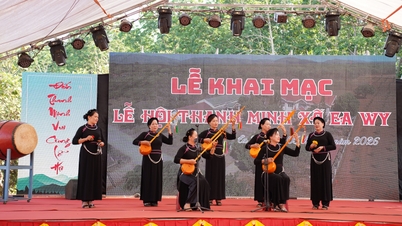
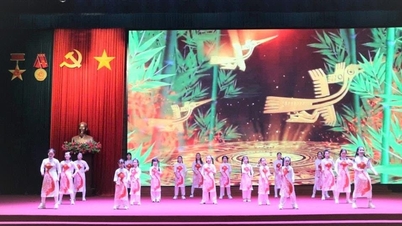
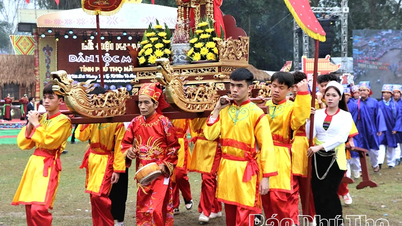
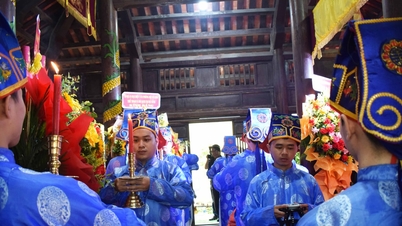
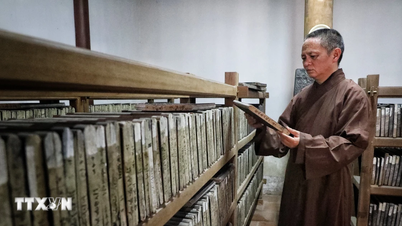
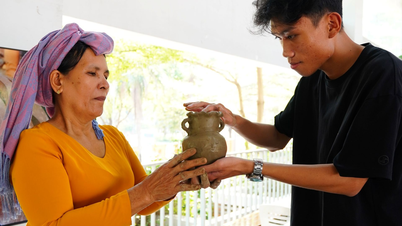
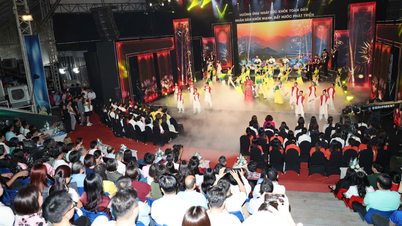
One of the most striking features of the movement is the strong resurgence of traditional cultural values. Folk songs are no longer just memories, but have become part of daily cultural practices. In every village, the seeds of art are being sown, passed down through generations, and nurturing the souls of the people, especially the youth.
Mr. Tran Van Due, Chairman of the Uyen Phong Village Ca Tru Club (Chau Hoa Commune, Tuyen Hoa District), affirmed the value and widespread influence of Ca Tru art in daily life: “The coordination between all levels of government, the unity of the people, and the dedication of the artisans have helped the club to form and develop over the past 23 years. This is the condition for Ca Tru to be revived and embraced by younger generations. We consider this both preserving a heritage and connecting the community, enriching the spiritual life of the local people.”
| Reviewing the 25-year journey of implementing the "National Unity in Building a Culturally Rich Life" movement, Ms. Le Thi Ngoc Ha, Deputy Director of the Department of Culture, Sports and Tourism, emphasized: "The success of the movement stems from the decisive involvement of Party committees and authorities at all levels, the close coordination of departments, agencies, and mass organizations, and the positive spirit and high responsibility of cadres, Party members, and the vast majority of the people. The implementation has created many bright spots, good models, and innovative approaches. This is an important driving force contributing to promoting socio-economic development and building a more prosperous, civilized, and sustainable Quang Binh homeland." |
The province currently has 189 self-governing models, with 100% of residential areas establishing security self-governing groups. Models such as "Self-governing groups for border areas and national boundary markers" or "Residential areas, villages, and hamlets free from crime, drugs, and human trafficking" contribute to protecting the border region and maintaining peace in the villages. These models have spread the ethical values of the community, teaching people to live responsibly, to love, and to preserve beauty.
Twenty-five years—a relatively short period compared to the history of a region's development—is enough to witness the enduring and extraordinary strength of the people's will when properly awakened. In an era of rapid development with many unpredictable changes, the role of culture is becoming increasingly important and urgent. Culture is no longer a secondary element, a decorative factor, but the root, the core foundation that keeps people standing firm in the face of challenges, and keeps communities stable amidst change. In this era of national progress, culture will continue to be the source that guides Quang Binh towards the future—a sustainable future built from the people's will, their strength, and for the benefit of the people.
Dieu Huong
Source: https://baoquangbinh.vn/van-hoa/202506/hanh-trinh-ben-bi-cua-long-dan-2227152/
![[Photo] Prime Minister Pham Minh Chinh receives the Chinese Ambassador to Vietnam](https://vphoto.vietnam.vn/thumb/1200x675/vietnam/resource/IMAGE/2026/04/05/1775397481797_ndo_br_dsc-5512-jpg.webp)















































Comment (0)