According to the investigation conclusions of the Ministry of Public Security , former director of Xuyen Viet Oil, Mai Thi Hong Hanh, is accused of using money from the Fuel Price Stabilization Fund to buy real estate, lend to friends, for personal expenses, and pay huge bribes to several individuals at the Ministry of Industry and Trade and the Ministry of Finance.
However, in addition to the reckless use of the Fuel Price Stabilization Fund, not only Xuyen Viet Oil but also some other fuel wholesalers have been slow to deposit funds into the Stabilization Fund's bank accounts or have not fully declared the Fund's balance, posing a significant risk of financial losses for the public.
The Ministry of Industry and Trade and the Ministry of Finance have repeatedly issued documents urging businesses such as Xuyen Viet Oil and Hai Ha Water and Land Transport Company Limited to transfer their remaining balances to the fuel price stabilization fund into the state budget. However, to date, the Ministry of Finance has not received any information from these businesses regarding the payment of the remaining balances to the fuel price stabilization fund.
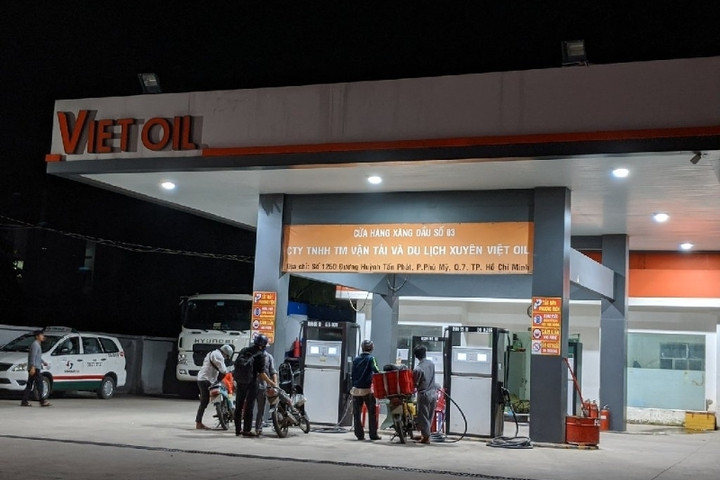
Recently, the Ministry of Industry and Trade also issued a document requesting Trung Linh Phat Co., Ltd. to report on the implementation of regulations regarding the fuel price stabilization fund and to rectify related violations.
According to the ministry, despite repeated requests for the company to seriously comply with regulations on the fuel price stabilization fund, including transferring funds to the price stabilization fund account, the company has yet to do so.
The fuel price stabilization fund should be abolished.



Speaking to Lao Dong newspaper, economist Vu Vinh Phu - former Deputy Director of the Hanoi Department of Trade - said that during its implementation, the fund revealed more shortcomings than positive effects on market stabilization.
Because the funds were held by businesses, they were sometimes misused, used for improper purposes, or even violated the law.
According to the conclusions of the Government Inspectorate in January 2024, 3 out of 7 petroleum wholesalers were fined three or more times; 3 wholesalers allocated and used funds for petroleum volumes exceeding those recorded in their books, resulting in incorrect fund allocations of over 4.7 billion VND and incorrect fund expenditures of over 22.5 billion VND…
The aforementioned shortcomings indicate that it is time to end the era of using this fund. When abolishing the fuel price stabilization fund, a replacement fund in kind (fuel) must be established. Currently, we are still dependent on the global market. The in-kind stabilization fund must be large enough to provide reserves for the country for 3-6 months; only then will it be able to stabilize the market when necessary.
This fund must be accounted for and circulated, with purchases made at low prices and sales made at high prices, just like a state-owned capital management company.
Furthermore, once petroleum import, wholesale, and retail units are given autonomy in their operations, it will eliminate monopolies, vested interests, the system of granting permits and approvals, and the complex, time-consuming reporting and consultation processes that deprive businesses of opportunities.
From then on, retail and wholesale prices will fluctuate according to the world market, and businesses will proactively calculate their own business costs from purchasing to selling each drop of gasoline and diesel, bearing the profits and losses themselves.



Petroleum products should be managed solely by a specialized ministry, namely the Ministry of Industry and Trade. The Ministry of Industry and Trade should not directly oversee business operations but should only manage and combat smuggling, trade fraud, counterfeit goods, and tax evasion.
The regulatory body needs to create a healthy, open, and transparent competitive environment in the domestic petroleum market. Greater transparency in petroleum transactions will benefit both businesses and consumers when they need to use petroleum products.
"With the new direction of establishing a state-invested, funded, and managed in-kind price stabilization fund, replacing the previous cash fund, it will bring a new image of business and service for a national essential commodity in the coming years, once the state-owned petroleum reserve is completed," Mr. Phu said.
Source: https://laodong.vn/kinh-doanh/he-luy-khi-quy-binh-on-xang-dau-bi-su-dung-sai-muc-dich-1387864.ldo




![[Photo] Prime Minister Le Minh Hung presides over the thematic session on promoting science and technology development and innovation.](https://vphoto.vietnam.vn/thumb/1200x675/vietnam/resource/IMAGE/2026/06/23/1782207872934_ndo_br_dsc-1724-jpg.webp)