

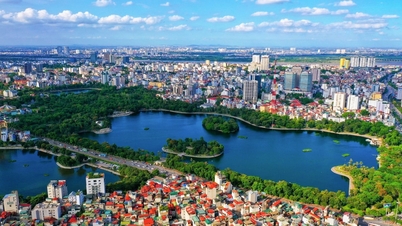
Shaping the structure of a multipolar, multi-centered megacity.
According to Decision No. 2512/QD-UBND dated May 13, 2026, approving the Master Plan for Hanoi Capital City with a 100-year vision, the Master Plan for Hanoi Capital City is developed with a long-term vision extending beyond 2085, based on the development of open spaces and a "multi-layered, multi-tiered, multi-polar, multi-centered" urban structure, closely linked with the Capital Region, the Red River Delta region, and national and international economic corridors.
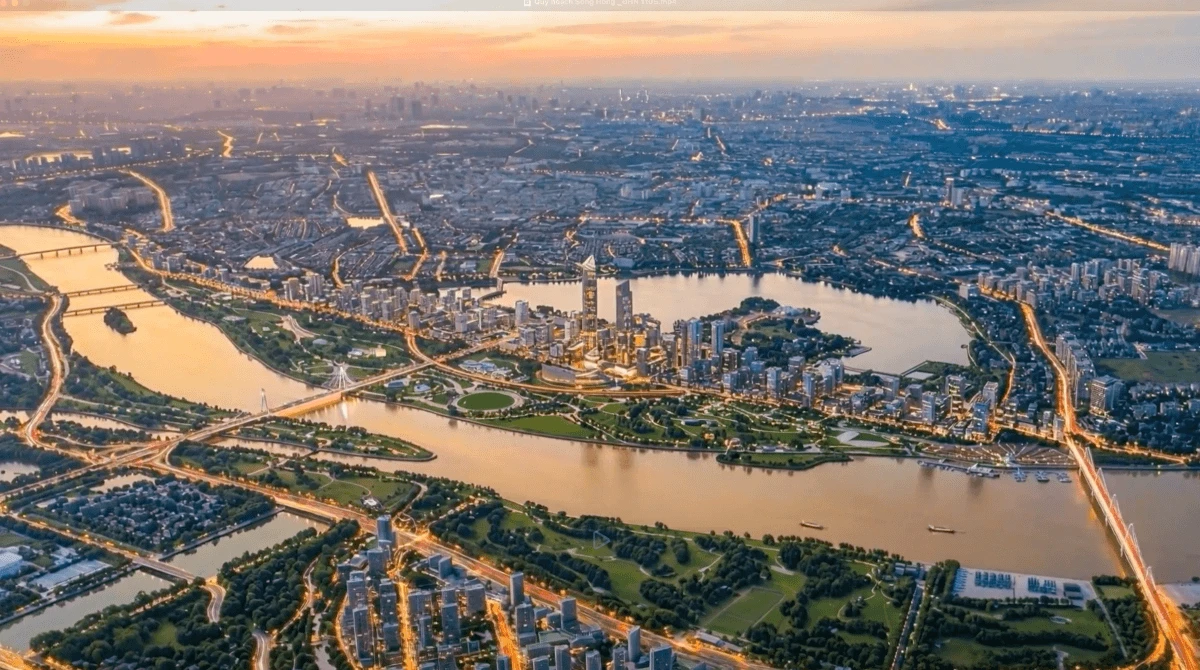
Notably, Hanoi has identified a development model comprising 9 growth poles, 9 major centers, and 9 strategic driving axes, forming a new development framework for the entire city.
In this plan, the historical inner city area plays the central role in politics , culture, and finance; the North develops into an airport city, logistics hub, and international integration center; the West forms the Hoa Lac science and technology cluster; and the South develops high-tech industries, logistics, and the capital's second airport.
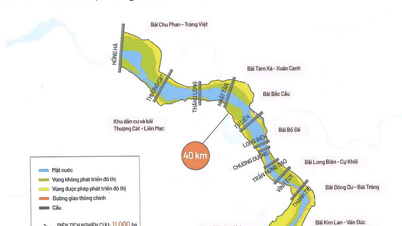
The planning orientation for the Red River scenic boulevard aims to develop a creative economy linked to local identity, forming a "cultural corridor along the mother river". According to the plan, Hanoi will build tourism routes connecting a chain of riverside heritage parks with a network of 11 modern themed parks.
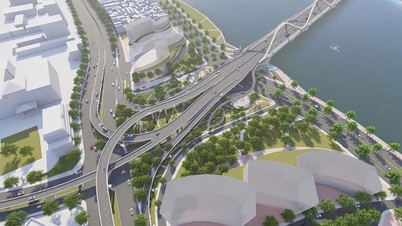
One of the most important highlights of the plan is the designation of the Red River as a "landscape boulevard" and a new central development space for the capital city.
According to the plan, the Red River axis will not only be a flood drainage corridor but also become a multi-functional development hub encompassing finance, trade, services, creative culture, tourism, and modern urban areas.
Hanoi plans to develop a Red River landscape corridor approximately 90km long, connecting Son Tay through the city center to Van Giang - Pho Hien. New bridges, riverside transportation routes, and public spaces on both banks will create a completely new urban landscape for the capital in the future.
Simultaneously, the city will implement a strategy to "revive the rivers" such as To Lich, Nhue, Day, Tich, and Cau Bay through a system of regulating lakes, underground reservoirs, centralized wastewater treatment, and riverside landscape beautification.
This is seen as a major breakthrough aimed at simultaneously addressing the long-standing problems of pollution, flooding, and urban traffic congestion.
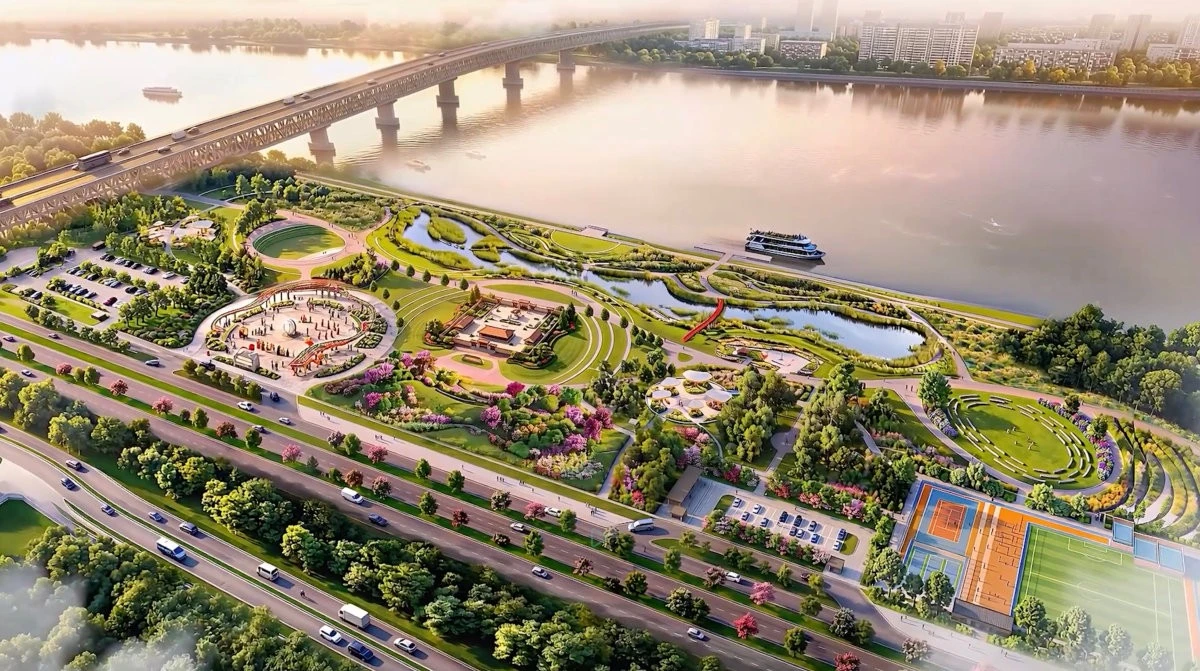
A network of 11 themed parks covering an area of 3,300 hectares.
The riverside green space system comprises 11 park clusters with a total area of approximately 3,300 hectares of interconnected land, stretching from north to south. The largest cluster is located on the Trang Viet riverbank in Me Linh and Thien Loc communes, covering over 1,100 hectares. Conversely, the park in Phu Thuong ward is the smallest, at approximately 20 hectares.
Notably, the themed park will preserve the peach and kumquat growing areas of Nhat Tan and Quang Ba wards. This project is expected to revitalize the historical waterway connecting Viet Tri, Hanoi to Pho Hien through the distinctive agricultural cultural values of the region.
Green transportation infrastructure and iconic cultural spaces
Besides green spaces, the plan also focuses on developing a network of pedestrian walkways along the waterfront and expanding transportation routes. Parks will integrate various recreational and sightseeing services to attract residents and tourists. This space will not only serve as a place for relaxation but also help reduce the concrete effect, improve air quality, and mitigate the urban heat island effect.
The project also proposes the construction of iconic international landmarks such as the Tower of the Era, the Museum of the Red River Memories, the Long Bien Bridge Museum, the Contemporary Museum, and the Technology Museum. These structures will create architectural highlights and innovative spaces for the capital city.
Developing waterway tourism and reviving traditional craft villages.
One of the key highlights is the development of a waterway transportation system along the Red River. The city plans to develop tours lasting from 1 to 3 days, visiting historical sites and museums along both banks. There will also be dedicated pedestrian and bicycle lanes along the riverbank, facilitating outdoor sports activities.
Furthermore, traditional craft villages such as Bat Trang, Kim Lan, and Van Duc will be preserved and revived, integrated into cultural tourism and experiential spaces. Improving the living conditions of villagers in these craft villages will be a top priority in the urban development process.
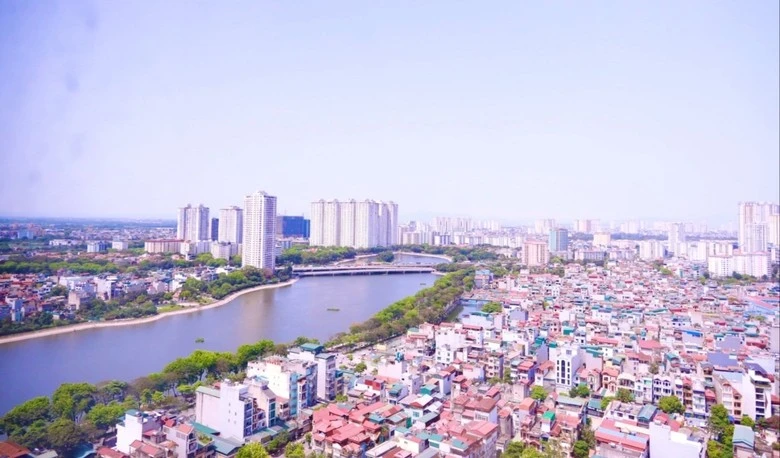
The goal is to become the 'Central Park' of the capital city.
Hanoi aims to transform the area along both banks of the Red River into a central ecological belt, serving as a large-scale cultural, tourism, festival, and sports space for Northern Vietnam. It is projected that, upon completion, the chain of parks and riverside services could attract 15 to 20 million visitors annually.
Currently, Hanoi is facing a shortage of public spaces and large-scale ecological squares. Implementing this project will not only transform the landscape but also improve the quality of life for residents, truly turning the Red River into a future development center for the city.
Source: https://baolaocai.vn/hinh-thanh-vanh-dai-sinh-thai-va-van-hoa-dang-cap-quoc-te-post899606.html


![[Image] Close-up view of the interchange connecting the two expressways and Long Thanh Airport.](https://vphoto.vietnam.vn/thumb/1200x675/vietnam/resource/IMAGE/2026/05/25/1779703378210_ndo_br_z7863716673926-224453a31600126cce10622af6290afd-4549-jpg.webp)
![[Image] Hanoi's urban life under the challenge of a "scorching hot" environment](https://vphoto.vietnam.vn/thumb/1200x675/vietnam/resource/IMAGE/2026/05/25/1779706979265_nang-nong-t5-2026-minh-duy-7-4636-jpg.webp)


































































Comment (0)