

Artifacts tell the story of history.
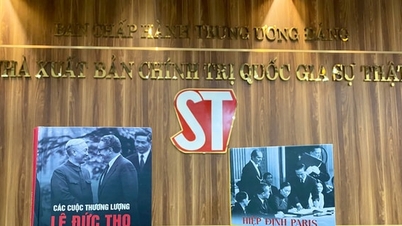
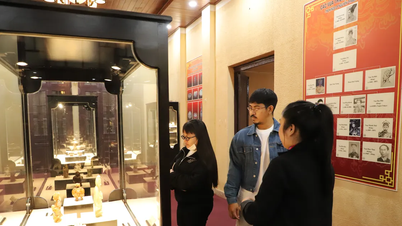
Within the War Remnants Museum (28 Vo Van Tan Street, Xuan Hoa Ward, Ho Chi Minh City), the exhibition room on the first floor recreates a special historical period of the nation: the Paris Peace Conference, the longest peace talks in world history, which took place from May 13, 1968 to January 27, 1973, aimed at ending the war and restoring peace in Vietnam.
Amidst the wealth of documents, images, and artifacts on display, the traditional Vietnamese ao dai dress, for over half a century, has quietly captivated the public's attention. This is the ao dai worn by Mrs. Nguyen Thi Binh, Minister of Foreign Affairs of the Provisional Revolutionary Government of the Republic of South Vietnam, on the day of the signing of the Paris Agreement, January 27, 1973.
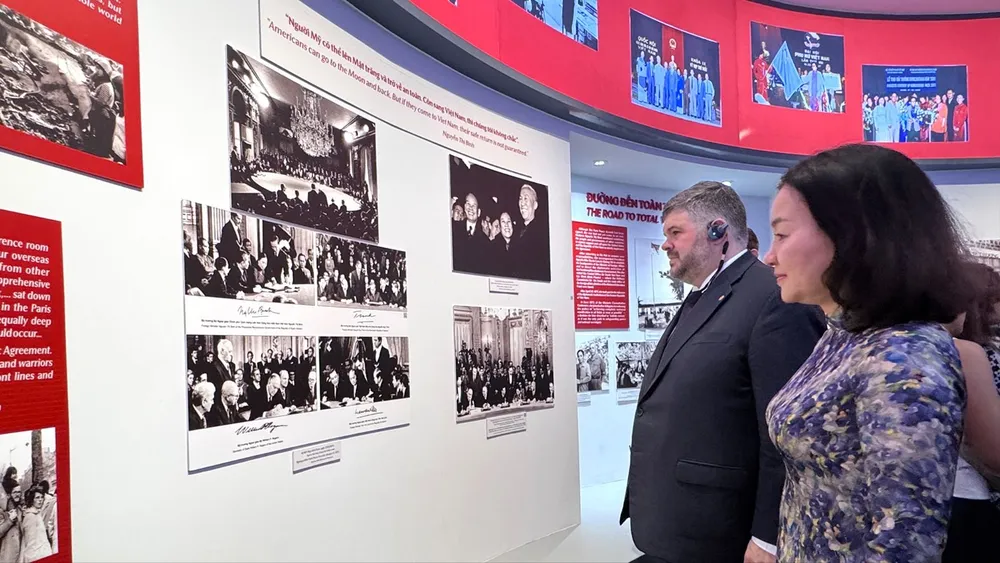
More than just an artifact, the ao dai (Vietnamese traditional dress) tells the story of Vietnamese courage and wisdom at the international negotiating table. Within the framework of the Paris Conference, Ms. Nguyen Thi Binh signed the agreement, representing the just voice of the Vietnamese people before world public opinion.
“I’ve read books, newspapers, and seen many documents about Ms. Nguyen Thi Binh, and I greatly admire her image at the negotiating table years ago – a woman of strong character, intelligence, and resilience. Today, seeing the dress she wore on the day of the agreement signing, I am truly moved. A Vietnamese ao dai that is both gentle and strong and resilient,” shared Ms. Pham Mai Thu Ha (35 years old, office worker, residing in Tan Binh ward).
"Live like Mrs. Nguyen Thi Binh"
These days, also at the War Remnants Museum, a thematic exhibition titled "Nguyen Thi Binh - The Intellect, Courage, and Character of Vietnamese Women in the Ho Chi Minh Era" is taking place. The exhibition was initiated by Ms. Ton Nu Thi Ninh (Chairperson of the Ho Chi Minh City Peace and Development Fund) and Mr. Nguyen Ba Son (Vice Chairperson of the Ho Chi Minh City Peace and Development Fund), in collaboration with the War Remnants Museum, the Vietnam Fatherland Front Museum, the Vietnam Women's Museum, and the Southern Women's Museum.
Sharing her thoughts at the exhibition, Ms. Ton Nu Thi Ninh emphasized: “Ms. Nguyen Thi Binh's journey was a journey of international integration during wartime, for national independence and reunification, for peace, development, and happiness – with all her aspirations, heart, and strength. In the world's perception during the 1960s and 1970s, Ms. Nguyen Thi Binh's image and voice truly made a striking impression, becoming a source of pride and inspiration for subsequent generations of diplomatic officials, especially women, in demonstrating the intelligence, courage, and character of Vietnamese women on the international stage.”
According to numerous documents, images, and messages on display, Nguyen Thi Binh's influence extended beyond the Paris Conference and strongly beyond national borders. The slogan "Live like her - Nguyen Thi Binh," which appeared in the anti-war movements of American women in the 1960s and 1970s, is vivid evidence of the widespread impact of a Vietnamese woman in the struggle for peace and justice.
At the exhibition space, through a video shared remotely, Ms. Nguyen Thi Binh expressed: “When talking about my journey, I always think that it is not just the journey of one woman, but of many women during a period of great upheaval in the country. At the Paris Conference, the female faces of the Provisional Revolutionary Government of the Republic of South Vietnam delegation frequently appeared at the negotiating table, illustrating that.”
According to Ms. Nguyen Thi Binh, what helps diplomats remain steadfast during challenging historical moments is "unwavering faith in the core values of the nation and a sense of responsibility towards the country." She added: "I hope that through this exhibition, young people will understand that peace is not something that comes automatically; to have and maintain peace, the entire nation, each individual citizen, must constantly protect, preserve, and promote it, so that the country can develop and every citizen can live in happiness."
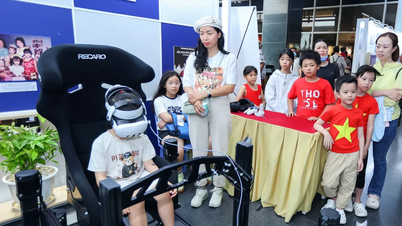
In the thematic exhibition "Nguyen Thi Binh - The Intellect, Courage, and Character of Vietnamese Women in the Ho Chi Minh Era," the War Remnants Museum is experimenting with virtual reality (VR) technology for the first time to recreate the events of the 1973 Paris Agreement signing conference.
The system is built on the digitalization of original visual materials of the meeting room at the Kléber International Convention Center (France) - where the agreement was signed. Through VR equipment, the multi-dimensional space of the meeting room is recreated with high accuracy, allowing viewers to visually interact and directly experience the scale and actual context of the historic negotiating table.
Source: https://www.sggp.org.vn/hoa-binh-khong-mac-nhien-ma-co-post836418.html



![[Photo] General Secretary and President To Lam and the President of the Philippines hold talks.](https://vphoto.vietnam.vn/thumb/1200x675/vietnam/resource/IMAGE/2026/06/01/1780286997787_anh-man-hinh-2026-06-01-luc-11-09-43.png)
![[Photo] Reception to welcome General Secretary and President To Lam and his wife on their State visit to the Philippines](https://vphoto.vietnam.vn/thumb/1200x675/vietnam/resource/IMAGE/2026/06/01/1780295488620_vna-potal-chieu-dai-chao-mung-tong-bi-thu-chu-tich-nuoc-to-lam-va-phu-nhan-tham-cap-nha-nuoc-toi-philippines-8798060-7855-jpg.webp)


































































Comment (0)