

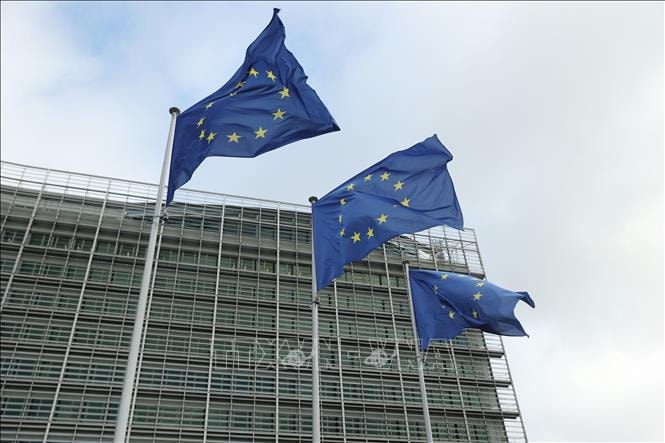
The event is seen as a significant milestone for the EU's expansion policy, taking place as the bloc seeks a new direction for its membership process, especially after the Russia-Ukraine conflict altered the geopolitical landscape of Europe.
A forum for leaders shaping the future of Europe.
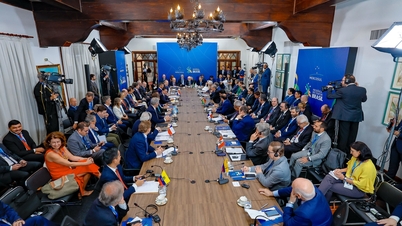
European Council President António Costa confirmed his attendance, along with Moldovan President Maia Sandu, Serbian President Aleksandar Vučić, the three Prime Ministers of the Western Balkans: Edi Rama (Albania), Milojko Spajić (Montenegro), Hristijan Mickoski (North Macedonia), and European Commissioner for Enlargement Marta Kos.
Euronews' initiative is seen as an effort to give a voice to candidate countries, in the context of European Commission President Ursula von der Leyen restarting the enlargement process, calling it "the reunification of Europe".
At the conference, leaders are expected to present their individual perspectives on the path to integration, from Moldova's determination amidst the war in Ukraine to the decades-long wait of the Western Balkan countries.
The diverse challenges in the journey to EU accession.
Since Russia launched its full-scale military campaign in Ukraine, Brussels has pushed for expansion to bolster the continent's security and socio-economic power. However, each candidate faces its own unique challenges.
Ukraine applied for membership just four days after the Russian attack in February 2022 and was granted candidate status within four months. The country is now striving to implement reforms while simultaneously defending its territory. Moldova followed suit, receiving candidate status at the same time and is expected to complete negotiations by 2027. President Maia Sandu has steadfastly pursued EU goals despite pressure and political interference from Russia.
Serbia began negotiations in 2014 after submitting its application in 2009, but public support for joining has fallen from over 70% to around 40%. Nevertheless, both Brussels and Belgrade maintain that Serbia has a place in the bloc.
Albania, a candidate since 2009, is closer than ever to achieving its goal of membership. Prime Minister Edi Rama stressed that this is the time to choose to stand with European values and security, with the aim of joining by 2030.
Montenegro is currently leading the process, having opened 33 chapters and tentatively concluded 7, aiming to complete the process by 2026 and become a member in 2028. Meanwhile, North Macedonia, which applied in 2004, continues to face obstacles from historical and linguistic disputes with Bulgaria, causing the process to stall.
Laying the groundwork for a new phase of expansion.
The Euronews conference took place at the same time that the European Commission released its 2025 Extended Assessment Report, an annual report that tracks the progress of candidate countries and guides their future steps.
According to the latest Eurobarometer survey, 56% of EU citizens support expanding the bloc, with young people showing the highest level of support. This reflects a general trend in Europe of seeking new cohesion among nations.
Euronews emphasizes that the conference's live television format will allow people across Europe to witness frank dialogues between EU leaders and candidate countries – where hopes, challenges, and aspirations for integration are placed side-by-side, helping to shape the future of a unified Europe.
Source: https://baolamdong.vn/hoi-nghi-mo-rong-eu-diem-nhan-moi-trong-tien-trinh-hoi-nhap-chau-au-399799.html


![[Photo] Prime Minister Pham Minh Chinh presides over a meeting on private sector economic development.](/_next/image?url=https%3A%2F%2Fvphoto.vietnam.vn%2Fthumb%2F1200x675%2Fvietnam%2Fresource%2FIMAGE%2F2025%2F12%2F20%2F1766237501876_thiet-ke-chua-co-ten-40-png.webp&w=3840&q=75)



















































Comment (0)