

To support the National Target Program for New Rural Development, the Provincial Farmers' Association annually adheres to the province's New Rural Development targets to develop relevant content and tasks. The Association has implemented models, programs, and projects for socio-economic development in a practical and specific manner, with content related to criteria such as income, environment, collective economy, cooperative economy, and the construction of the political system.
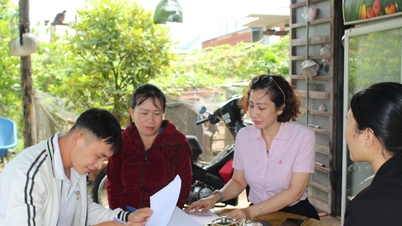
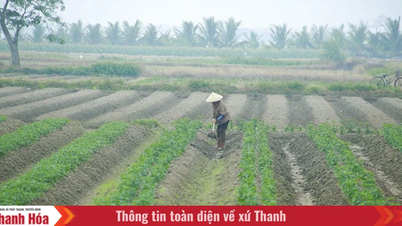
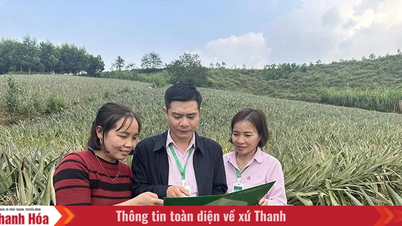
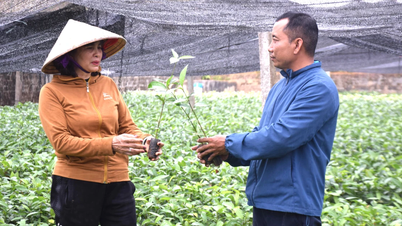
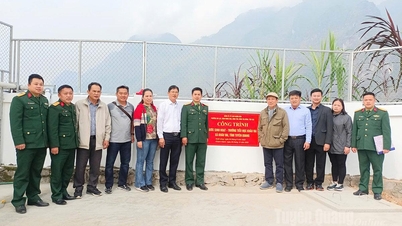
 Farmers' association members in Cam Phu commune (Cam Thuy district) are receiving support to develop hillside garden economic models.
Since then, many movements have been implemented in practice to promote the construction of new rural areas in localities, typically the movement "Farmers competing in excellent production and business, uniting to help each other get rich and sustainably reduce poverty". The Association also strengthened its propaganda, mobilization, guidance, and organization efforts to encourage farmers to actively participate in the emulation movement "The whole country joins hands to build new rural areas" in the 2021-2025 period, linked with the campaign "All people unite to build new rural areas and civilized cities". During the implementation of these movements, the Association also focused on publicizing exemplary individuals, innovative ideas, good experiences, new models, and effective methods for dissemination and replication.
In localities throughout the province, the core role of farmers has been promoted in the implementation of the New Rural Development program. From 2023 to the present, farmers' associations at all levels have mobilized members and farmers in the province to donate more than 214,000 square meters of land; repair and build more than 1,500 kilometers of rural roads and canals; and participate in the construction of 529 projects of various types. Regarding the environmental criteria, grassroots farmers' associations have established 522 self-governing groups for rural environmental protection. In implementing the production and income criteria, more than 142,100 farmer households producing and trading agricultural products have registered and committed to ensuring food safety and hygiene. Farmers' associations at all levels have also established 569 new farmer association models participating in the implementation of food safety indicators. At the same time, they have mobilized more than 434,400 farmer households to register for the construction of culturally exemplary families. 459,629 members and farmers participated in health insurance to meet the cultural and health criteria in the New Rural Development program in their localities.
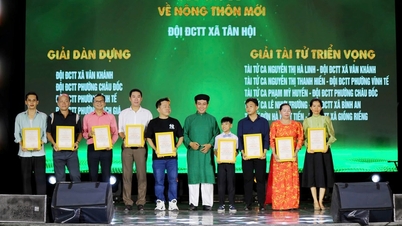
Annually, farmers' associations at all levels, in coordination with the People's Committees at the same level, launch and organize the evaluation and awarding of titles, and conduct preliminary reviews of the movement for outstanding farmers in production and business, solidarity, mutual assistance for wealth creation, and sustainable poverty reduction according to regulations. On average, the entire province has over 200,000 households achieving outstanding production and business status at various levels each year. From these movements, many outstanding farmers have established enterprises, cooperatives, partnerships, branches, and professional associations, attracting and creating jobs for many workers, and forming cooperative linkages in production, business, and product consumption. The associations also mobilize farmers to help each other with money, goods, plants, and livestock to support thousands of disadvantaged farming households in the province each year.
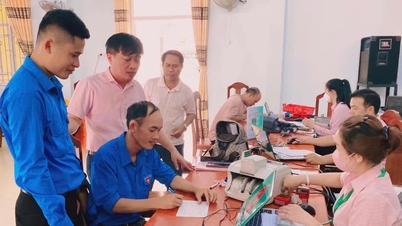
In addition, the various levels of the Farmers' Association have strengthened activities to support farmers with capital, supplies, technology transfer, vocational training, market information, product promotion and consumption, etc. This has helped members and farmers raise awareness, change their mindset, and boldly shift the structure of crops and livestock towards increasing added value and sustainable development. At the same time, they continue to act as guarantors and trustees with banks to provide loans to farmers for production and business development, with a total outstanding loan balance of nearly 16,000 billion VND to date, for over 5,500 loan groups with over 175,000 members. The various levels of the Association have also effectively implemented the Farmers' Support Fund, reaching 37.1 billion VND with 77 projects for 599 households. Through this, farmers have built economic development models, cooperative economies, collective economies, and established cooperatives and businesses. That is precisely the goal that the New Rural Development Program aims for: to develop production and increase income for rural people.
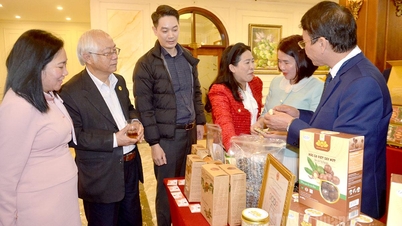
Over the years, the Provincial Farmers' Association has collaborated with departments, agencies, and businesses to organize training courses on the transfer of science and technology for hundreds of thousands of farmers and association members in the province. To date, farmers in various localities have developed 125 high-tech and high-tech agricultural production models, linked to the development of value chains. Farmers in the province have also received support in training and guidance on good agricultural practices, traceability labels, and product labeling, and have directly promoted and supported the development of 50 OCOP products; and received support in supplies for agricultural production according to VietGAP standards. The Provincial Farmers' Association also coordinated with the Provincial Post Office and the Provincial Sub-Department of Agricultural, Forestry, and Fisheries Quality Inspection to organize 37 training courses for 2,446 trainees in districts, towns, and cities on how to operate and list products on e-commerce platforms. To date, the number of agricultural products listed for sale on the Postmart platform has reached 1,104 products, including 45 OCOP products.
To continue supporting the New Rural Development Program, farmers' associations at all levels are continuing to promote and mobilize cadres and members to donate land, contribute labor and money to expand transportation routes, build public works and social welfare facilities. The associations at all levels are also coordinating the effective implementation of sustainable poverty reduction policies, healthcare, education and training, culture, sports, and social security policies, especially health insurance, voluntary social insurance, and agricultural insurance for farmers.
Text and photos: Linh Truong
Source


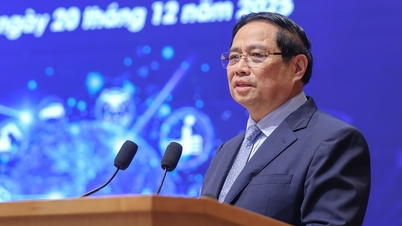
![[Photo] Prime Minister Pham Minh Chinh presides over a meeting on private sector economic development.](/_next/image?url=https%3A%2F%2Fvphoto.vietnam.vn%2Fthumb%2F1200x675%2Fvietnam%2Fresource%2FIMAGE%2F2025%2F12%2F20%2F1766237501876_thiet-ke-chua-co-ten-40-png.webp&w=3840&q=75)

































































Comment (0)