Paying attention to every piece of porcelain.
As the person chosen by the Hue Imperial Citadel Conservation Center, artisan Nguyen Thanh Thuan (Quang Tho commune, Quang Dien district) is in charge of a team of 20 highly skilled craftsmen responsible for shaping, inlaying ceramics, and restoring decorative motifs and dragon images on the roof of Thai Hoa Palace.
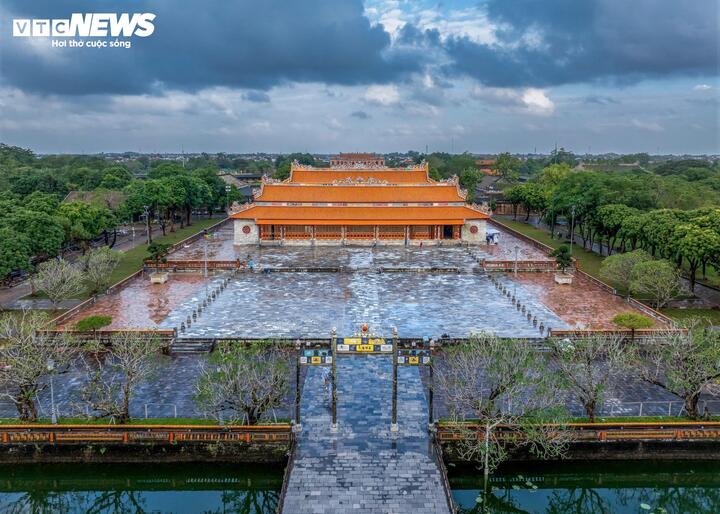
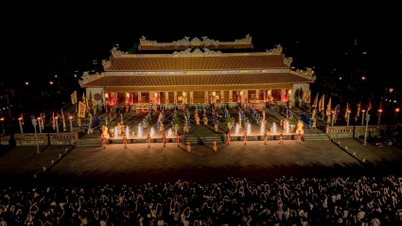
The Thai Hoa Palace, after restoration, still retains its original value. (Photo: Nguyen TA Phong)
Mr. Nguyen Thanh Thuan began his career in ceramic mosaic at the age of 18, under the tutelage of Mr. Truong Van An, a veteran ceramic mosaic artist in Hue who has undertaken numerous projects restoring dragons and phoenixes, and decorating with ceramic mosaics on the restoration of Hue's imperial palaces for over 30 years. To date, Mr. Thuan has spent over 20 years dedicated to restoring dragons and phoenixes on Hue's imperial architecture.
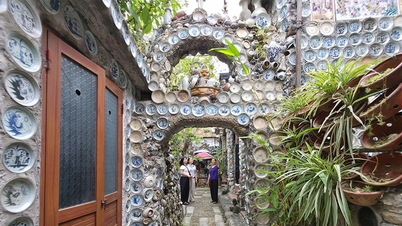
According to artisan Thuan, working in historical sites requires not only high skill but also strict adherence to conservation principles. Most of the ceramics used for inlaying dragons and phoenixes are antique Japanese and Chinese ceramics, with a few from Europe; new items from the market are not allowed because the colors are unsuitable.
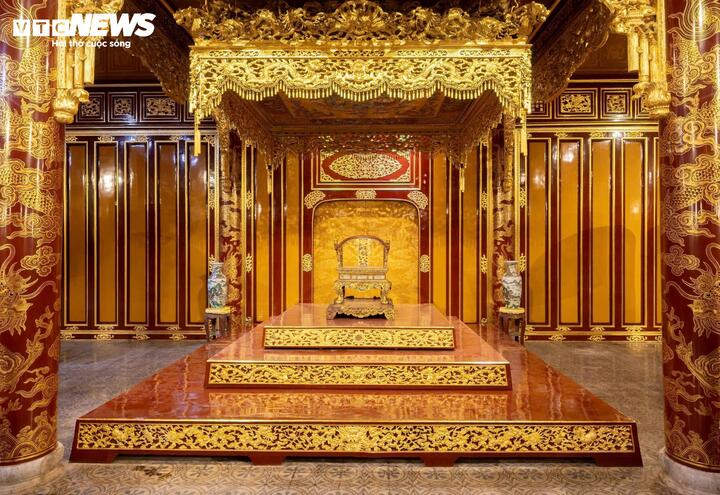
The canopy and throne platform of the Nguyen Dynasty in the Thai Hoa Palace after restoration. (Photo: Nguyen TA Phong)
“ To obtain the materials for the restoration of the monument, we have to order from those who work in the sand and gravel industry on the Perfume River. Previously, this source of ceramics was abundant, but now it is dwindling. To ensure a sufficient supply, we have to buy from antique collectors or source from Japanese ceramics shops, at very high prices.”
"The artisans break the purchased bowls and ceramics, carefully selecting suitable pieces and meticulously gluing them together with cement day after day to create the eyes, noses, legs, claws, scales, etc., forming majestic and lifelike dragons on the palace walls and roofs ," shared artisan Nguyen Thanh Thuan.
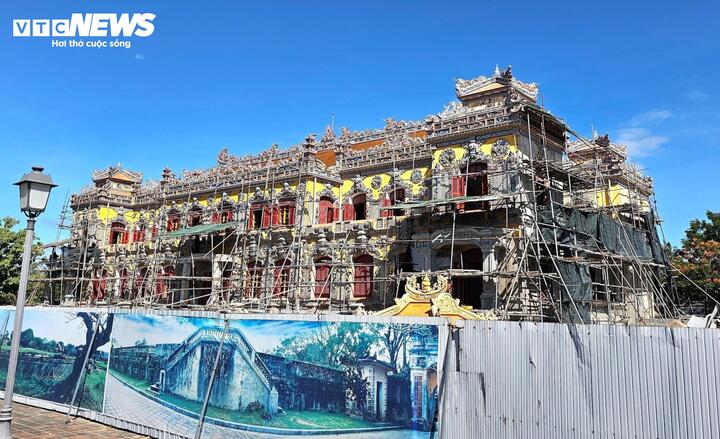
In 2019, Thua Thien Hue province (now Hue City) spent nearly 124 billion VND to restore Kien Trung Palace on its old foundation.
Even if only 1/3 of the wooden components remain, they should still be kept.
Hue's principle in restoring and preserving heritage sites is not to chase after appearances or replicate existing restorations, but to strive to retain as many original components as possible. Even when a site is deteriorating, it is still necessary to ensure compliance with regulations on conservation and promotion of the value of historical and cultural heritage.
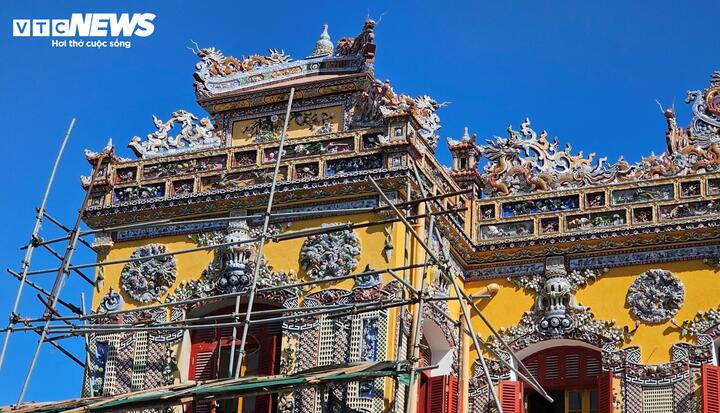
During the restoration process of Kien Trung Palace, the restoration workers carefully studied documents and images to restore the palace to its original state.
According to artisan Phan Canh Quang Thuan (born in 1973, residing in Thuy Bieu ward, Hue City), when restoring Thai Hoa Palace, each wooden component was meticulously assessed. Components in good condition were reused, while those damaged or infested with termites were replaced with new wood and restored to their original state.
After the wooden components are crafted into columns, beams, purlins, and walls, they are transferred to the gilding and painting stage. To complete the gilding and painting of a single wooden component, artisans must go through many stages and apply up to 14 layers of paint.
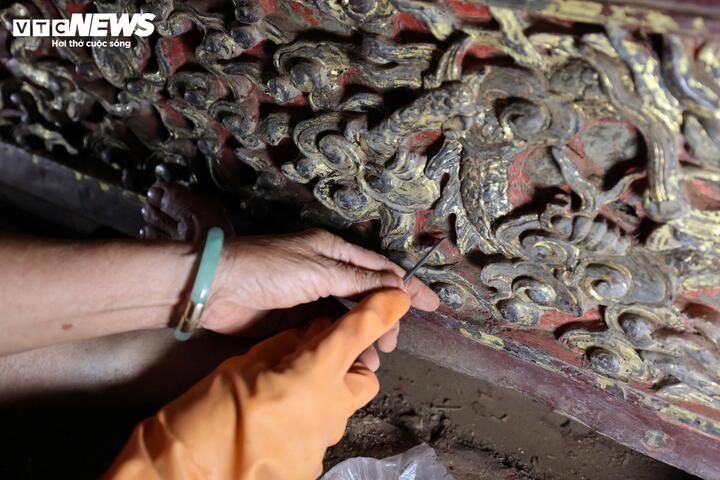
The artisan meticulously cleans each detail on the wooden components of the Thai Hoa Palace before applying the gold leaf. (Photo: Nguyen TA Phong)
“ The process of gilding the wooden components and gilded canopies at Thai Hoa Palace is carried out according to strict procedures. The team of craftsmen has to divide into many shifts, working day and night to ensure both technical quality and timely completion to serve visitors… ”, shared artisan Quang Thuan.
Initially, artisans extracted resin from a type of lacquer tree found in nature. The raw lacquer, after being processed into a refined lacquer, was filtered through cloth to remove impurities. This mixture was then blended with lacquer pigments, pine resin, tung oil, and kerosene in specific proportions, and then processed into vermilion. The artisans used this vermilion to gild and silver-leaf the wooden components of the Thái Hòa Palace.
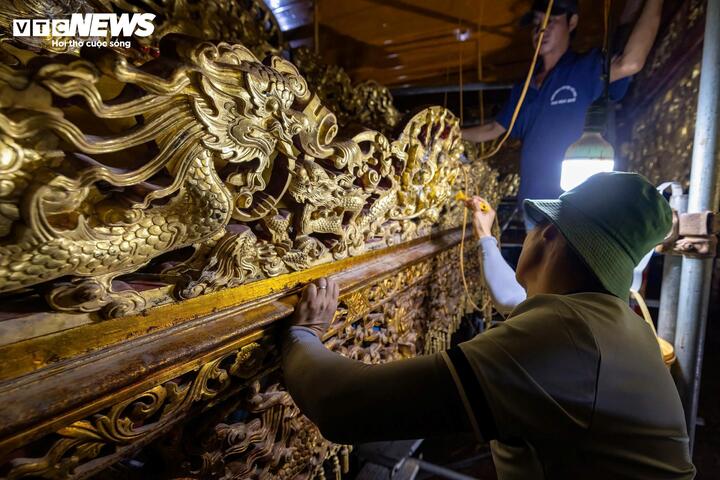
The canopy is made of wood, and over time the gold leaf has faded; it needs careful preservation and restoration. (Photo: Nguyen TA Phong)
The leader of the Hue Imperial City Relics Conservation Center stated: " The biggest lesson learned from restoring relics is that we cannot be hasty. Each structure is a living entity, containing valuable historical and cultural memories, so it requires patience, respect, and love for heritage, preserving as much as possible the cultural landscape of the heritage site combined with the natural elements that our ancestors painstakingly built. That is the secret to helping Hue maintain its identity and strengths amidst the flow of modern development trends ."
Source: https://vtcnews.vn/hoi-sinh-di-san-o-co-do-hue-ar953383.html






![[Video] Sunset at Lap An Lagoon – Where the sun sets over the fishing nets](https://vphoto.vietnam.vn/thumb/1200x675/vietnam/resource/IMAGE/2026/05/31/1780187239592_2222.jpeg)










































































Comment (0)