

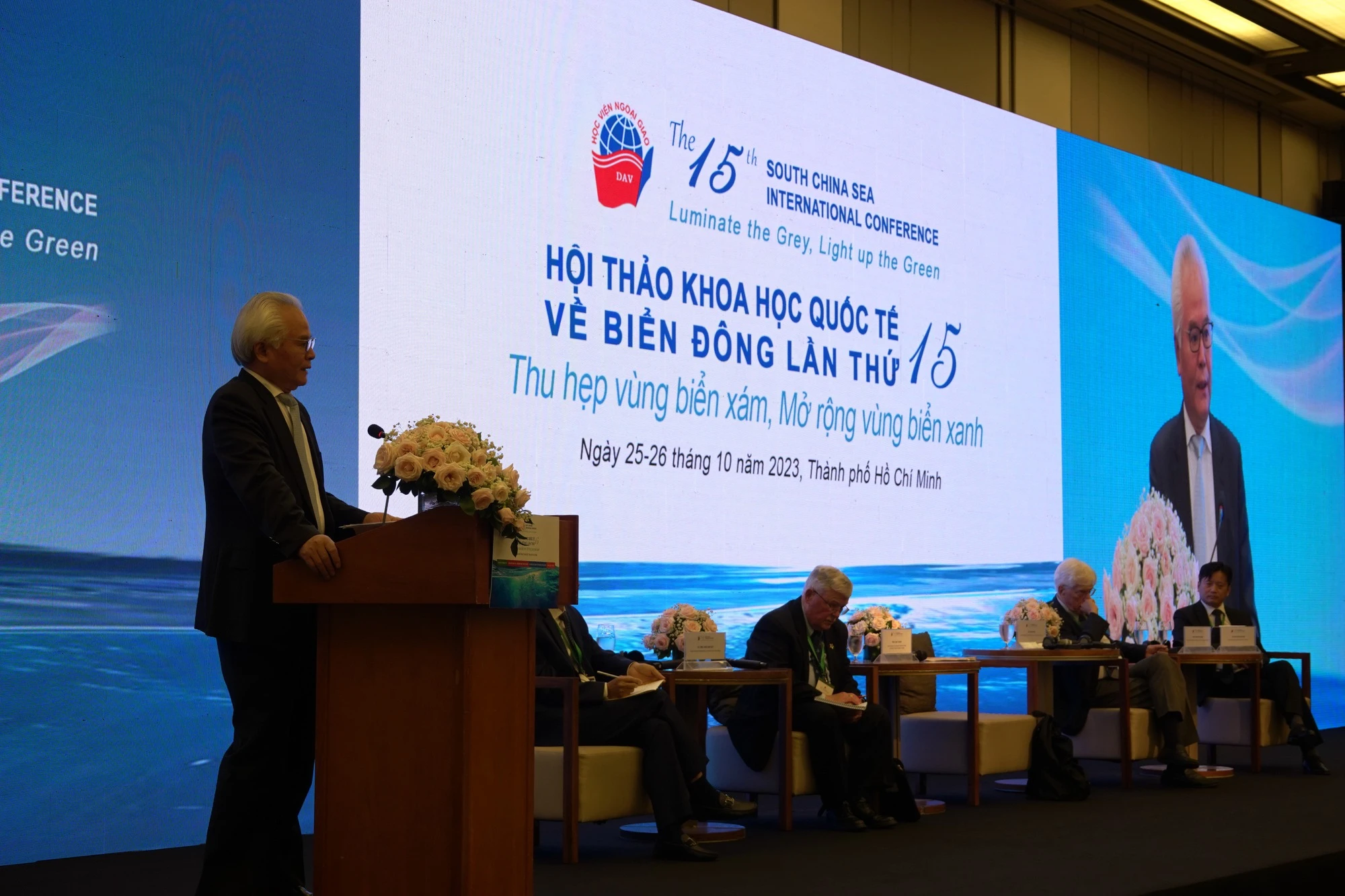
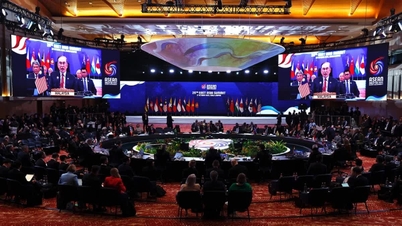
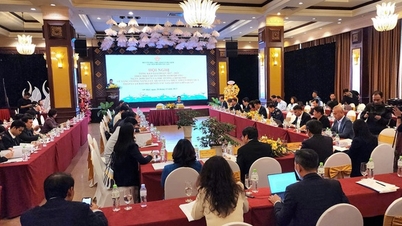
International speakers deliver their presentations at the conference.
In her opening remarks at the South China Sea Conference, Acting Director of the Diplomatic Academy Pham Lan Dung explained the reasons for choosing this year's theme. Accordingly, the organizers hope that experts will analyze the current situation in the South China Sea and the region, clarify common governing rules, identify policies to promote trust and cooperation, and shed light on actions that negatively impact the rules- based international order and increase tensions.
What are green and gray areas?
According to Ms. Pham Lan Dung, "Narrowing the gray sea zone" aims to make the marine space more transparent and peaceful . "Expanding the blue sea zone" aims to identify the potential of the sea and its future, by promoting best practices in key areas such as green transition, technologies, research and investment related to wind power, marine energy conversion, etc.
The workshop also focused on exchanging and discussing how maritime forces and regional mechanisms can contribute constructively towards a "greener" and "more peaceful " South China Sea.
Speaking at the opening session, Deputy Minister of Foreign Affairs Do Hung Viet highly appreciated the series of East Sea Conferences held over the past 15 years, which have created an open, frank, and friendly environment for regional and international experts to gather to enhance common understanding and narrow differences.
Deputy Minister Do Hung Viet expressed his hope that over the next 15 years, this dialogue channel will continue to be an important, open, inclusive, and innovative regional maritime security forum; a meeting place and a point of intersection between interests from the Indian Ocean to the Pacific and beyond.
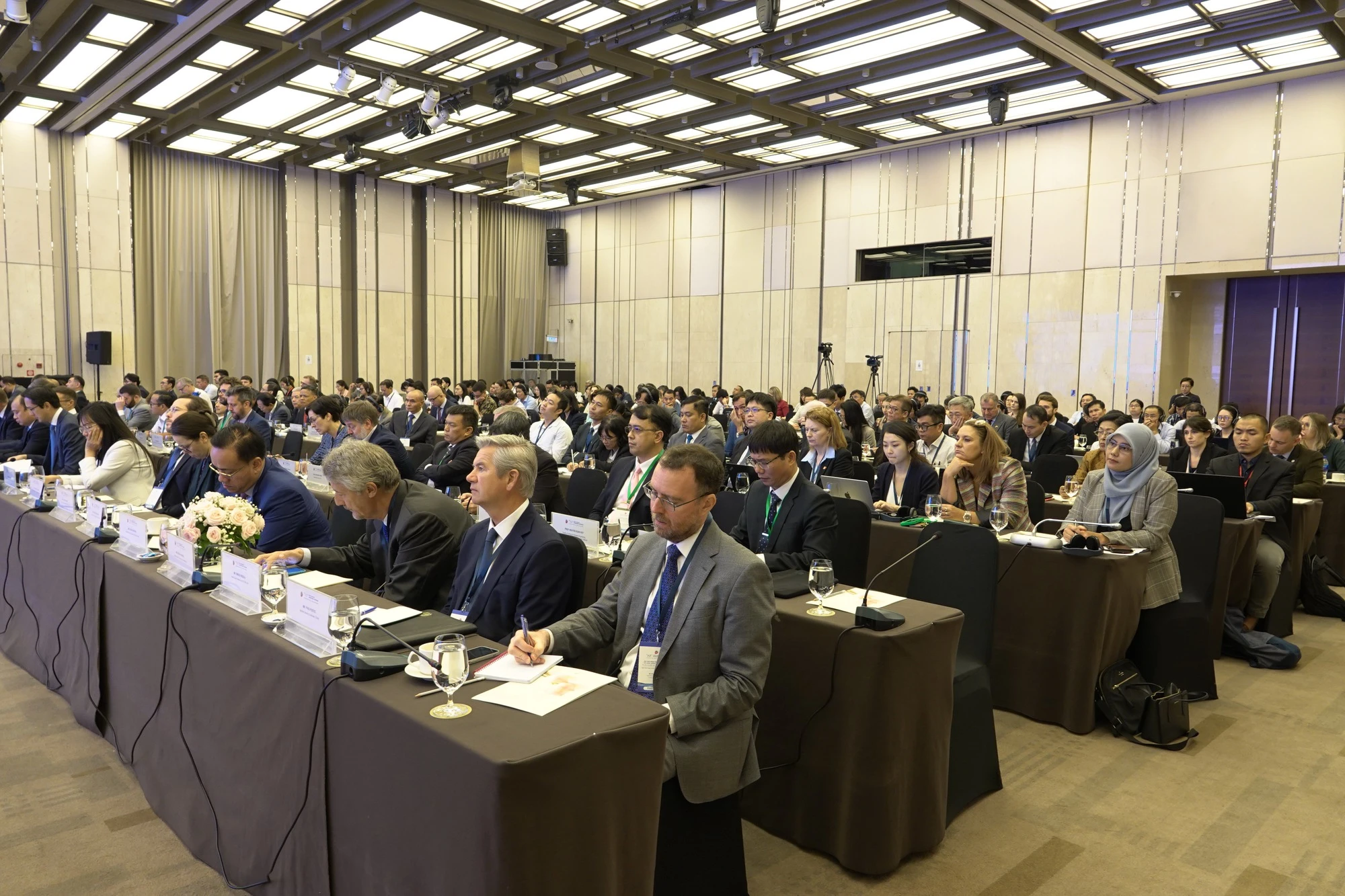
The conference marks a 15-year journey.
Identifying new challenges
Mr. Do Hung Viet believes that the global focus is continuing to shift towards the Indo-Pacific region, which is becoming the "center" of global growth and a crucial engine for global recovery and future prosperity.
However, that future cannot be guaranteed without lasting peace and stability in general, and in the regional maritime space in particular.
Currently, strategic competition is creating "major divisions" and "large rifts," as noted by United Nations Secretary-General Antonio Guterres. Conflicts are occurring in many regions of the world; in the maritime space of the Indo-Pacific, the risk of confrontation and conflict is certainly unavoidable.
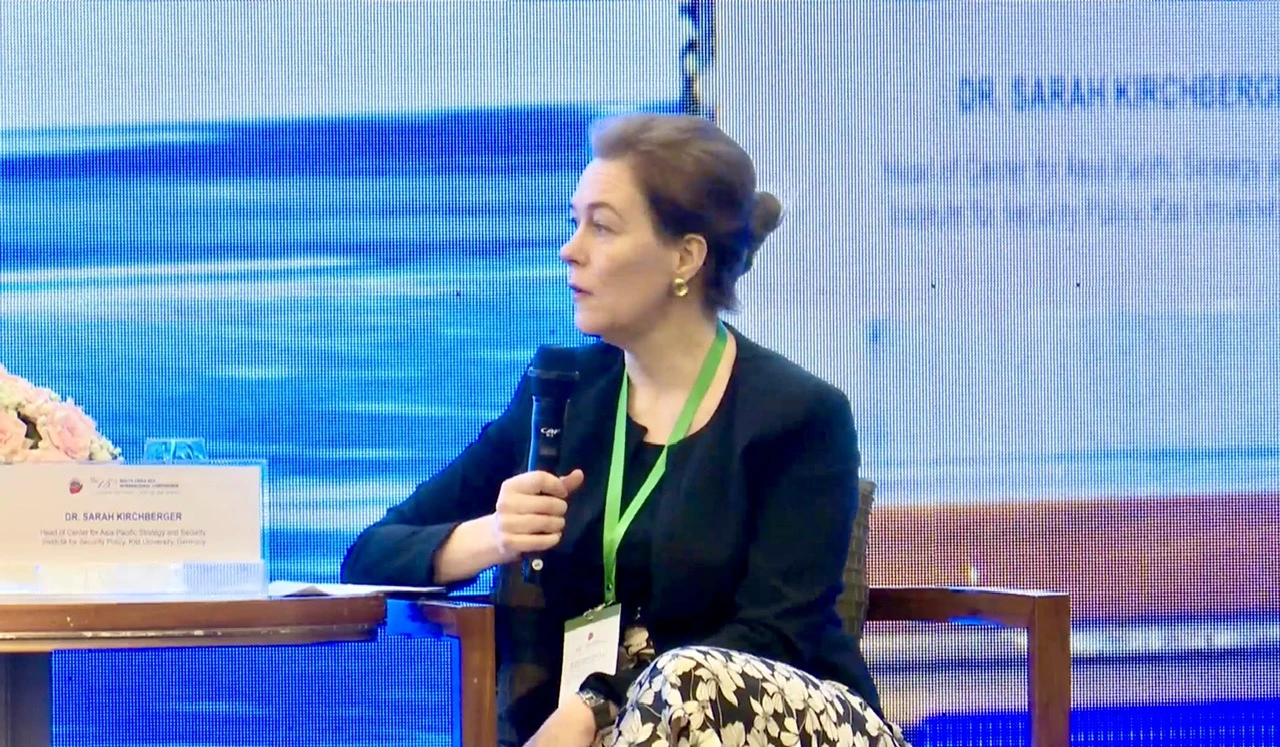
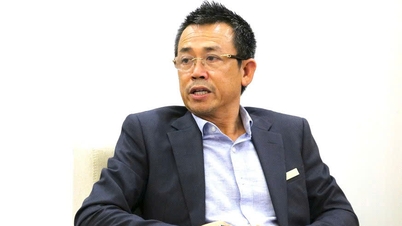
The speaker is Dr. Sarah Kirchberger, Head of the Asia-Pacific Strategy and Security Centre at the Kiel University Institute for Security Policy (Germany).
This situation compels Vietnam, along with the international community, to continuously identify potential threats at sea, review existing cooperation mechanisms to address emerging challenges, and act together to prevent those threats.
Compared to 15 years ago, the Deputy Minister believes that the situation in the South China Sea has become increasingly complex, with many new "grey areas" emerging that need to be clarified. However, the South China Sea remains a region offering many potential opportunities for cooperation.
In that context, Mr. Do Hung Viet highly appreciated the choice of the conference's theme; emphasizing that only through cooperation can we help the South China Sea transform from "gray" to "green," moving towards peace and sustainable development.
To achieve this, it is crucial to respect and abide by international maritime law, as enshrined in the 1982 United Nations Convention on the Law of the Sea (UNCLOS 1982).
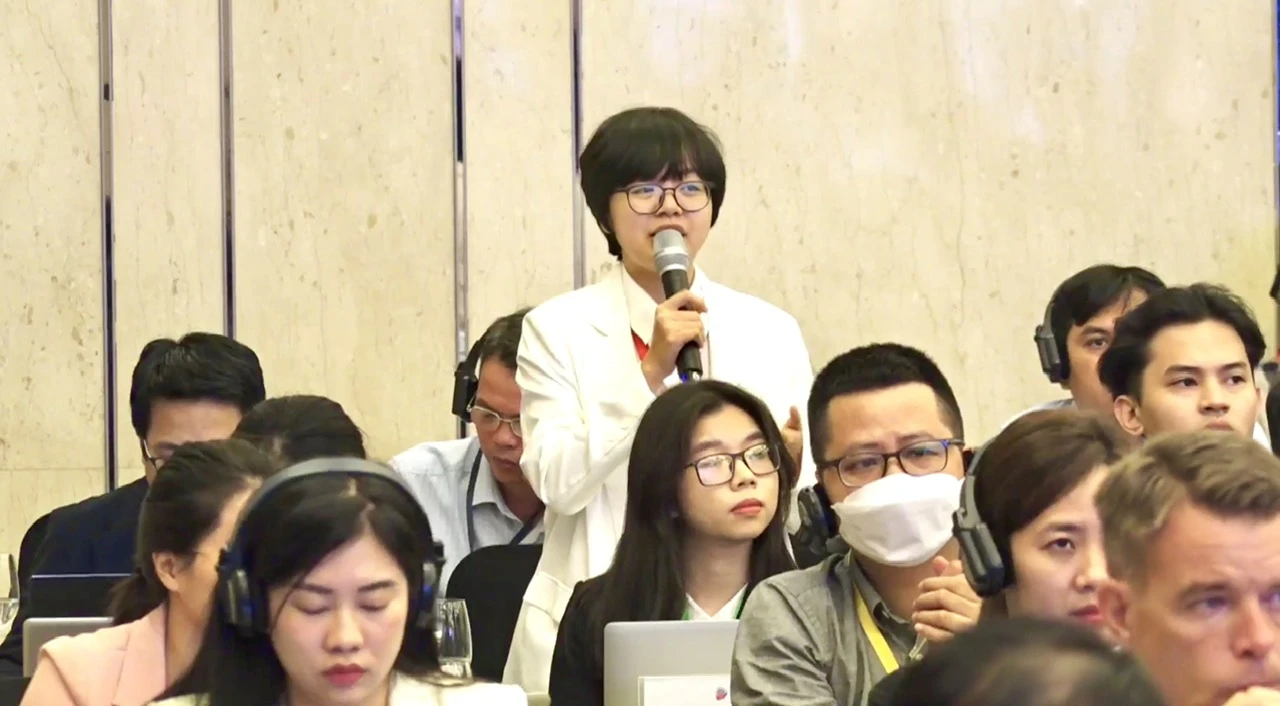
The workshop featured the emergence of young faces.
The voice of succeeding generations
The 15th International Conference on the South China Sea took place over two days, October 25-26, with eight sessions covering diverse topics. Among them were sessions that attracted significant attention, such as "Great Powers and Great Responsibilities: Cooperation and Coexistence in the Context of Increasing Competition?", "Multilateral Approaches to the South China Sea: A New Trend?", and "The Role of Coast Guards in Enhancing Cooperation in the South China Sea".
Notably, for the first time this year, the workshop dedicated a session to discussions between representatives from the coast guard forces of several countries bordering the South China Sea.
In addition, the Conference upgraded a separate session for young regional leaders to a plenary session on the agenda. In previous years, the young regional leaders program was designed as a side discussion session of the South China Sea Conference.
This year, the inclusion of the Youth Leadership Session on the main agenda aims to raise awareness among the next generation about the importance of peace, cooperation, the rule of law, and to seek fresh perspectives on peaceful solutions to the South China Sea dispute.
General information about the workshop
The conference was attended by over 200 delegates in person and nearly 250 delegates who registered online. It brought together nearly 50 speakers, all reputable experts from almost 20 countries across different continents; and nearly 70 delegates from foreign diplomatic missions in Vietnam (including nearly 20 Ambassadors and Consuls General).
Nearly 30 reporters from 21 domestic and international news agencies and television stations attended the conference to cover the event. The conference was also attended by Associate Professor Dr. Le Hai Binh, Alternate Member of the Central Committee of the Communist Party of Vietnam and Deputy Head of the Central Propaganda Department.
The 2023 conference also featured special keynote sessions from several high-level leaders, including Rt. Hon Anne-Marie Trevelyan, UK Minister of State for the Indo-Pacific; Martin Thümmel, Commissioner for East Asia, Southeast Asia and the Pacific, German Foreign Office; and Paola Pampaloni, Acting Executive Director for Asia and the Pacific at the EEAS.
Source link

![[Photo] Prime Minister Pham Minh Chinh presides over a meeting on private sector economic development.](/_next/image?url=https%3A%2F%2Fvphoto.vietnam.vn%2Fthumb%2F1200x675%2Fvietnam%2Fresource%2FIMAGE%2F2025%2F12%2F20%2F1766237501876_thiet-ke-chua-co-ten-40-png.webp&w=3840&q=75)

























































Comment (0)