

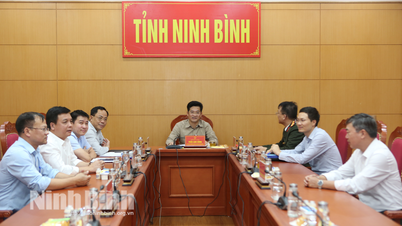
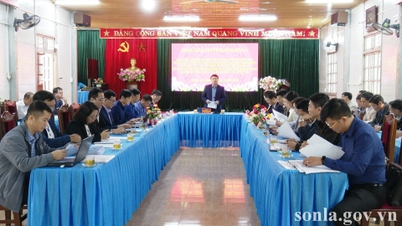
On the morning of May 20th, the Steering Committee of the project "Application of Science and Technology to build a model for growing myrtle trees as raw materials and for tourism purposes at the National Wildlife Park in Ninh Binh province" held a field workshop.
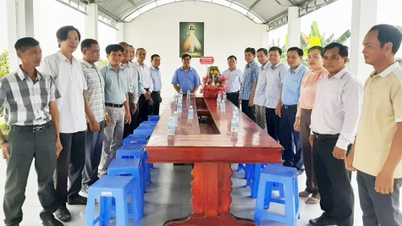
The workshop was attended by representatives from the Department of Science and Technology, the Wildlife Park Management Board (Department of Agriculture and Rural Development), the District Department of Agriculture and Rural Development, the local government, and some households from Ky Phu commune (Nho Quan district).
Over the past three years, the research team has conducted investigations into the distribution of myrtle plants; collected scientific data; studied and demarcated areas where myrtle plants are naturally distributed; developed a description of the biological characteristics of myrtle specimens; and purchased myrtle specimens…
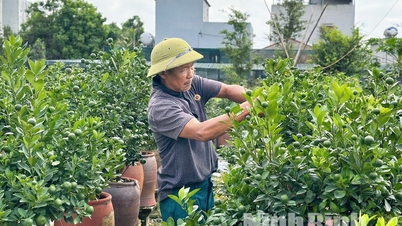
In addition, a model garden for sim tree seedlings was established: 2,000 sim tree seedlings (mother trees) were purchased to provide cuttings for propagation and later for planting; these were planted in a collection garden where seedlings were gathered from several localities. The seedlings were closely monitored for indicators such as height, trunk diameter, canopy diameter, growth time, flowering, and bud formation.
The results showed that the seedlings brought in were of good quality, and the planting model proceeded smoothly. The plants developed and produced enough seedlings to supply both raw materials and planting material during and after the project.
From the two intensive cultivation models of 3 hectares of seedlings (1.5 ha) and cuttings (1.5 ha), it was observed that: For the cuttings model, initial results were positive (90% of the plants have flowered).
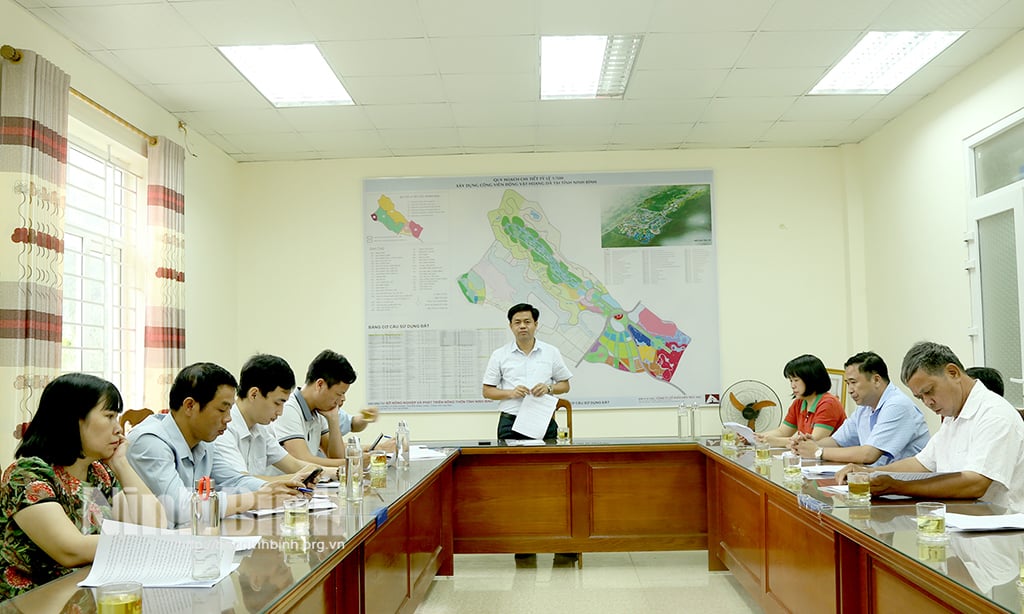
The workshop received constructive feedback from technicians and participating local households. This included technical specifications, advantages and disadvantages, and lessons learned from both seedling and cutting-based planting models.
Based on the evaluation, the project has initially succeeded in researching the ability to propagate myrtle plants using two methods: seed propagation and cuttings.
These two propagation models have the potential to provide seedlings for the project during and after implementation, as well as raise awareness among interested people, thereby enabling wider propagation.
This successful model not only reclaims barren, desolate land in the hilly areas but also generates significant income from harvesting sim fruit, while simultaneously creating a beautiful natural landscape and an ecotourism environment for the wildlife park in the near future.
Text and photos: Minh Duong
Source




































































Comment (0)